Footwork
MasteredMoved to the ball before most players had read it — the foundation of his apparent effortlessness.
How it developed
Years of one-on-one drills with coach Peter Lundgren and physical trainer Pierre Paganini.
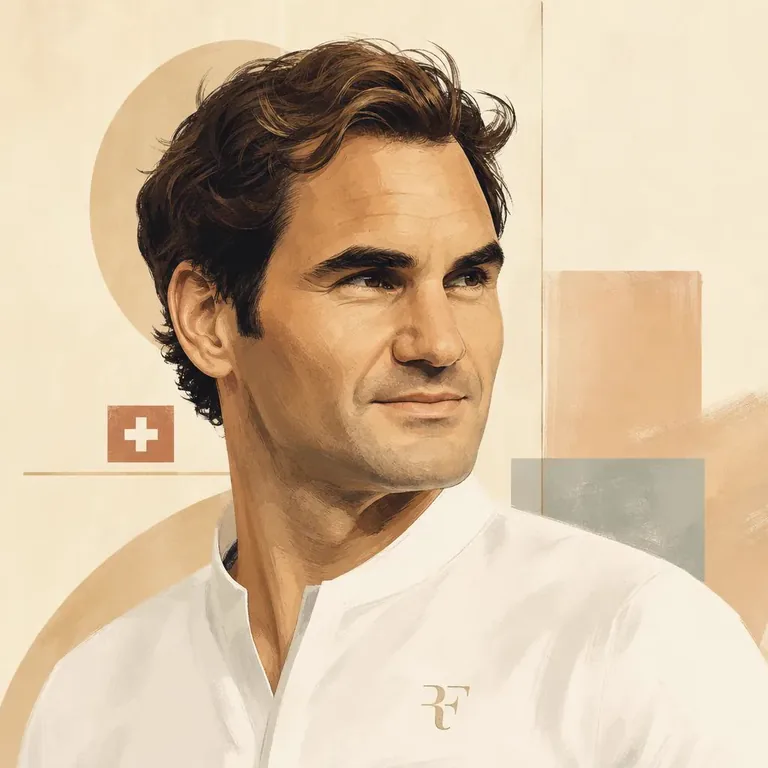
20-time Grand Slam Tennis Champion.
The Swiss craftsman who turned a teenage racket-thrower into the most elegant athlete of his generation — and stayed in the top of his sport for two decades by making the game look easy.
Every story has the highlights. This is the boring middle, the doubts, and the moments that quietly changed everything.
Father Swiss, mother South African; raised speaking Swiss German with an English-speaking mother.
Growing up between cultures and identities.
Multiple roots make a portable career possible.
Moved to Ecublens at 14, living away from family in French-speaking Switzerland.
Severe homesickness; he was the only German speaker and openly cried during the first months.
The early discomfort of leaving home is the cost of a real apprenticeship.
Took the boys' singles and doubles at Wimbledon and turned professional at 17.
Transitioning from junior dominance to the brutal pro tour grind.
Junior success is a credential, not a career. Start over the day you turn pro.
Defeated the seven-time champion in the fourth round in a five-set classic — his arrival on the global stage.
Believing he belonged with the greatest player in the sport's history.
One defining win against the right opponent rewrites your self-image.
Won his first major in straight sets and credited the years of grass-court apprenticeship at the All England Club.
Carrying the favorite's pressure for the first time in a major final.
The first one breaks the dam. Subsequent ones become a system.
Took the top ranking in February 2004 after winning the Australian Open; held it for 237 consecutive weeks, a record.
Sustaining motivation at the top without an obvious peer pushing him.
The hardest competition is internal once you're already #1.
Lost the greatest match in tennis history 9–7 in the fifth set, ending his five-year Wimbledon reign.
Absorbing the most painful loss of his career without losing belief.
Generational rivalries are the best gift a sport gives an athlete.
Won his only French Open over Robin Söderling after Nadal was upset, completing all four majors.
Closing the one gap his critics used against him.
Sometimes the door only opens when someone else clears the room.
Suffered a back injury and dropped to #8; many wrote his career off at age 32.
Restructuring his team, coach, and racket while ego was bruised.
Reinvention starts the moment you accept the old version isn't coming back.
Returned from knee surgery and won in Melbourne against Nadal in five sets — one of sport's great comebacks.
Convincing his body and his coaching team that a major was still possible.
Long breaks can reset what daily grinding cannot.
Became a major equity partner in the Swiss running shoe brand, eventually worth over a billion dollars in his stake.
Choosing the right post-career business that aligned with his identity.
Endorse only what you would buy yourself. Equity follows authenticity.
Played his final professional match in doubles with Rafael Nadal in London; both wept on court.
Ending a career on his terms while his body forced the timing.
Choose how you leave. The exit is part of the legacy.
Skills aren't talents — they're the residue of a thousand decisions. Here is what compounded over a lifetime.
Moved to the ball before most players had read it — the foundation of his apparent effortlessness.
Years of one-on-one drills with coach Peter Lundgren and physical trainer Pierre Paganini.
Played slice, topspin, serve-and-volley, and baseline with equal fluency in the same match.
Refused to specialize as a junior; played every surface and every style throughout adolescence.
Held his serve at break point and converted big moments more often than statistics could predict.
Beat a teenage temper through deliberate work with a sports psychologist after junior career meltdowns.
Built a global brand by being consistently gracious on camera and aligned with luxury partners.
Decades of media training and tight collaboration with agent Tony Godsick at IMG and later Team8.
Played a 24-year pro career by managing his schedule, surface choices, and recovery obsessively.
Built a team — coach, physio, agent, family — around protecting his body and mind, not maximizing tournaments.
Conceded matches with public grace that protected his rivals' careers and his own brand.
Modeled on Stefan Edberg and shaped by his own teenage struggles with composure.
Surrounded himself with the same small group for decades — coaches, agent, wife, trainer.
Hired slowly, fired almost never; treated team as family rather than service providers.
No journey is a straight line. The setbacks weren't detours — they were the route.
Famous for throwing rackets and self-deprecating outbursts that worried coaches about his career prospects.
Worked deliberately on emotional regulation; by 2003 he was almost expressionless on court.
The temperament problem you fix at 16 is the asset you compound at 36.
Lost the most famous match of the modern era in five sets, ending his five-Wimbledon streak.
Won the next year's French Open and three more Wimbledons; treated Nadal as fuel, not obstacle.
The defining loss often unlocks a level your wins never demanded.
Dropped to world No. 8 with back issues; commentators declared his peak years over at 32.
Switched coaches to Stefan Edberg, adopted a larger racket head, and won three more majors after 35.
Mid-career reinvention is real when you change tools and team together.
Tore his meniscus running a bath for his daughters; missed Wimbledon and most of the year.
Used the six-month break to retrain his body and game; came back to win the 2017 Australian Open at 35.
Forced rest can reveal the version of you that was buried under the schedule.
The books on the shelf, the people they studied, the ideas they kept returning to.
René Stauffer
The most thorough biography, written with extensive access to family and early coaches.
Michael Mewshaw
A literary portrait of the late-career Federer phenomenon.
Andre Agassi
Federer recommended Agassi's memoir as the truest account of a tennis career from the inside.
W. Timothy Gallwey
Foundational mental-game text every elite player engages with at some point.
Doris Henkel
Photographic and biographical volume covering his career with rare on-court access.
Interviews, keynotes, talks, and documentaries — chosen for the moments that reveal how they actually thought.
The bets that, made differently, would have written a different life.
AI-distilled takeaways, sorted by who you are and what you're building toward.
Twenty thousand hours hidden behind every shot that looks easy.
Talent caps out where emotion takes over.
One change rarely sticks — change the whole system at once.
Federer: 'Easy is an illusion.' Embrace the process — it's the actual reward.
Your worst moments shape your brand more than your best.
Long-term commercial value follows authentic alignment.
Continuity compounds. Constant churn destroys trust capital.
The questions most people have after studying this life. Tap one — every answer is built from Roger Federer's own timeline, decisions, books, and lessons on this page.
Adjacent journeys, a collection that frames the craft, and one pick from a different world.
A Compton, California prodigy coached by her father on public courts who became the most decorated tennis player of the Open era — and rewrote what a global athlete brand can look like.
Read Journey
A Madeiran teenager who left home at 12 to chase football, became the most marketed athlete on earth, and built a career powered by training discipline that outlasted most of his contemporaries.
Read Journey
A Mumbai schoolboy whose talent was so obvious by 14 that the country built its cricketing expectations around him — and who delivered them for 24 years.
Read Journey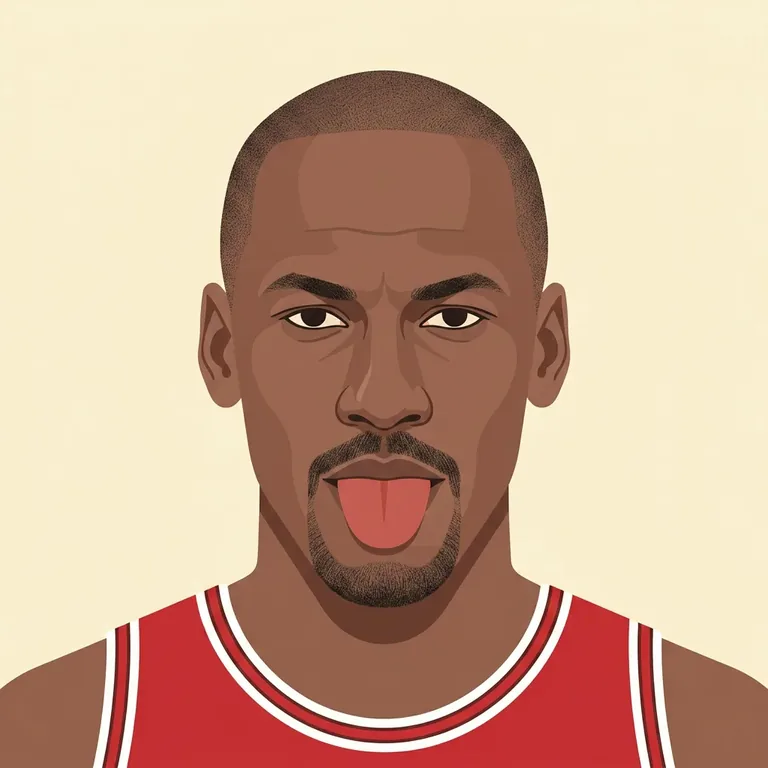
A North Carolina teenager cut from his high-school varsity team who became basketball's defining player and proved that an athlete could be a multi-billion-dollar global brand.
Read Journey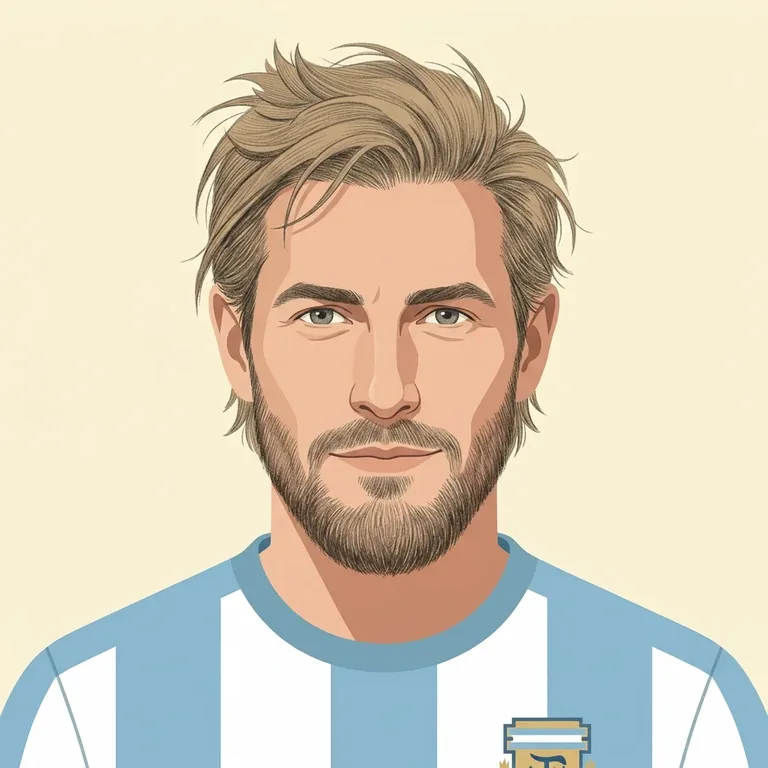
Champions who built dynasties through preparation, recovery, and relentless self-management — across tennis courts, basketball arenas, football pitches, and cricket grounds.
Open CollectionA two-year residency ended the week my savings did. The bar shifts that followed taught me what the studio never had to.
Read Story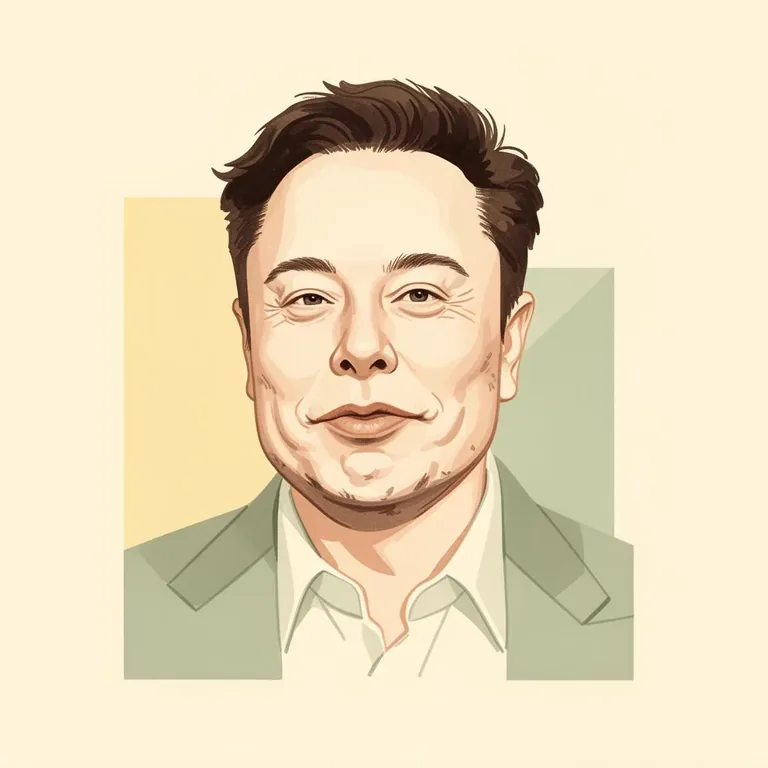
Founder of Tesla & SpaceX
An obsessive engineer betting on rockets, electric cars, and the impossible — applying first-principles thinking at planetary scale.
Open Journey