Reduction
MasteredRemoves elements until removing one more would break the object.
How it developed
Carpentry training that taught addition costs material and weight.
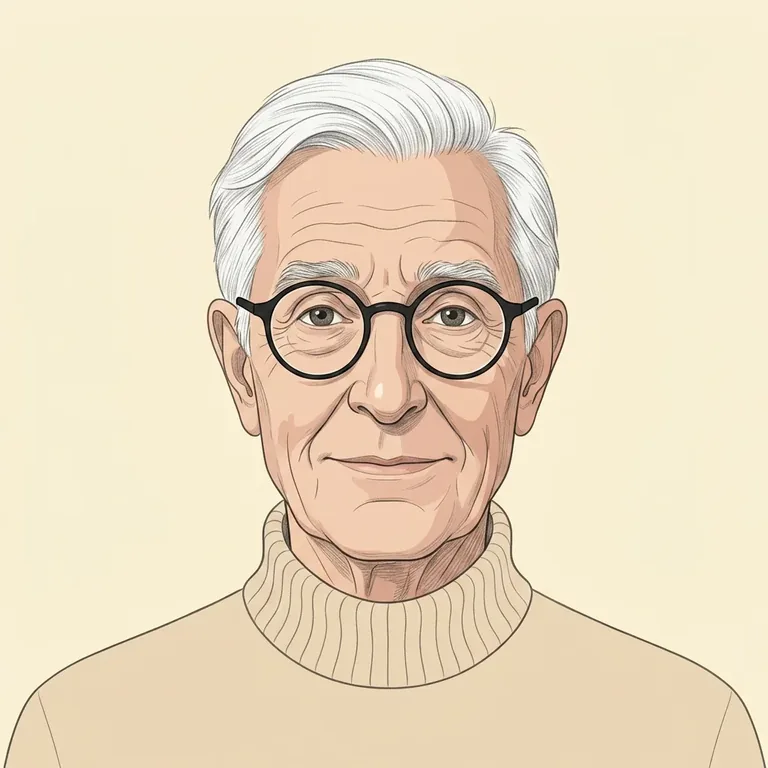
Industrial designer at Braun and Vitsoe, author of the Ten Principles.
A German industrial designer whose 40 years at Braun produced a body of work so disciplined and reduced it set the visual language for modern consumer electronics — including the iPod and iPhone.
Every story has the highlights. This is the boring middle, the doubts, and the moments that quietly changed everything.
Grandson of a carpenter; spent his childhood in the workshop watching joinery and detail work.
Growing up through wartime austerity and reconstruction.
Restraint as a value is often inherited from a generation that had nothing to waste.
Learned cabinetmaking by hand before formal design training.
Physical craft as foundation before drawing.
Designers who can build never lose their grip on materials.
Trained in architecture and interior design.
Reconciling postwar German modernism with traditional craft training.
Good design schools teach you how to look, not what to draw.
Hired by Erwin and Artur Braun to redesign company interiors; quickly shifted to product design.
Walking into a family business in transition.
The right environment hands you 10 years of opportunity in one offer.
The 'Snow White's Coffin' — a transparent acrylic and white-metal record player that became an icon.
Defending austerity against German consumer norms.
A single product can announce a designer's philosophy for life.
A handheld radio with a circular dial that prefigured the iPod's design language by 40 years.
Compressing electronics into a hand-friendly slab.
Good design ages slowly because it solves the underlying problem, not the trend.
Led the design team that defined Braun's visual identity for decades.
Managing a multidisciplinary team across razors, kitchen appliances, and audio.
Continuity of taste is a leadership outcome, not a personal one.
Designed the 606 Universal Shelving System for Vitsoe — a modular shelving design still in production.
Designing for indefinite manufacturing rather than annual model years.
Time is a designer's harshest critic; long-lived designs are pre-judged.
Asked himself 'Is my design good design?' and codified the answer.
Reducing intuition to ten testable statements.
If you can't write your principles down, they aren't actually principles.
Stepped back from active design after 40 years.
Watching consumer electronics drift away from his ethos.
Influence is measured by what continues without you.
Brian Eno-scored portrait introduced his work to a new generation.
Speaking publicly about a career he had always treated as quiet.
The most disciplined designers still need to tell the story eventually.
Skills aren't talents — they're the residue of a thousand decisions. Here is what compounded over a lifetime.
Removes elements until removing one more would break the object.
Carpentry training that taught addition costs material and weight.
Sees plastic, aluminum, and glass as expressive materials, not commodities.
Decades of factory walks at Braun and Vitsoe.
Built a unified visual language across hundreds of Braun products.
Continuous head-of-design tenure across multiple product lines.
Codified ten principles to test any object against.
Distilled from 20 years of in-house design reviews.
Used near-white, gray, and black with rare accent color.
Bauhaus and Ulm school inheritance refined through Braun's brand discipline.
No journey is a straight line. The setbacks weren't detours — they were the route.
His work was widely copied but rarely credited until the 1990s.
Continued shipping; the iPod era retroactively elevated his profile.
Quiet careers compound — the body of work eventually speaks.
By the 90s most consumer products had abandoned longevity for fashion cycles.
Spent retirement years lecturing and writing on sustainable design.
If your industry abandons your ethos, become its teacher instead.
The books on the shelf, the people they studied, the ideas they kept returning to.
Dieter Rams
The closest thing to a Rams operating manual.
Sophie Lovell
Definitive monograph on his Braun work.
Kenya Hara
A parallel philosophy from a Japanese designer.
Dieter Rams
Collected lectures and essays.
Interviews, keynotes, talks, and documentaries — chosen for the moments that reveal how they actually thought.
The bets that, made differently, would have written a different life.
AI-distilled takeaways, sorted by who you are and what you're building toward.
Default to subtraction; addition has to be argued for.
If the product wouldn't be made in 20 years, redesign it now.
Codify the taste so the team can apply it without you in the room.
Stay long enough at one place to compound a body of work.
Pick longevity over annual fashion cycles; it's the cheapest sustainability story.
The questions most people have after studying this life. Tap one — every answer is built from Dieter Rams's own timeline, decisions, books, and lessons on this page.
Adjacent journeys, a collection that frames the craft, and one pick from a different world.
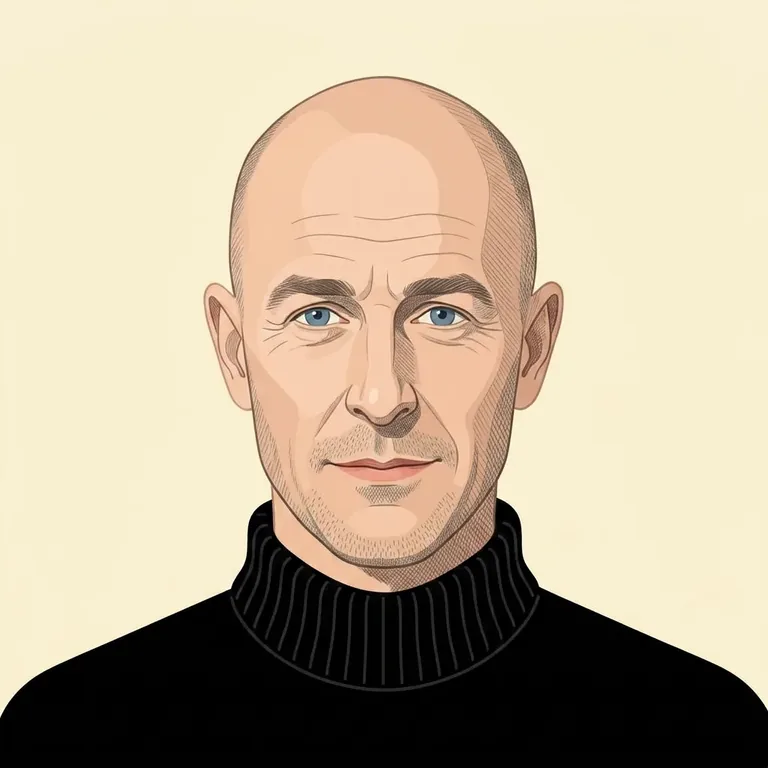
A soft-spoken British industrial designer who turned a near-bankrupt Apple into the most valuable design-led company on earth — and then walked away to start over.
Read Journey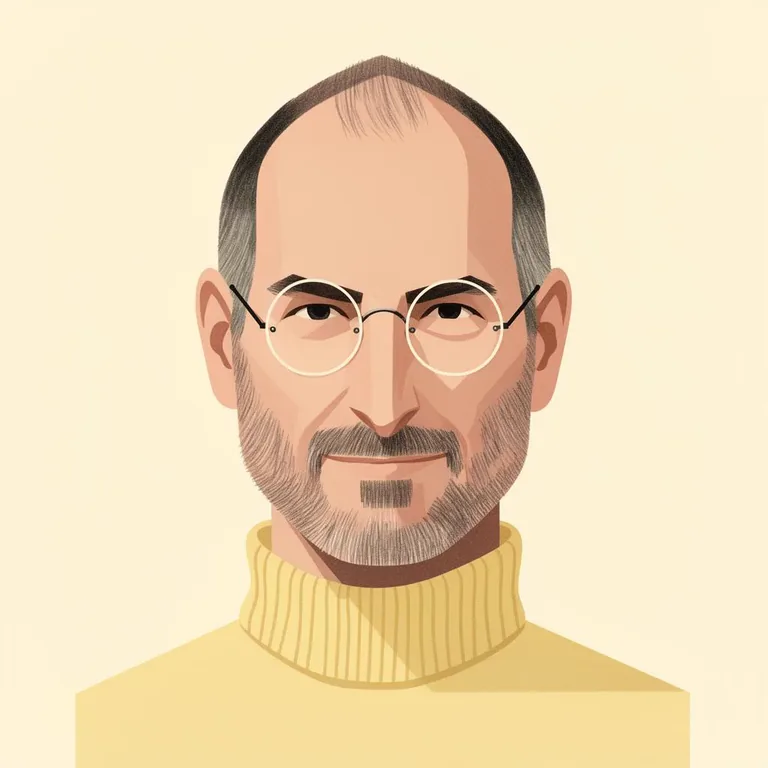
One of the most influential product visionaries in history — a relentless editor of ideas who insisted technology should feel human.
Read Journey
Three air mattresses and a designer's eye that turned strangers into hosts — a founder who treats hospitality as a craft and product as the story.
Read Journey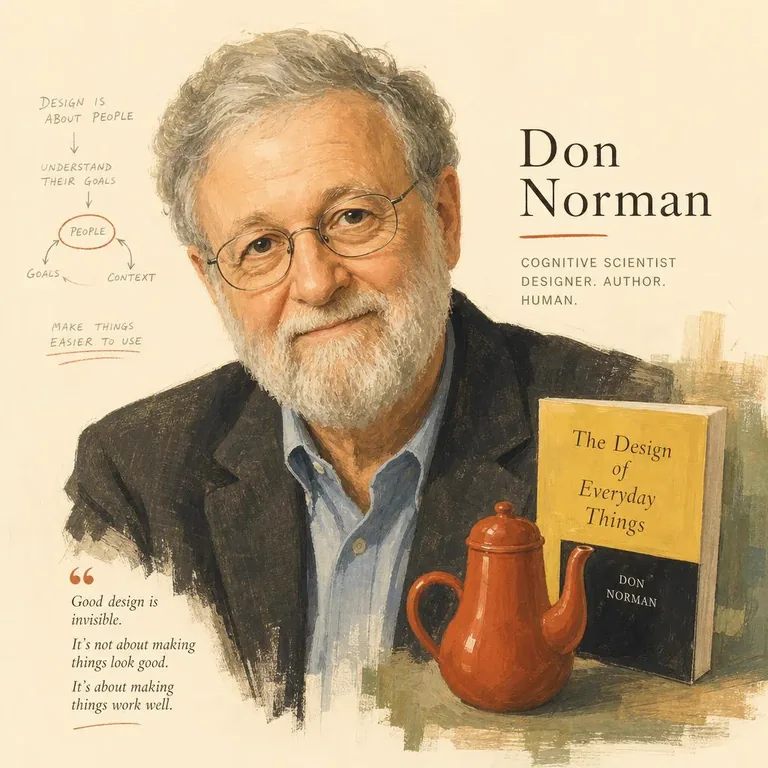
Coined 'user experience' and built the field — by insisting that confusing doors and broken stovetops were design failures, not user failures, and that cognition is what design actually serves.
Read Journey
Taste as a leadership discipline. Founders and operators who used design culture as a competitive moat.
Open CollectionTwelve months of soft inquiries and no contracts. The fix wasn't a new portfolio site. It was admitting who I actually wanted to work with.
Read StoryCo-founder of Canva
Teaching yearbooks in Perth that grew into a design tool for a billion people — proof that patient founders win the long game.
Open Journey