Plain English
MasteredCodified six rules for prose that became the standard for clear political writing.
How it developed
A decade as a journalist editing his own prose ruthlessly.
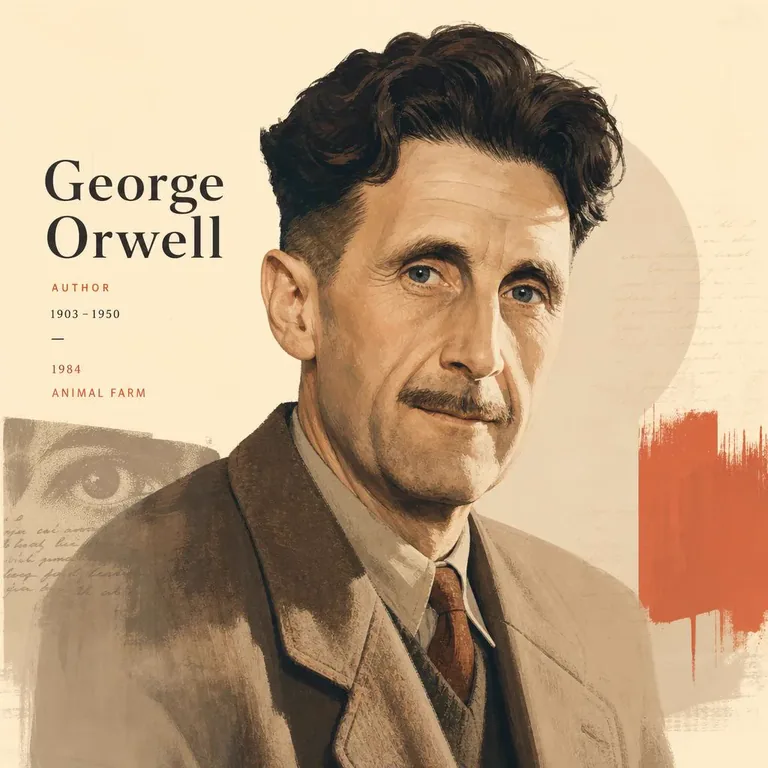
Novelist; Essayist; Political Journalist.
Turned every political compromise he refused — empire, fascism, Soviet apologism, sloppy English — into prose so plain it became permanent. Wrote two novels that named two centuries of authoritarianism.
Every story has the highlights. This is the boring middle, the doubts, and the moments that quietly changed everything.
Son of a colonial opium-department official; sent home to England as a child.
Outsider in his own country from age four.
Outsider perspective is the writer's earliest training.
Educated alongside the British upper class he would later spend his career critiquing.
Scholarship boy in an aristocratic environment.
Spending years inside a power structure clarifies what's actually true about it.
Five years as a colonial officer in a regime he came to despise.
Carrying out empire while ceasing to believe in it.
Live the system you intend to critique; abstractions won't do.
Returned to Europe determined to become a writer and to atone for colonial service.
Walking away from a respected career with no manuscript ready.
Quit clean; the half-loyal life is worst of all.
First book under the pen name George Orwell, based on years of voluntary poverty.
Building credibility on lived experience rather than reportage.
Direct experience is the cheapest research and the most expensive currency.
Joined POUM militia; shot through the throat by a Francoist sniper.
Survived assassination attempts by Stalinist allies as well as fascists.
Some 'allies' are more dangerous than the enemy.
Memoir of Spain that exposed Soviet betrayal of the Republican left.
Publishing inconvenient truths in a left-wing press that didn't want them.
Telling truth about your own side is the test of honesty.
Wrote and produced wartime broadcasts for India; later said it taught him about propaganda.
Working inside a propaganda apparatus while keeping integrity.
The closer you study propaganda, the better you can write against it.
Finished the manuscript; rejected by multiple publishers afraid of upsetting the Soviets.
Selling an anti-Stalin allegory during the wartime alliance with Moscow.
Truths in the wrong season need patient publishers.
Released after V-E Day; immediate international success.
Wife Eileen died unexpectedly during surgery the same year.
Personal grief and professional vindication arrive uncoordinated.
The essay that defined his rules for clear prose and political writing.
Indicting a literary establishment he was now part of.
Critique your own discipline first; everyone else next.
Written while tubercular on the Scottish island of Jura; introduced Big Brother and Newspeak.
Finishing a 400-page novel with one lung functioning.
The most urgent work is finished against the body's objections.
Married Sonia Brownell on his deathbed; never recovered from his Jura winter.
Outliving his own books by only a few months.
Some writers live just long enough to deliver the work.
Skills aren't talents — they're the residue of a thousand decisions. Here is what compounded over a lifetime.
Codified six rules for prose that became the standard for clear political writing.
A decade as a journalist editing his own prose ruthlessly.
Lived as a tramp, a colonial policeman, a soldier — and wrote only from inside.
Deliberate immersion as a research method.
Compressed political arguments into stories a child could read and remember.
Years drafting Animal Farm to find the simplest possible form.
Coined Big Brother, doublethink, thoughtcrime, Newspeak, memory hole — words now load-bearing in political English.
Writer-as-engineer of language as well as story.
Reviewed his own past loyalties as ruthlessly as he reviewed others'.
Forged in Spain when his own side tried to kill him.
Wrote some of the 20th century's best essays on language, books, food, and tea.
A weekly column at Tribune trained him to write to a deadline at length.
Refused honors, party loyalties, and easy money throughout his career.
Treated independence as a non-negotiable working condition.
No journey is a straight line. The setbacks weren't detours — they were the route.
'Down and Out' was rejected multiple times; 'Animal Farm' rejected by four publishers afraid of the Soviets.
Persisted, eventually found brave publishers (Gollancz, then Warburg).
Books refused for political reasons often become the most permanent.
Spent five years enforcing the empire he came to despise.
Wrote 'Shooting an Elephant' and 'Burmese Days' to atone in print.
Public confession of past complicity is more powerful than denial.
Like many young leftists, initially uncritical of the Soviet Union.
Spain stripped the illusions; spent the rest of his life writing against Stalinism.
Update your politics in public when the evidence demands it.
Worked himself to exhaustion on Jura with worsening TB.
Finished 1984 before he died; the trade-off was conscious.
Some books are worth your remaining lung capacity.
The books on the shelf, the people they studied, the ideas they kept returning to.
George Orwell
His final novel; the most influential dystopia ever written.
George Orwell
The Stalin allegory that became the entry-level political novel for two generations.
George Orwell
Spanish Civil War memoir; his political pivot point.
George Orwell
The essay on plain prose that every writing teacher still assigns.
George Orwell
First book; immersive reportage on urban poverty.
George Orwell
Investigative book on northern English mining communities and democratic socialism.
Interviews, keynotes, talks, and documentaries — chosen for the moments that reveal how they actually thought.
The bets that, made differently, would have written a different life.
AI-distilled takeaways, sorted by who you are and what you're building toward.
Plain English is a moral choice, not a style preference.
Read every cliché for what it conceals.
Distance corrodes accuracy; immersion sharpens it.
Tribal loyalty is the easiest path to writing falsehoods you'll believe.
Free speech that only protects agreeable speech isn't speech.
Go live the thing before you write about it.
Orwell's sixth rule trumps the other five; clarity above all.
The questions most people have after studying this life. Tap one — every answer is built from George Orwell's own timeline, decisions, books, and lessons on this page.
Adjacent journeys, a collection that frames the craft, and one pick from a different world.
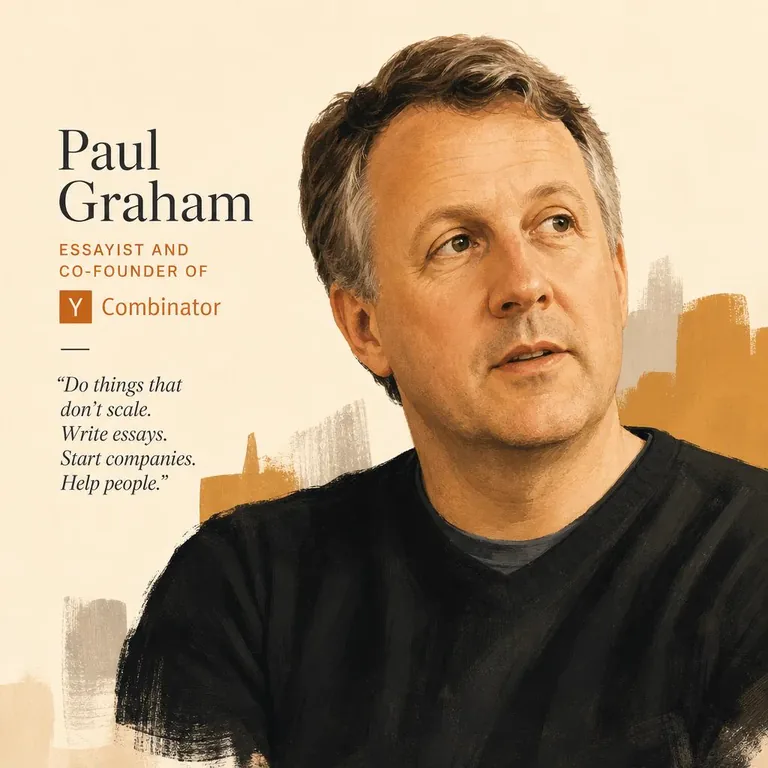
The programmer-essayist who invented modern startup investing — turning a Lisp-fueled hacker's worldview into Y Combinator and a body of essays that became the operating manual for two decades of founders.
Read Journey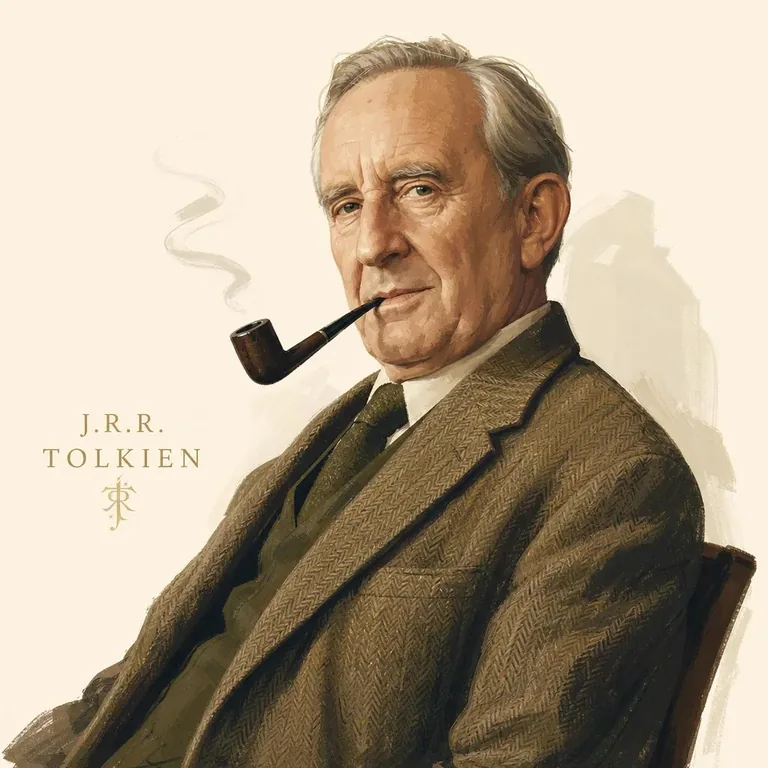
Invented languages first, then the world they would be spoken in — and proved that a single Oxford philologist, working evenings for forty years, could create the mythology a country didn't know it was missing.
Read Journey
An editor at Random House who wrote her first novel before work in the early morning hours — and ended up rewriting the American literary canon and winning every major prize a writer can win.
Read Journey
A British-American director who self-financed his first feature on weekends, won the right to make IMAX-scale event films on his terms, and proved that mainstream audiences will pay full price for ambitious ideas.
Read Journey
Writers, directors and authors who built worlds readers and viewers refuse to leave. The craft of carrying an audience through a thousand pages or three hours of darkness.
Open Collection
Co-founder of Canva
Teaching yearbooks in Perth that grew into a design tool for a billion people — proof that patient founders win the long game.
Open Journey