Philology
MasteredDeep mastery of Old English, Old Norse, Middle English, Gothic, and Finnish.
How it developed
Decades of Oxford scholarship and editorial work.
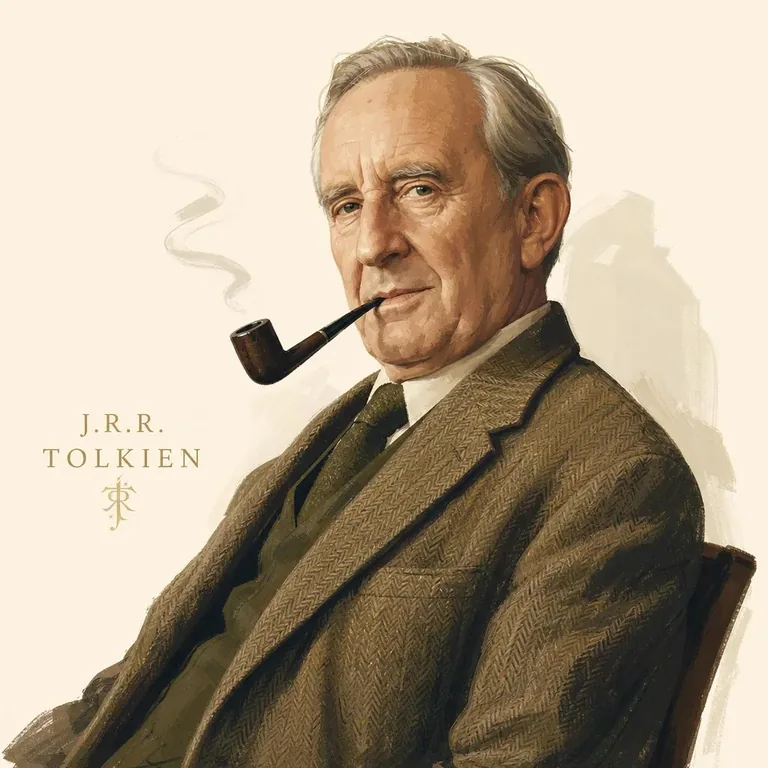
Philologist; Professor; Author of 'The Lord of the Rings'.
Invented languages first, then the world they would be spoken in — and proved that a single Oxford philologist, working evenings for forty years, could create the mythology a country didn't know it was missing.
Every story has the highlights. This is the boring middle, the doubts, and the moments that quietly changed everything.
Family moved to England when he was three after his father died in South Africa.
Lost both parents by age twelve.
Imagination is sometimes built on the absence of the people who would have shared it.
Fell in love at sixteen; his guardian forbade contact until he turned twenty-one.
Forced separation from the woman who would become Lúthien.
Forced patience can become the mythology of a love.
Read Classics, then switched to English Language and Literature.
Choosing philology over the more prestigious classics track.
Follow the field that makes you forget the time.
Joined the Lancashire Fusiliers as Britain entered World War I.
Reconciling academic life with imminent trench warfare.
The catastrophe doesn't wait for the right moment in your career.
Served as battalion signals officer; lost most of his close friends in the war.
Witnessing industrial slaughter on a scale his generation didn't have language for.
Direct experience of horror becomes the unspoken backbone of every later page.
Recovering from trench fever, started writing 'The Fall of Gondolin' — the seed of Middle-earth.
Inventing a mythology while recovering from a war and grieving lost friends.
The work that matters most often begins in convalescence.
First academic post; co-edited a definitive edition of 'Sir Gawain and the Green Knight.'
Establishing scholarly credibility while privately constructing Quenya.
Day-job rigor funds the private projects.
Returned to Oxford as one of the youngest professors in the university's history.
Defending philology against modern English studies' rising influence.
Old disciplines need confident, modern defenders.
Informal Oxford literary group with C.S. Lewis and others; read drafts aloud weekly.
Sustaining a writing practice with no external deadline.
Find the small group that takes your unfinished work seriously.
Originally a children's tale told to his own children; became an unexpected bestseller.
Reconciling academic dignity with a successful children's book.
Don't be embarrassed by the work the audience actually loves.
Allen & Unwin asked for a Hobbit sequel; the project took 17 years.
Writing a long-form mythology around academic duties and family life.
Generational books are completed evenings, not weekends.
First volume of the trilogy released after years of revision and publisher negotiation.
Publishers wanted a single book; he insisted on three volumes.
Defend the structural choices the work requires.
Left 'The Silmarillion' unfinished; son Christopher would spend the next 47 years editing the legendarium.
Trusting another generation with the unfinished work.
A literary legacy outlives you only when someone else loves it as you did.
Skills aren't talents — they're the residue of a thousand decisions. Here is what compounded over a lifetime.
Deep mastery of Old English, Old Norse, Middle English, Gothic, and Finnish.
Decades of Oxford scholarship and editorial work.
Invented Quenya and Sindarin with full phonology, grammar, and historical evolution.
Started in his teens; refined for sixty years.
Built Middle-earth with consistent history, geography, races, and cosmology.
Treated worldbuilding as scholarship; cross-referenced his own appendices obsessively.
Spent 17 years writing 'The Lord of the Rings' in evenings around teaching and family.
Inklings accountability plus a refusal to release until ready.
Wrote with the conviction that England lacked its own mythology and he could supply one.
Lifelong reading of Norse, Finnish, and Celtic mythology.
Held Oxford audiences with dramatic recitations of Beowulf in the original Old English.
Decades of teaching in tutorial and lecture format.
Sustained intellectual friendships (Lewis, the Inklings) that anchored his writing.
Weekly group readings for two decades.
No journey is a straight line. The setbacks weren't detours — they were the route.
Spent 60 years on the foundational mythology and never published it himself.
Son Christopher edited and published it in 1977 and another decade of derivative volumes.
Some bodies of work are deliberately too large for one lifetime.
Three of his four closest school friends died in WWI.
Channelled the grief into Frodo's path through the Dead Marshes and the broader theme of loss.
Grief becomes mythology when you don't deny it.
Allen & Unwin balked at three volumes; Collins refused the manuscript altogether.
Held firm on structure; A&U eventually published all three volumes.
Defend the work's shape even against the publisher you trust.
Critics dismissed LOTR as escapist fantasy through the 1950s and 60s.
Audience took the work seriously across generations; criticism caught up.
Audience verdicts outlast critical fashion.
The books on the shelf, the people they studied, the ideas they kept returning to.
J.R.R. Tolkien
His central work; modern fantasy's foundational text.
J.R.R. Tolkien
Children's tale that became the gateway to Middle-earth for generations.
J.R.R. Tolkien (ed. Christopher Tolkien)
The foundational mythology, published posthumously.
J.R.R. Tolkien
His essay on the moral and imaginative function of fantasy.
J.R.R. Tolkien
Landmark lecture that reshaped Beowulf scholarship for the 20th century.
Tolkien & Humphrey Carpenter (ed.)
Indispensable companion to his methods, intentions, and theology.
Interviews, keynotes, talks, and documentaries — chosen for the moments that reveal how they actually thought.
The bets that, made differently, would have written a different life.
AI-distilled takeaways, sorted by who you are and what you're building toward.
Treat invented languages, maps, and chronologies with academic rigor; readers feel the difference.
LOTR was written evenings around teaching and family for 17 years.
The Silmarillion's incompleteness didn't diminish its influence; intention did.
Philology over Classics changed his life — and English literature with it.
Weekly readings to a small group accountable readers can sustain decades of work.
Cultures starve without stories; build them deliberately if your nation lacks them.
WWI losses are everywhere in Middle-earth; named and dignified, not denied.
The questions most people have after studying this life. Tap one — every answer is built from J.R.R. Tolkien's own timeline, decisions, books, and lessons on this page.
Adjacent journeys, a collection that frames the craft, and one pick from a different world.
An editor at Random House who wrote her first novel before work in the early morning hours — and ended up rewriting the American literary canon and winning every major prize a writer can win.
Read Journey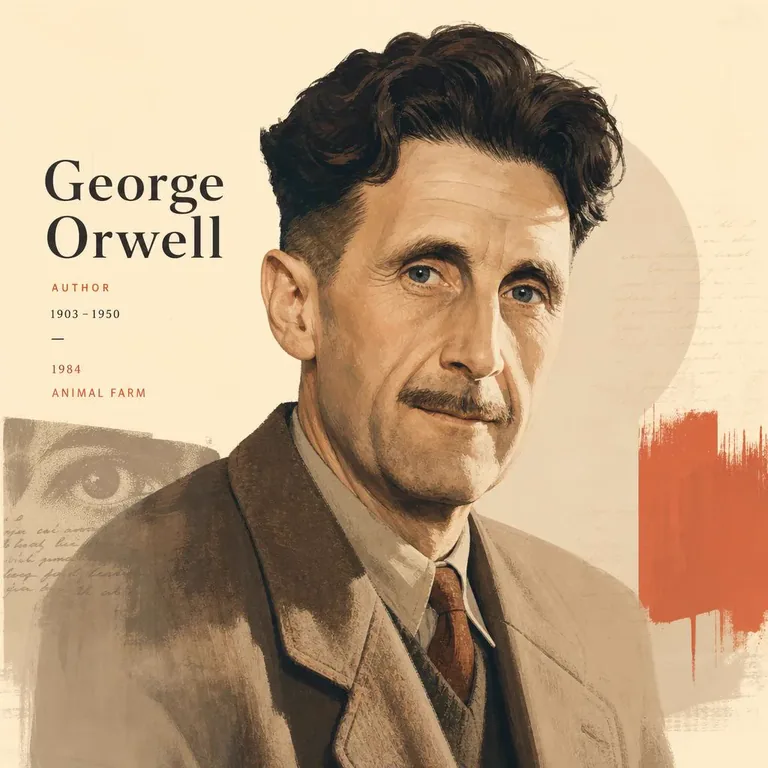
Turned every political compromise he refused — empire, fascism, Soviet apologism, sloppy English — into prose so plain it became permanent. Wrote two novels that named two centuries of authoritarianism.
Read Journey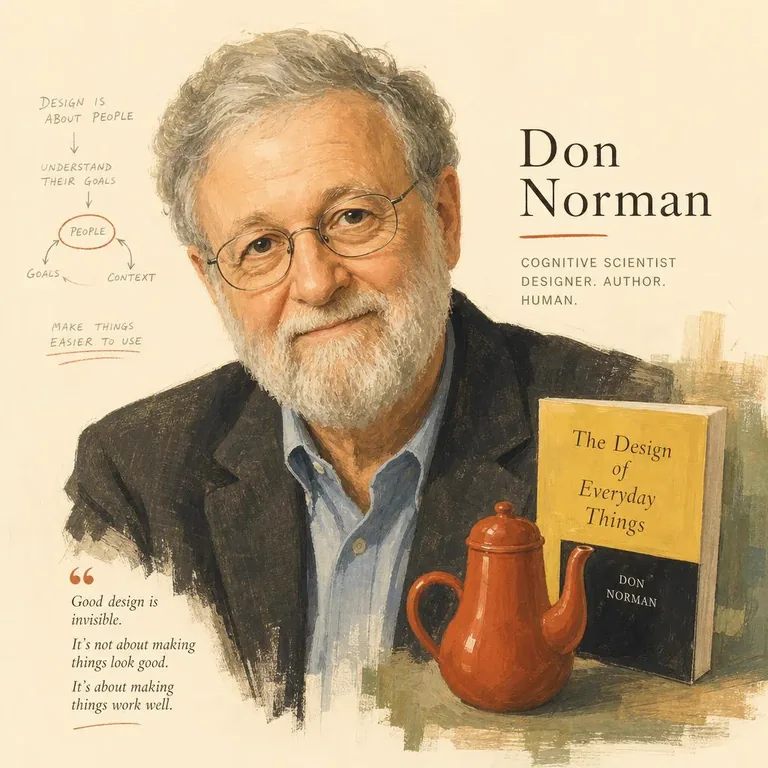
Coined 'user experience' and built the field — by insisting that confusing doors and broken stovetops were design failures, not user failures, and that cognition is what design actually serves.
Read Journey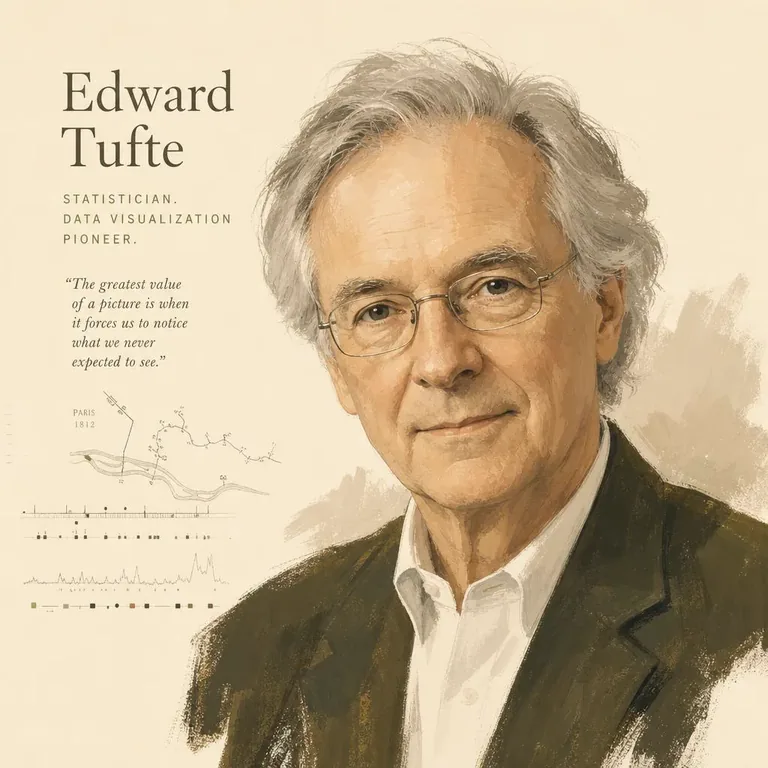
Treated charts as a form of moral seriousness — taught a generation that bad visualizations don't merely confuse, they kill, and built the standards that distinguish honest evidence from decorated noise.
Read Journey
Writers, directors and authors who built worlds readers and viewers refuse to leave. The craft of carrying an audience through a thousand pages or three hours of darkness.
Open Collection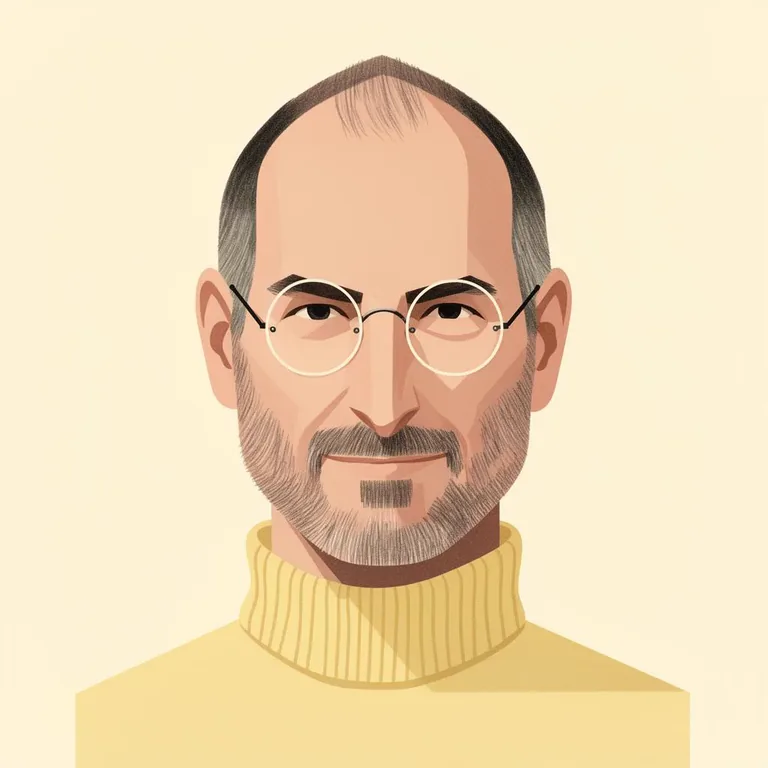
Co-founder of Apple
One of the most influential product visionaries in history — a relentless editor of ideas who insisted technology should feel human.
Open Journey