Long-Term Thinking
MasteredOperates on 5–7 year decision horizons in a quarterly world.
How it developed
Refused to give EPS guidance from year one and wrote multi-decade shareholder letters.
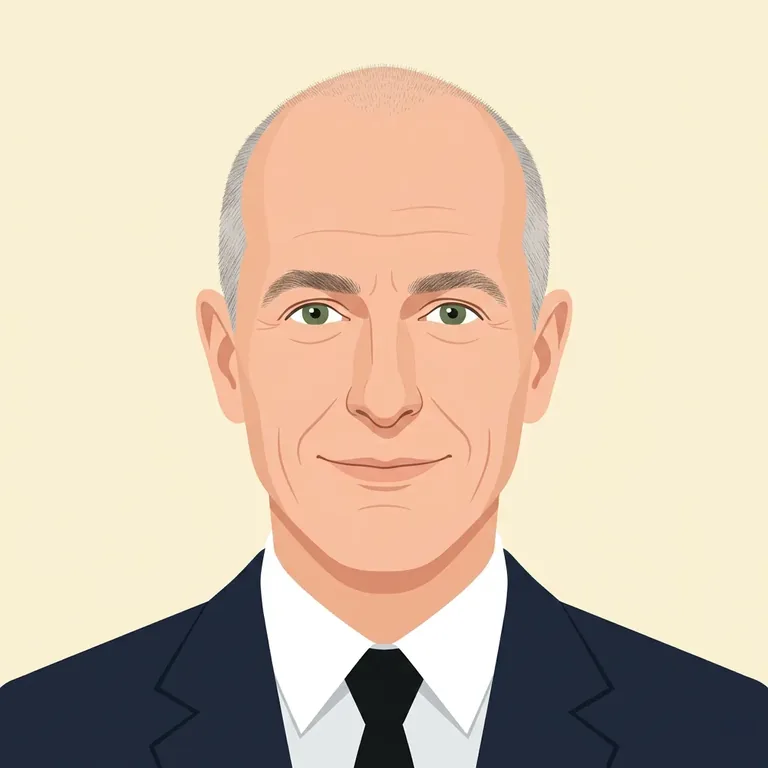
Founder of Amazon.
A hedge-fund quant who quit Wall Street to sell books out of a garage and ended up rewiring global commerce, logistics, and cloud computing around one obsession: the customer.
Every story has the highlights. This is the boring middle, the doubts, and the moments that quietly changed everything.
Raised partly by his Cuban-immigrant stepfather Miguel Bezos; spent summers on his grandfather's Texas ranch fixing windmills and machinery.
Constantly moved as a child and had to keep starting over socially.
Hands-on tinkering teaches you that almost everything is fixable if you take it apart slowly.
Switched from physics after realizing the top theoretical physicists were operating at another level.
Letting go of a childhood dream of being a physicist.
Comparative advantage is a better filter than passion alone.
Became the youngest senior VP at one of Wall Street's most quantitative firms; ran exotic-arbitrage groups.
Choosing finance over the engineering work he loved.
Time spent at a learning machine pays a dividend long after you leave.
Saw web usage growing 2,300% a year, wrote a list of 20 categories, and chose books. Drove to Seattle with MacKenzie writing the business plan in the passenger seat.
Walking away from a guaranteed year-end bonus to sell books online.
Use a regret-minimization framework — project to age 80 and pick what you won't regret.
IPO'd 18 months after launch at $18 a share; first shareholder letter introduced 'Day 1' and the long-term operating model.
Convincing public markets to underwrite years of unprofitability.
Write the operating philosophy down on year one — it compounds for decades.
Stock fell from $107 to $6; convertible debt holders began circling.
Cutting headcount while staying invested in long-bet infrastructure.
Survive the crash and the surviving competitors are gone.
Saw internal teams reinventing infrastructure and decided to externalize it as a platform.
Asking retail-trained leaders to build a developer business.
Inside-out platforms beat outside-in ones because they're battle-tested first.
Took four years of secret hardware work to free books from paper.
Cannibalizing Amazon's own bookstore business.
If you don't cannibalize yourself, someone else will.
Personal $250M purchase; reframed the Post as a national digital paper.
Restoring credibility to a declining institution under public scrutiny.
Sometimes you buy an institution because the country needs it to exist.
Became the second US company to reach the milestone; AWS now an enterprise standard.
Managing the regulatory and political weight that comes with scale.
Scale is a tax; the only deduction is staying focused on customers.
Handed Amazon to Andy Jassy and refocused on Blue Origin, the Bezos Earth Fund, and the Day 1 Fund.
Letting go of the company he'd defined for 27 years.
Founders should leave while the institution still has its energy.
Skills aren't talents — they're the residue of a thousand decisions. Here is what compounded over a lifetime.
Operates on 5–7 year decision horizons in a quarterly world.
Refused to give EPS guidance from year one and wrote multi-decade shareholder letters.
Banned PowerPoint for six-page memos; meetings start with 20 minutes of silent reading.
Decade-plus discipline of authoring every shareholder letter himself.
Decomposes problems to physics-level building blocks before applying analogies.
Trained at Princeton physics and refined at D.E. Shaw's quantitative culture.
Personally reviewed metrics dashboards weekly; could quote conversion rates by category.
Treated Amazon's S-Team weekly review as his real classroom.
Created the 'bar raiser' role to ensure every hire raised the average.
Watched early teams degrade with mediocre hires and engineered the system to prevent it.
Reinvested every dollar of profit for two decades to build moats competitors couldn't price.
Modeled compounding from Buffett's letters; applied it to operating cash flow.
Distinguishes one-way and two-way doors; demands speed on the latter.
Codified after observing his own teams over-deliberate reversible choices.
No journey is a straight line. The setbacks weren't detours — they were the route.
Spent ~$170M building an Amazon-branded smartphone that flopped at retail.
Killed it within a year; the underlying voice team rolled into Alexa, which became Echo.
Even disastrous bets can produce the seed of the next category.
Amazon-backed delivery business that became the symbol of dot-com excess.
Wrote off the investment; absorbed the operational lessons into Amazon's own logistics.
External bets pay off in pattern recognition even when the equity goes to zero.
Two failed attempts to build an eBay competitor before Marketplace finally worked.
Re-architected as a seller platform integrated with Amazon listings.
If a strategy is right, the third execution often is the one that ships.
Faced regulatory friction and integration questions on the $8.5B deal.
Pushed through closing and folded MGM into Prime Video's slate.
Large acquisitions buy not just IP but a multi-year integration commitment.
The books on the shelf, the people they studied, the ideas they kept returning to.
Kazuo Ishiguro
Bezos calls it the book that taught him about regret and choices.
Sam Walton
Source of Amazon's frugality and customer-first operating culture.
Clayton Christensen
Used to justify cannibalizing Amazon's own businesses.
Jim Collins
Influence on Amazon's leadership-principles framework.
Jeff Bezos
His collected shareholder letters and speeches — the closest thing to his operating manual.
Interviews, keynotes, talks, and documentaries — chosen for the moments that reveal how they actually thought.
The bets that, made differently, would have written a different life.
AI-distilled takeaways, sorted by who you are and what you're building toward.
Watch what customers complain about today; competitors will copy you tomorrow either way.
Move fast on reversible choices and slow on the irreversible ones.
When the team picks the other path, throw your weight behind it without irony.
A rising tide hides early mistakes and rewards staying power.
Replace slide decks with prose memos and watch quality jump.
Optimize for what the business can compound, not what looks good this quarter.
The questions most people have after studying this life. Tap one — every answer is built from Jeff Bezos's own timeline, decisions, books, and lessons on this page.
Adjacent journeys, a collection that frames the craft, and one pick from a different world.

An Indian-American founder who built AngelList into the operating system for early-stage startups, and whose tweets and podcasts have become a generational manual for wealth, judgment, and happiness.
Read Journey
The Denny's busboy who bet thirty years on parallel computing — and turned a 1990s graphics card maker into the most strategically important company of the AI era.
Read Journey
An obsessive engineer betting on rockets, electric cars, and the impossible — applying first-principles thinking at planetary scale.
Read Journey
An Omaha paperboy who turned a failing New England textile mill into the world's most patient compounding machine, and along the way wrote the most-quoted shareholder letters in business history.
Read Journey
Builders who turned a stubborn idea into a company. Study the persistence, the pivot, and the boring middle that no pitch deck ever shows.
Open CollectionLeft the army at 29 with a resume that didn't translate and a network of people who had also just left. The transition took longer than the enlistment had implied.
Read StoryCo-founder of Apple
One of the most influential product visionaries in history — a relentless editor of ideas who insisted technology should feel human.
Open Journey