Capital Allocation
MasteredReinvested float and earnings across decades into compounding businesses.
How it developed
60+ years of practicing reinvestment as the primary CEO duty.
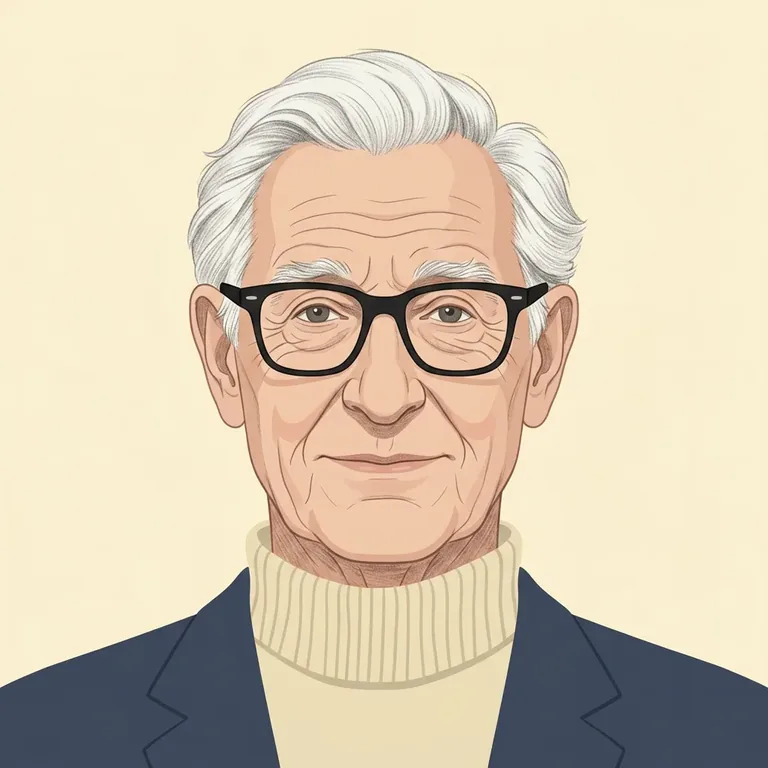
Chairman and CEO of Berkshire Hathaway.
An Omaha paperboy who turned a failing New England textile mill into the world's most patient compounding machine, and along the way wrote the most-quoted shareholder letters in business history.
Every story has the highlights. This is the boring middle, the doubts, and the moments that quietly changed everything.
Son of a stockbroker and congressman; bought his first stock at age 11.
Family money tight during the Depression.
An early relationship to scarcity shapes a lifetime relationship to risk.
Bought three shares with his sister Doris; sold too early and watched it triple.
Coping with his sister's frustration at the early sale.
Selling winners early is the most expensive mistake an investor makes.
Discovered Ben Graham's book and applied to Columbia Business School to study under him.
Getting accepted late after missing Wharton's preferred path.
One book at the right moment can redirect a career permanently.
Returned to Omaha with $174,000 from family and friends; charged no management fee.
Building credibility outside Wall Street.
Aligning incentives with limited partners pays decades of trust dividends.
Took control of a declining textile mill in New Bedford.
Inheriting a dying industrial business as his investment vehicle.
The vehicle matters less than the operator running it.
Voted out the existing CEO after a price disagreement on share buybacks.
Becoming a turnaround operator overnight.
Sometimes a bad business teaches you better lessons than a good one would.
Paid $25M for a confectioner generating $4M pre-tax — first 'wonderful business at a fair price.'
Overpaying by Graham standards.
Quality compounds; cheap stays cheap.
Spent $1.3B on Coca-Cola shares between 1988–94.
Holding through the early 90s slump.
The right holding period for a great business is forever.
Began annual transfers to the Gates Foundation and family foundations.
Redirecting a fortune at scale without disrupting beneficiaries.
Wealth distribution is a multi-decade operational job, not a single gift.
With Bill and Melinda Gates, asked billionaires to give majority of wealth.
Setting a public norm for peer billionaires.
Public pledges create accountability where private intentions don't.
Publicly named Abel as CEO-in-waiting for Berkshire.
Telegraphing the succession without disrupting operations.
Succession announced early lets the new operator earn legitimacy in advance.
Trimmed Apple stake and built record cash position before stepping back from annual letter authorship.
Resisting pressure to deploy capital into elevated markets.
Inactivity is a legitimate investment decision when prices are wrong.
Skills aren't talents — they're the residue of a thousand decisions. Here is what compounded over a lifetime.
Reinvested float and earnings across decades into compounding businesses.
60+ years of practicing reinvestment as the primary CEO duty.
Reads 500+ pages a day; can read a 10-K and reconstruct the business model.
Daily reading habit since childhood, codified through Graham's framework.
Holds through crashes; buys when others panic.
Lived through 1987, 2000, 2008 and 2020 as a buyer.
Authors annual shareholder letters in plain English.
Six decades of drafting them personally, often by hand.
Empowers operators with full autonomy after acquisition.
Refined over 90+ acquisitions where management stayed in place.
Worked with Charlie Munger for 60+ years; never wrote a competing fund.
Built around long-term partnerships rather than transactional ones.
No journey is a straight line. The setbacks weren't detours — they were the route.
Called it a $200B mistake to use a dying textile business as his vehicle.
Used the name as a holding company and built around it.
Even the headline-mistake can be re-framed into a long-term asset.
Paid $433M in Berkshire stock for a shoe company that went to zero.
Stock used as currency compounded — the real cost grew enormously.
Paying in equity at a discount is more expensive than paying in cash.
Avoided technology businesses for decades, citing his circle of competence.
Built Apple position in 2016 onward; admitted the misses publicly.
A discipline is also a constraint; revisit which businesses you can understand each decade.
The books on the shelf, the people they studied, the ideas they kept returning to.
Benjamin Graham
The book that taught him value investing.
Benjamin Graham & David Dodd
His investing reference text.
Warren Buffett
The most-quoted operating literature in modern finance.
Charles T. Munger
The mental-models companion volume to his investing playbook.
Philip Fisher
Shaped his bias toward quality businesses.
Interviews, keynotes, talks, and documentaries — chosen for the moments that reveal how they actually thought.
The bets that, made differently, would have written a different life.
AI-distilled takeaways, sorted by who you are and what you're building toward.
Build emotional rituals that let you act when markets panic.
Cash on the balance sheet is optionality, not laziness.
Smart and energetic without integrity is the worst combination.
Annual letters force you to update yourself in public.
Quality compounds; cheap mediocrity doesn't.
Stay in long partnerships — the dividends arrive decades later.
The questions most people have after studying this life. Tap one — every answer is built from Warren Buffett's own timeline, decisions, books, and lessons on this page.
Adjacent journeys, a collection that frames the craft, and one pick from a different world.
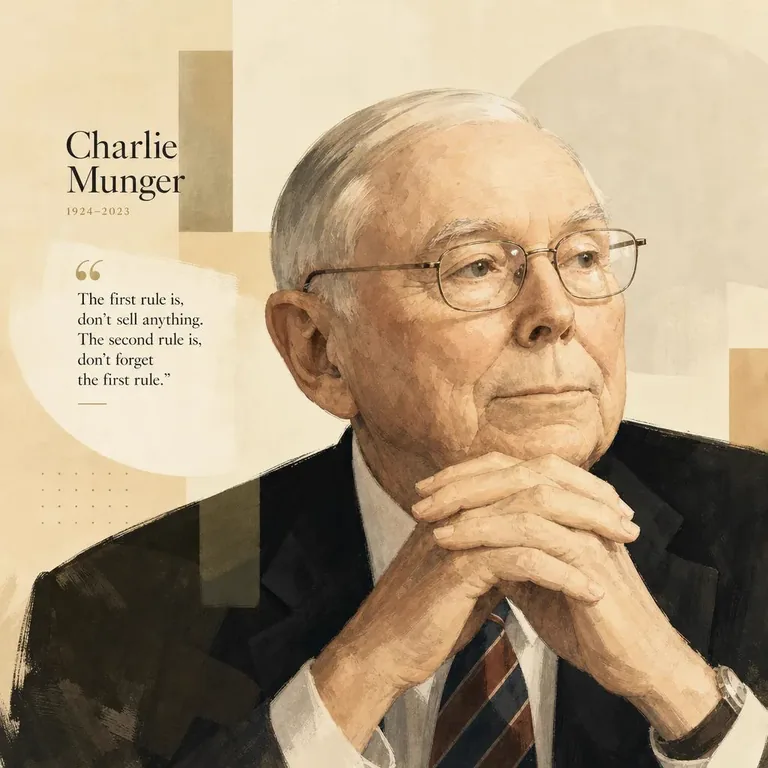
The intellectual sparring partner who turned Berkshire from a Graham-style cigar-butt shop into the world's most patient compounder — by insisting that great businesses, bought rarely, beat clever ones bought often.
Read Journey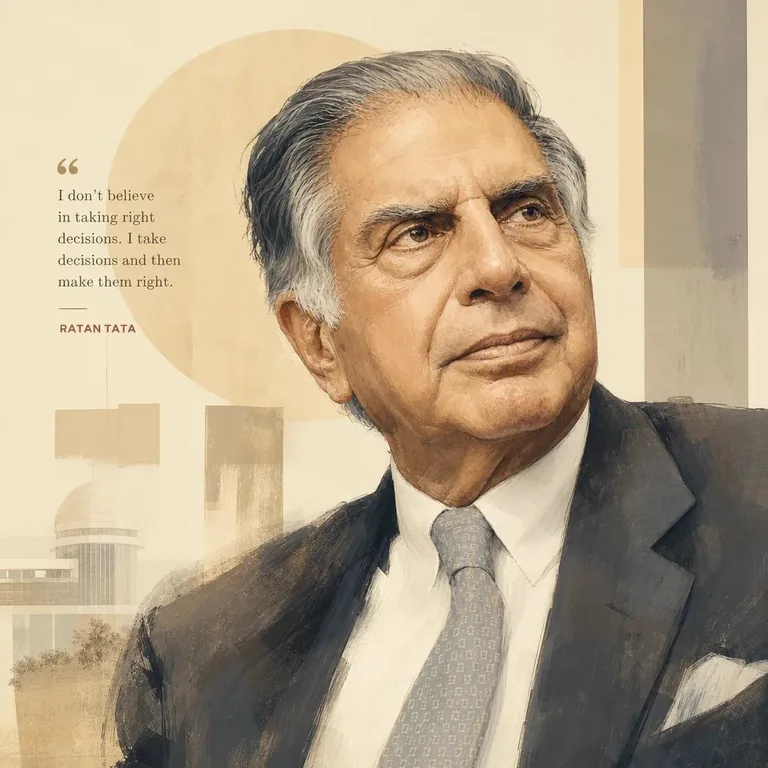
The quiet industrialist who took an aging family conglomerate and turned it into India's first true global corporation — acquiring Jaguar Land Rover, Tetley, and Corus while building the world's cheapest car.
Read Journey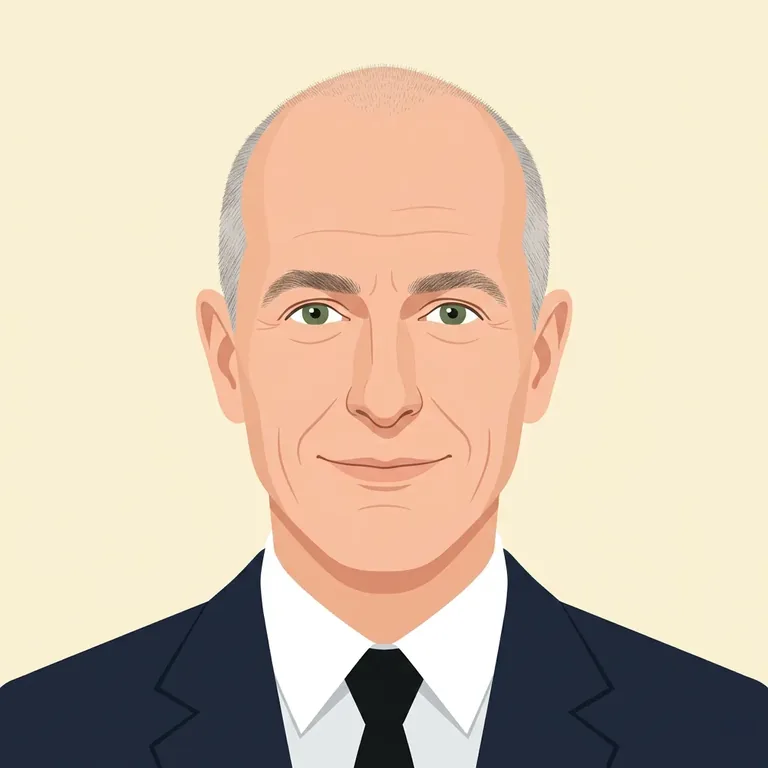
A hedge-fund quant who quit Wall Street to sell books out of a garage and ended up rewiring global commerce, logistics, and cloud computing around one obsession: the customer.
Read Journey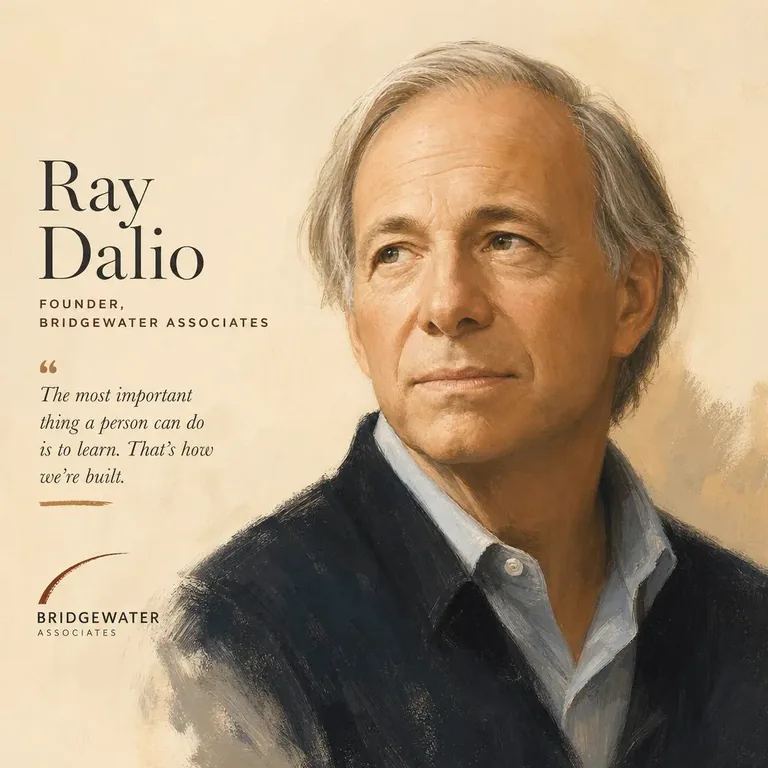
Built the world's largest hedge fund by codifying decision-making itself — turning radical transparency, idea meritocracy, and written principles into an operating system for thinking under uncertainty.
Read Journey
Capital allocators who treat investing as a craft of patience, judgment, and compounding — and rewrote the rules of how money is put to work.
Open Collection
Co-founder of Canva
Teaching yearbooks in Perth that grew into a design tool for a billion people — proof that patient founders win the long game.
Open Journey