Believability-Weighted Decisions
MasteredWeighted each contributor's input by their track record on that specific kind of question.
How it developed
Decades of tracking who was right about what at Bridgewater.
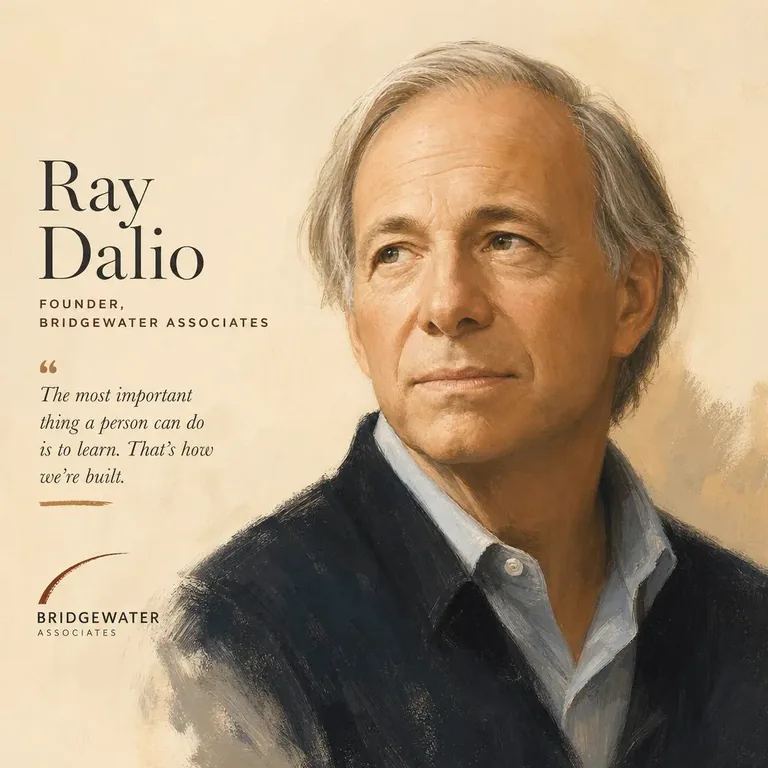
Founder, Bridgewater Associates.
Built the world's largest hedge fund by codifying decision-making itself — turning radical transparency, idea meritocracy, and written principles into an operating system for thinking under uncertainty.
Every story has the highlights. This is the boring middle, the doubts, and the moments that quietly changed everything.
Only child of a jazz musician father and a homemaker mother in a middle-class neighborhood.
No exposure to capital markets or finance growing up.
Curiosity is the great equalizer; you can teach yourself any game.
Used caddying money to buy Northeast Airlines because it was the only company he knew under $5; it tripled.
Mistook luck for skill in his first win.
Beginner's luck is the most expensive teacher.
Working on the NYSE floor he expected a crash; markets soared, teaching him history rhymes.
His textbook intuition was completely wrong about the policy response.
Study how the machine actually works, not how it's supposed to work.
Started as an institutional advisory shop after Harvard Business School, working out of his two-bedroom.
No capital, no clients, no track record.
Big things start as small consistent practices.
Publicly predicted a depression that never came; lost nearly everything and had to borrow $4,000 from his father.
Had to fire all his employees and start over alone.
Pain plus reflection equals progress. Arrogance is the enemy of survival.
Codified a separation of alpha (skill bets) from beta (market exposure) that became an industry standard.
Convincing institutions that the distinction mattered.
Clear frameworks compound — name the thing precisely.
Designed a portfolio engineered to perform across any economic environment using risk parity.
Selling a 'mediocre in every scenario' product to clients who wanted home runs.
Robustness beats optimization when you can't predict the regime.
Began circulating internal memos codifying decision rules; eventually 200+ pages used across the firm.
Writing publicly about disagreements and mistakes invited ridicule.
Document the rules so the next decision isn't argued from scratch.
Pure Alpha returned ~14% in 2008 while peers blew up; cemented Dalio's status as a macro oracle.
Resisting the consensus that subprime was contained.
Calculate the mechanics; ignore the narrative.
Bridgewater crossed $120B AUM, surpassing Paulson and Man Group.
Scaling culture as headcount passed 1,000.
Culture is the product; protect it as ruthlessly as the strategy.
Best-selling book and free PDF distilling four decades of operating rules into 600 pages.
Risking ridicule by publishing the inside of his head.
Your operating manual is more valuable shared than hoarded.
Began handing daily leadership to co-CIOs while remaining mentor and chairman.
Letting go of identity built around the firm.
The hardest part of building an institution is leaving it.
Transferred voting control to the board after a multi-year succession plan.
Watching the firm move in directions he wouldn't have chosen.
Succession done well looks like loss; done poorly looks like collapse.
Skills aren't talents — they're the residue of a thousand decisions. Here is what compounded over a lifetime.
Weighted each contributor's input by their track record on that specific kind of question.
Decades of tracking who was right about what at Bridgewater.
Treated every painful event as raw data; wrote down what happened, what was missed, and the rule going forward.
Forged after the 1982 blow-up that nearly ended his career.
Translated discretionary judgments into rules a computer could run, then back-tested across history.
Built Bridgewater's daily observations and indicator system over 40 years.
Recorded almost every meeting and made them searchable internally so debates could be replayed and learned from.
Implemented after realizing whisper networks were destroying decision quality.
Studied 500+ years of debt cycles to recognize regime shifts before markets priced them.
Self-taught economic history obsession that began in the 1970s.
Allocated by risk contribution rather than capital, so portfolios were truly diversified.
Decades of refining All Weather across multiple decades of data.
Made his thinking transferable through long-form principles, books, and animated videos.
Forced himself to write down rules before acting on them.
No journey is a straight line. The setbacks weren't detours — they were the route.
Publicly forecast a US depression on television; instead markets rallied for two decades.
Borrowed $4,000 from his father, rebuilt with fewer staff, and codified humility into his process.
Being confident is not the same as being right.
Press exposés portrayed Bridgewater's transparency as cult-like and brutal.
Doubled down on documenting principles in public and refining the tooling.
If your culture is misunderstood, explain it better — or change it.
Cycled through multiple CEOs (Jensen, McCormick, others) before transition stabilized.
Eventually moved to co-CIO model and gave up voting control.
Founders are the hardest succession variable to manage.
Vocal support for Chinese economic policy drew sharp criticism as relations deteriorated.
Continued to engage but moderated tone as geopolitical reality shifted.
Being early on a structural call doesn't excuse missing the political reaction.
The books on the shelf, the people they studied, the ideas they kept returning to.
Ray Dalio
The 600-page operating manual that distills four decades of decision rules.
Ray Dalio
His macro framework for the rise and fall of empires, currencies, and reserve status.
Ray Dalio
Free PDF dissecting the mechanics of 48 historical debt cycles.
Edwin Lefèvre
His introduction to the psychology of markets in his teens.
Will & Ariel Durant
Shaped his long-arc view that the same patterns repeat across centuries.
Burton Malkiel
Forced him to reconcile efficient markets with his own active edge.
Interviews, keynotes, talks, and documentaries — chosen for the moments that reveal how they actually thought.
The bets that, made differently, would have written a different life.
AI-distilled takeaways, sorted by who you are and what you're building toward.
True diversification means 15+ uncorrelated bets, not 15 stocks in the same regime.
Write down every painful event and the rule that prevents recurrence.
Weight inputs by believability — track record on the specific question.
Memorize history's debt cycles before forming opinions about today.
The cost of polite opacity is wrong decisions made twice.
Codify the rule once so the next argument is about edge cases, not first principles.
Confidence without mechanics is gambling dressed in adult clothes.
The questions most people have after studying this life. Tap one — every answer is built from Ray Dalio's own timeline, decisions, books, and lessons on this page.
Adjacent journeys, a collection that frames the craft, and one pick from a different world.
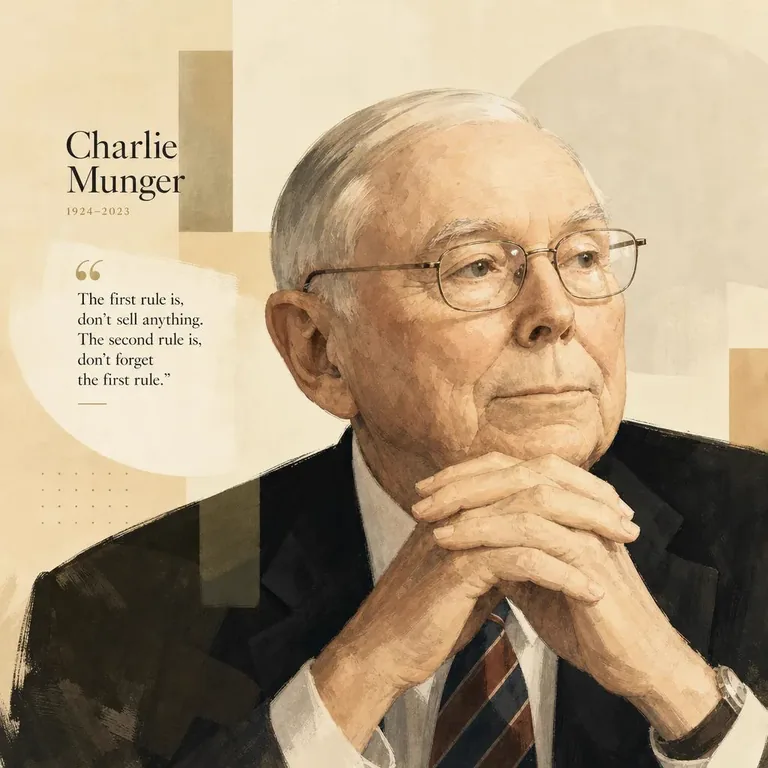
The intellectual sparring partner who turned Berkshire from a Graham-style cigar-butt shop into the world's most patient compounder — by insisting that great businesses, bought rarely, beat clever ones bought often.
Read Journey
An Omaha paperboy who turned a failing New England textile mill into the world's most patient compounding machine, and along the way wrote the most-quoted shareholder letters in business history.
Read Journey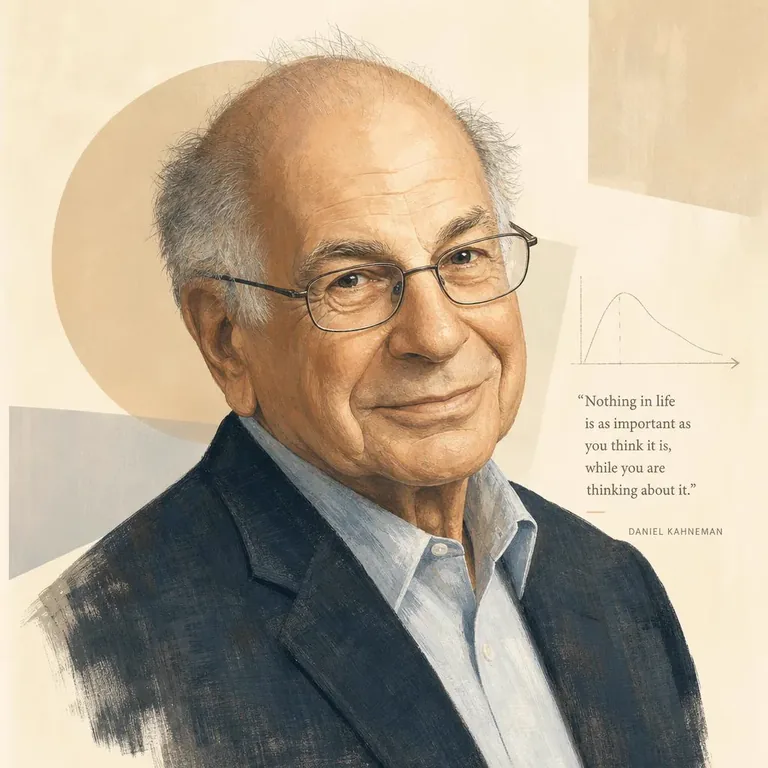
The psychologist who proved economists wrong about rationality — and gave the world a vocabulary for the two systems running in every human head.
Read Journey
A Compton, California prodigy coached by her father on public courts who became the most decorated tennis player of the Open era — and rewrote what a global athlete brand can look like.
Read Journey
Capital allocators who treat investing as a craft of patience, judgment, and compounding — and rewrote the rules of how money is put to work.
Open Collection
Co-founder of Apple
One of the most influential product visionaries in history — a relentless editor of ideas who insisted technology should feel human.
Open Journey