Platform Thinking
MasteredDesigns systems as thin, open protocols that others build on — not as feature-rich products.
Years of watching closed enterprise software collapse against open ecosystems; refined while designing the India Stack.
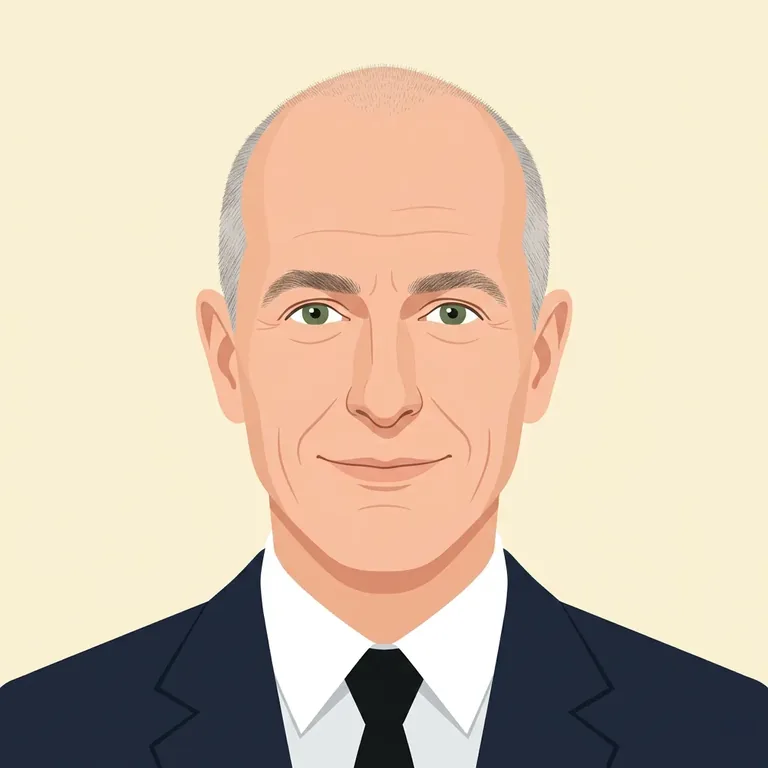
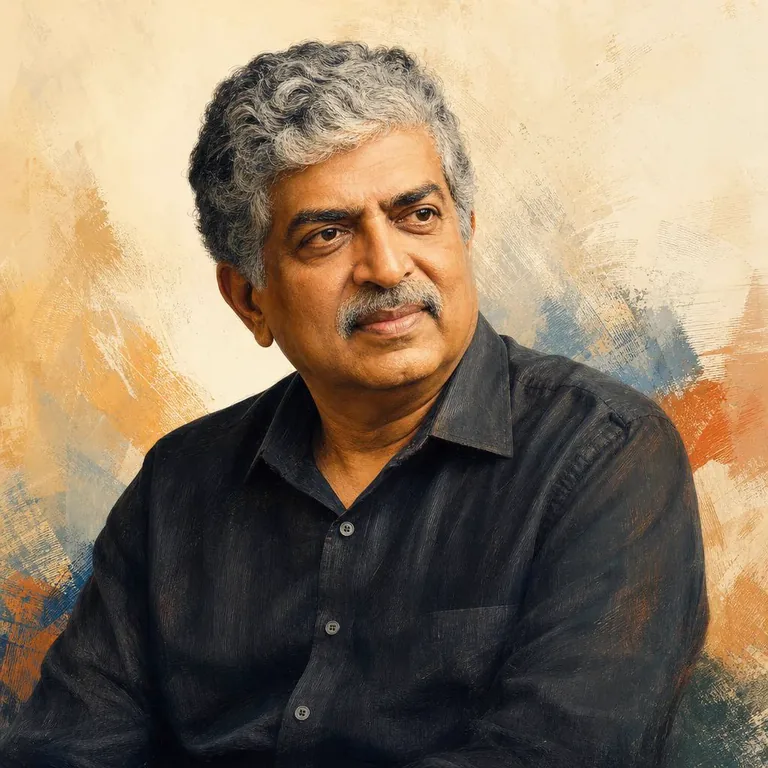
Co-founder, Infosys; Architect of Aadhaar.
The technologist who built India's biggest IT company, then walked away to build the world's largest digital identity system — and proved a billion people could be brought online without a credit card.
Every story has the highlights. This is the boring middle, the doubts, and the moments that quietly changed everything.
Son of a manager at Mysore Minerals; raised in a middle-class Konkani family that prized education.
A comfortable but constrained childhood with no obvious path to entrepreneurship.
Curiosity travels further than circumstance.
Discovered student politics, debating, and the wider world of ideas outside engineering.
Coming from a small-town school into one of India's most competitive institutions.
The classroom is half the education at any good college.
Met Narayana Murthy during his interview — Murthy became his first boss and lifelong partner.
Indian IT in 1978 was tiny, low-margin, and built on imported mainframes.
Your first boss matters more than your first company.
Seven engineers pooled ₹10,000 to start a software company in a one-room flat in Pune.
License Raj India made importing computers and exporting services nearly impossible.
Found with people whose values you'll still respect in thirty years.
When a buyer offered to acquire the struggling company, six of seven co-founders wanted to sell. Murthy and Nilekani held out.
Saying no to liquidity in a company that had barely survived a decade.
The hardest decisions are made when you have the least money.
First Indian company to list on NASDAQ; the IPO turned Indian software services into a global asset class.
Convincing US investors that a Bangalore company could run mission-critical systems for the Fortune 500.
Credibility compounds — show up at the harder venue once and the easier ones open.
Took over from Murthy in a planned succession; doubled revenues in five years.
Stepping out of a founder's shadow while keeping his trust.
Inheritance is a position. Authority is built one decision at a time.
Quit Infosys at the peak of his corporate career to build a free digital identity system for every Indian.
Leaving a $30B company for a government office with a 12-person team.
The biggest leverage in mid-career is the willingness to start over.
A tribal woman named Ranjana Sonawane received India's first 12-digit Aadhaar number.
Convincing skeptics that biometric enrolment of a billion people was feasible at all.
Start with the hardest user, not the easiest. If the system works for them, it works.
Contested as a Congress candidate against Ananth Kumar of BJP and lost by over 200,000 votes.
Discovering that competence and goodwill don't translate into votes.
Politics is its own craft. Mastery in one domain doesn't transfer.
Helped design UPI, eKYC, DigiLocker — the open APIs that now move ₹100+ trillion a year.
Convincing banks, regulators, and startups to build on shared public infrastructure.
Open protocols outscale proprietary platforms when the network matters more than the rent.
Came back after a boardroom crisis pushed out CEO Vishal Sikka; stabilised the company and the stock.
Walking back into a company changed beyond what he'd left behind.
You can go home again — but you bring back what you learned outside.
Aadhaar had become the world's largest digital identity system, embedded in every major Indian welfare and finance flow.
Sustaining public trust through ongoing privacy, exclusion, and design debates.
Digital public infrastructure is a generational project, not a launch.
Skills aren't talents — they're the residue of a thousand decisions. Here is what compounded over a lifetime.
Designs systems as thin, open protocols that others build on — not as feature-rich products.
Years of watching closed enterprise software collapse against open ecosystems; refined while designing the India Stack.
Speaks both the language of regulators and the language of engineers without losing precision in either.
Decades alternating between corporate boardrooms and government committee rooms.
Sets 10–15 year goals (a billion enrolments, a trillion-rupee UPI) and works back from them.
Internalised at Infosys, where every meaningful contract took 3–5 years to develop.
Pulled a 12-person UIDAI core team from across Infosys, IIT, and government — a 'volunteer army' on government salaries.
Years of recruiting at Infosys taught him that talent follows mission, not money, at the senior end.
Uses books, op-eds, and lectures to set policy agendas before regulators do.
Authored Imagining India and Rebooting India; learned that policy is downstream of public narrative.
Defended Aadhaar's privacy design publicly through years of Supreme Court scrutiny.
Forced into the role when activists and journalists turned Aadhaar into a national debate.
No journey is a straight line. The setbacks weren't detours — they were the route.
Ran as a Congress candidate; lost by 228,000 votes despite spending heavily and campaigning hard.
Returned to civic-tech work full time; wrote Rebooting India with Viral Shah within months.
Optionality is freedom. He had something to go back to — and went back without bitterness.
His co-founder Murthy publicly clashed with then-CEO Sikka over governance; the company hit a confidence crisis.
Returned as non-executive chairman, stabilised governance, oversaw a smooth CEO transition.
Founder-CEO relationships are fragile. Codify the rules of engagement in writing, early.
Years of reports of welfare denial due to biometric failures and ongoing court cases over data protection.
Continually engaged critics, supported privacy legislation, and revised consent architecture.
Public infrastructure must be argued about publicly. Defensiveness ages badly.
Took Infosys nearly a decade to find product-market fit; almost sold the company in 1990.
Held on through the 1991 reforms which unlocked Indian IT exports.
Macro tailwinds can take a decade to arrive. Survive long enough to catch them.
The books on the shelf, the people they studied, the ideas they kept returning to.
Nandan Nilekani
His 2008 manifesto — a roadmap for India's economic and technological future that previewed Aadhaar.
Nandan Nilekani & Viral Shah
Inside-the-room account of building Aadhaar and the lessons for digital governance.
Nandan Nilekani & Tanuj Bhojwani
On digital wellbeing and personal information management in an attention economy.
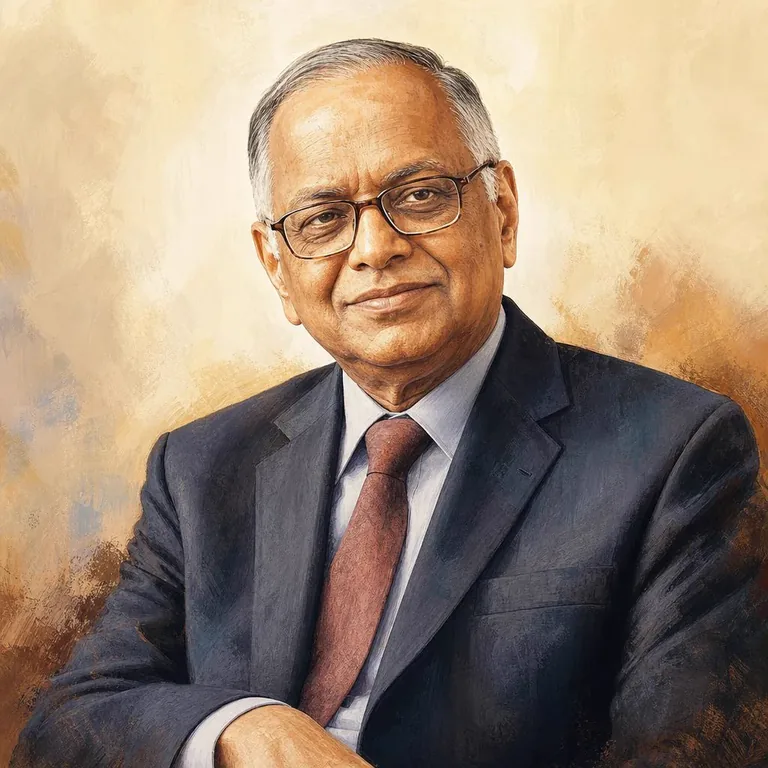
N.R. Narayana Murthy
His co-founder's parallel manifesto — required reading to understand the Infosys ethos.
Rob Kitchin & Martin Dodge
Theoretical scaffolding he often cites for how digital infrastructure reshapes physical life.
Interviews, keynotes, talks, and documentaries — chosen for the moments that reveal how they actually thought.
The bets that, made differently, would have written a different life.
AI-distilled takeaways, sorted by who you are and what you're building toward.
Aadhaar is an API. UPI is an API. Both scaled because they were thin layers others could build on.
Open protocols capture network value for the public; closed platforms extract it.
Government has the scale and the mandate. Product people bring the discipline of the user.
He left Infosys at the peak. The second act became the bigger story.
Once a billion people have a verifiable identity, every other public service gets cheaper.
You can ship the code in months. You earn the trust to use it in decades.
The questions most people have after studying this life. Tap one — every answer is built from Nandan Nilekani's own timeline, decisions, books, and lessons on this page.
Adjacent journeys, a collection that frames the craft, and one pick from a different world.

The socialist-turned-capitalist who founded Infosys with ₹10,000 from his wife's savings, ran it on a code of 'compassionate capitalism', and built the institution that proved Indian software belonged on the world stage.
Read Journey
A hedge-fund quant who quit Wall Street to sell books out of a garage and ended up rewiring global commerce, logistics, and cloud computing around one obsession: the customer.
Read Journey
One of the most influential product visionaries in history — a relentless editor of ideas who insisted technology should feel human.
Read Journey
Three air mattresses and a designer's eye that turned strangers into hosts — a founder who treats hospitality as a craft and product as the story.
Read Journey


Builders who turned a stubborn idea into a company. Study the persistence, the pivot, and the boring middle that no pitch deck ever shows.
Open Collection
Co-founder of Canva
Teaching yearbooks in Perth that grew into a design tool for a billion people — proof that patient founders win the long game.
Open Journey