Compassionate Capitalism
MasteredA discipline of generating wealth while treating every stakeholder — employees, customers, society — with dignity.
How it developed
Forged in the Bulgarian jail and refined through 40 years of building Infosys.
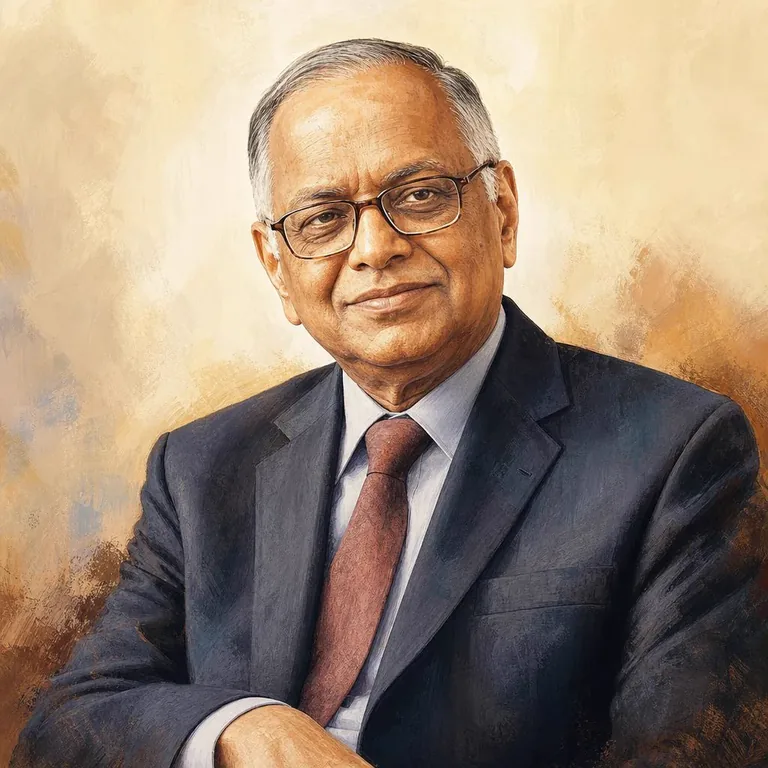
Founder, Infosys.
The socialist-turned-capitalist who founded Infosys with ₹10,000 from his wife's savings, ran it on a code of 'compassionate capitalism', and built the institution that proved Indian software belonged on the world stage.
Every story has the highlights. This is the boring middle, the doubts, and the moments that quietly changed everything.
Son of a schoolteacher in a Madhya-class Brahmin family of eight children. Money was tight and books were sacred.
Growing up in a household where there was no obvious path to entrepreneurship.
A teacher's home teaches you what's worth more than money.
Studied electrical engineering on scholarship; topped his class.
His father couldn't afford IIT fees, so he took the merit route.
Constraints are the cheapest education in discipline.
A young socialist on a hippie pilgrimage, he was thrown in a Bulgarian jail for chatting with a girl on a train. The experience converted him to capitalism.
Watching a state apparatus dehumanise ordinary people he believed Marxism was supposed to protect.
Ideologies are stories. Reality is the place those stories get tested.
Met Sudha Kulkarni (his future wife) and a young Nandan Nilekani. Worked on early Indian computing.
Indian computing in the 1970s was tiny, low-margin, and constrained by the License Raj.
The right colleagues are worth more than the right industry.
Co-founded Infosys with six engineers in his Pune apartment; Sudha's savings were the entire seed capital.
Starting a software company in a country where importing a computer required a ministerial sign-off.
Most great companies start when the rules say they can't.
Six of seven co-founders wanted to take the exit. Murthy said he'd buy them out instead. They stayed.
Holding the line in a near-bankrupt company.
Conviction is most expensive — and most valuable — when the cash isn't there.
The Manmohan Singh reforms removed the constraints that had nearly killed Infosys; the company finally got room to grow.
Pivoting from a survival mindset to a growth mindset in months.
Macro change is rare. When it arrives, double the speed of execution.
The IPO was undersubscribed and had to be bailed out by Morgan Stanley — but it crossed the line.
Public market scepticism about the long-term viability of Indian software services.
An undersubscribed IPO that gets done is still a successful IPO.
Listed on NASDAQ with a $1.7B market cap — an event that re-rated the entire Indian IT industry.
Convincing US institutional investors that Indian governance and disclosure could meet US standards.
Adopt the harder standard before someone asks you to.
Voluntarily transitioned at the height of his power — first of several planned successions he oversaw.
Letting go of operational control of a company he'd founded and saved.
Succession is the founder's last and most important product.
Officially stepped away from the company; founded Catamaran Ventures to back Indian startups.
Defining a post-Infosys life with the same intensity as the Infosys years.
Retirement is just the next project, named differently.
Came back when growth stalled and brought his son Rohan as executive assistant — a controversial move criticised as nepotism.
Reconciling personal succession with institutional values he'd publicly preached.
Even principled founders bend rules under pressure. The lesson is to notice when you do.
Handed over to Vishal Sikka as CEO; left the board entirely.
Admitting that the comeback hadn't delivered what he'd promised.
Owning a partial failure is harder — and more useful — than declaring a partial win.
Said young Indians should work 70-hour weeks to build the country; the comment ignited a national debate.
Speaking from a generation's lens about a generation that had different choices.
The advice that worked for you is not always the advice that works now.
Skills aren't talents — they're the residue of a thousand decisions. Here is what compounded over a lifetime.
A discipline of generating wealth while treating every stakeholder — employees, customers, society — with dignity.
Forged in the Bulgarian jail and refined through 40 years of building Infosys.
Pioneered US-GAAP reporting, board independence, and disclosure standards far ahead of Indian regulation.
Knew Infosys would be judged by the harder of two standards once it listed in the US.
Lived in a modest home, flew economy long after he was a billionaire, and demanded the same modesty from senior leaders.
From a teacher's-son upbringing; institutionalised at Infosys as a cultural cornerstone.
Wrote A Better India, A Better World, gave thousands of speeches; helped shape India's view of itself as a knowledge economy.
Learned that institution-building requires narrative as much as operations.
Built Infosys's training campus in Mysore — capable of inducting tens of thousands of fresh engineers a year.
Faced the reality that Indian engineering colleges produced volume, not consistency.
Resisted glamour, foreign vacations, lavish offices; protected the company's ethics from his own ego.
Personal practice from his Bulgarian conversion onward.
No journey is a straight line. The setbacks weren't detours — they were the route.
Six of seven co-founders voted to accept a $1M acquisition offer; he was the sole holdout.
Offered to buy the others out; they stayed; the company eventually went public for $1.7B.
Founder conviction sometimes has to outweigh team consensus.
Returned to revive growth and chose his son Rohan as executive assistant — a move criticised as undermining his own governance preaching.
Stepped down again, handed over cleanly to Vishal Sikka, accepted the criticism publicly.
Comebacks are harder than founding. Plan a clean exit before you begin one.
Suggested young Indians should work 70-hour weeks; the comment was widely criticised as out-of-touch with modern wellbeing concerns.
Defended the comment but acknowledged the generational gap in framing.
Generational advice doesn't always transfer. Update the framing or expect pushback.
After his comeback, he publicly clashed with Sikka over governance; Sikka resigned and Sikka's exit hurt the stock.
Nandan Nilekani returned to stabilise; Murthy stepped back from public commentary.
Founder commentary in public after handing over has compound risk.
The books on the shelf, the people they studied, the ideas they kept returning to.
N.R. Narayana Murthy
His manifesto of compassionate capitalism — values, governance, and the role of business in Indian society.
S. Hema
An institutional history of the founding and growth of Infosys, with deep access to the founders.
Nandan Nilekani
His co-founder's complementary vision for India's future — pairs naturally with Murthy's work.
Jim Collins & Jerry Porras
Cited often by Murthy as the framework that shaped how he thought about Infosys's long-term design.
Akio Morita
The Sony founder's autobiography — a model Murthy openly drew on for building an export-quality Indian brand.
Interviews, keynotes, talks, and documentaries — chosen for the moments that reveal how they actually thought.
The bets that, made differently, would have written a different life.
AI-distilled takeaways, sorted by who you are and what you're building toward.
US-GAAP, independent boards, employee stock — Infosys did all three before Indian law demanded any.
Lower personal burn buys you the freedom to make long-term decisions.
Compassionate capitalism is not charity — it is excellent work done with dignity.
If you can't plan an exit, you don't really own the company. The company owns you.
His Marxist convictions died in a Bulgarian jail. Hold beliefs lightly enough to update them.
Codify the rules of post-founder engagement before the founder leaves.
The questions most people have after studying this life. Tap one — every answer is built from N.R. Narayana Murthy's own timeline, decisions, books, and lessons on this page.
Adjacent journeys, a collection that frames the craft, and one pick from a different world.
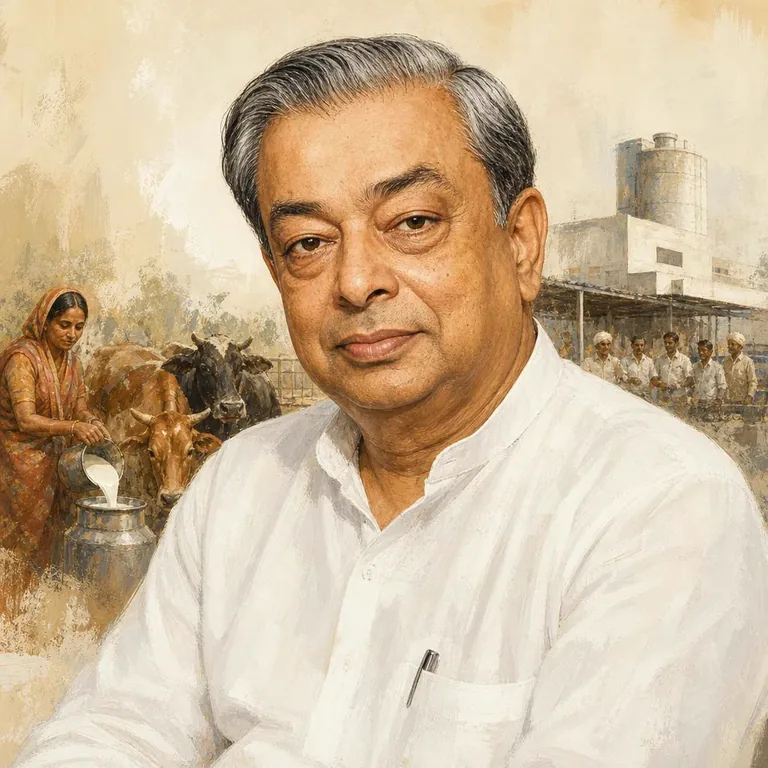
The engineer who turned India from a milk-deficient country into the world's largest milk producer — by handing the dairy back to the farmers who actually milked the cows.
Read Journey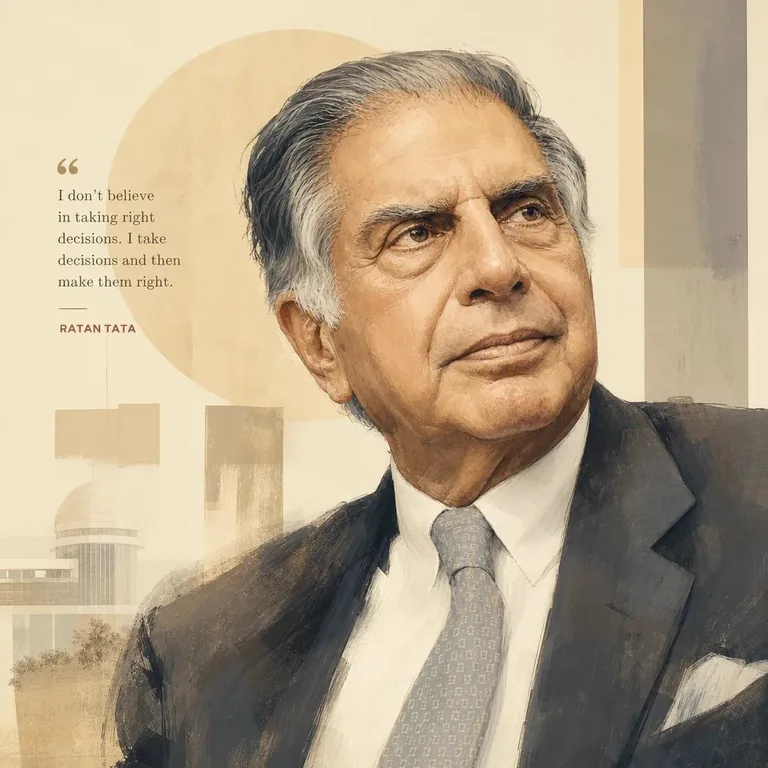
The quiet industrialist who took an aging family conglomerate and turned it into India's first true global corporation — acquiring Jaguar Land Rover, Tetley, and Corus while building the world's cheapest car.
Read Journey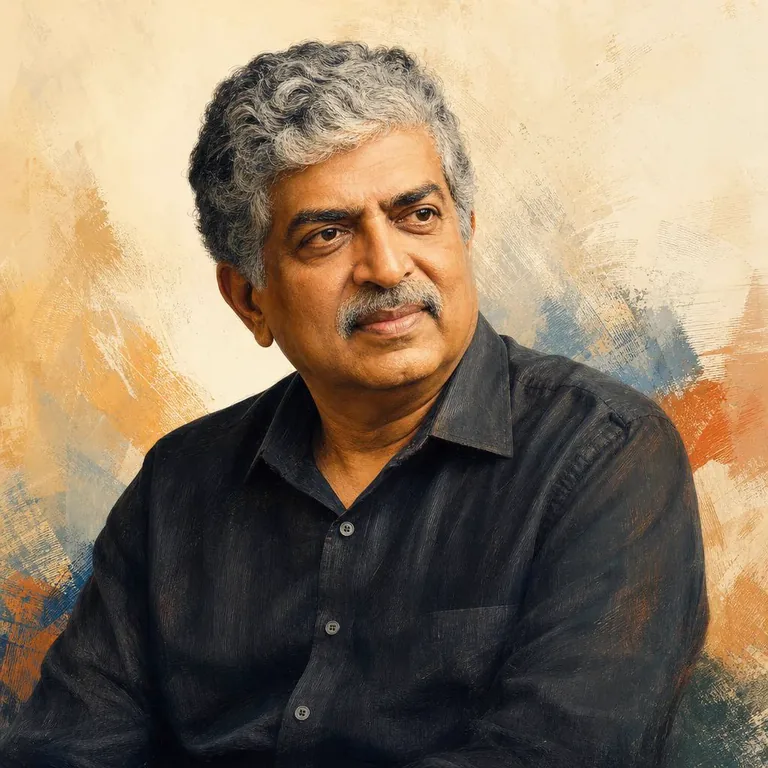
The technologist who built India's biggest IT company, then walked away to build the world's largest digital identity system — and proved a billion people could be brought online without a credit card.
Read Journey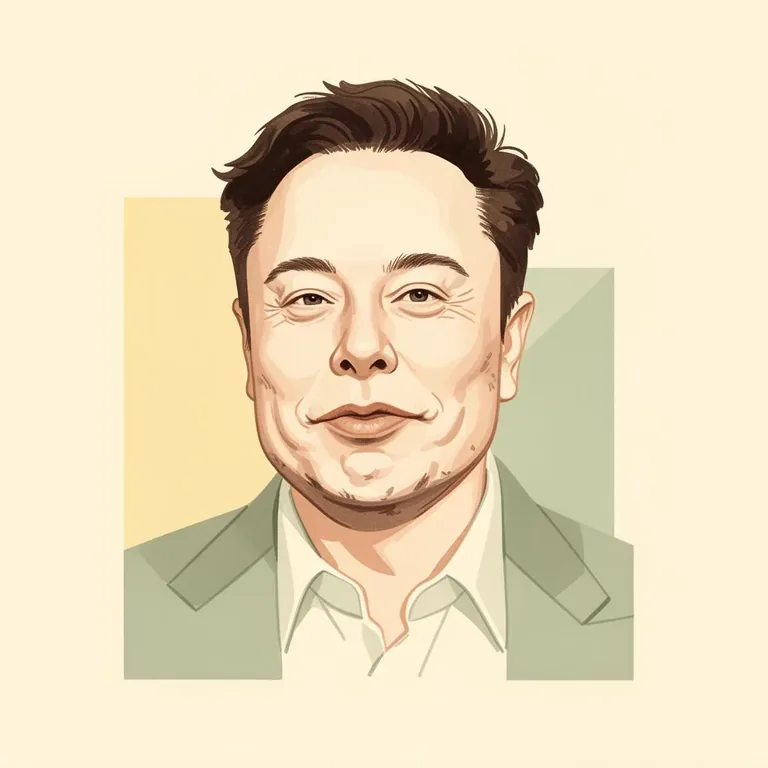
An obsessive engineer betting on rockets, electric cars, and the impossible — applying first-principles thinking at planetary scale.
Read Journey

Founders who were fired, rejected a hundred times, or three failed launches from bankruptcy — and the route they took back.
Open CollectionThree years building a tool nobody asked for, financed by my parents' savings. The post-mortem was harder than the shutdown.
Read StoryCo-founder of Airbnb
Three air mattresses and a designer's eye that turned strangers into hosts — a founder who treats hospitality as a craft and product as the story.
Open Journey