Observation
MasteredCould enter an organization, talk to a few dozen people, and surface its real operating logic in weeks.
How it developed
Two-year embed at General Motors taught him how to listen across hierarchical levels.
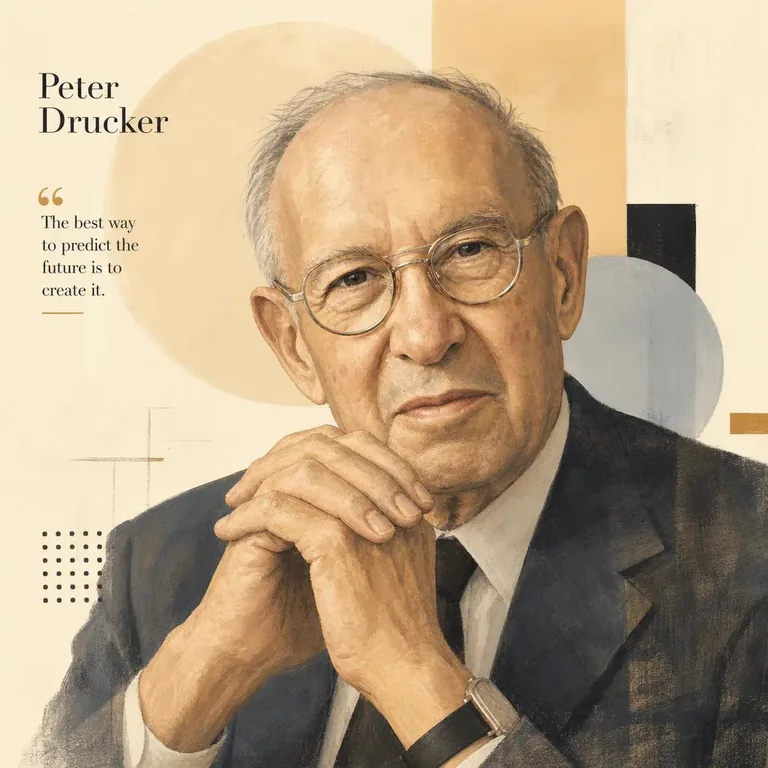
Father of Modern Management.
The Austrian-born consultant who invented management as a discipline — and spent 60 years teaching executives that the purpose of a business is to create a customer.
Every story has the highlights. This is the boring middle, the doubts, and the moments that quietly changed everything.
Raised in a household of Viennese intellectuals; Freud was a family acquaintance and Schumpeter a family friend.
Growing up in the collapsing world of Habsburg Vienna between two wars.
Witnessing institutions die shapes a lifelong question of what makes them work.
Published a paper critical of the Nazis that was burned by the regime; left for London the same year.
Starting over at 24 with no money, no language, and no professional standing.
Take the early signal seriously. Don't wait for things to get worse.
Married Doris Schmitz and moved to New York to write 'The End of Economic Man' on the rise of totalitarianism.
Building a writing career in his second language.
The outsider's eye is an analytical asset — keep it sharp.
Alfred Sloan gave him unprecedented access to study GM for two years — the basis for 'Concept of the Corporation.'
GM's leadership rejected most of his findings and refused to implement them.
Tell the truth even when the client doesn't want to hear it. It becomes your reputation.
The first serious book treating a business as an organization worth analyzing, not just a profit machine.
Inventing a field — management studies — that did not yet exist as a discipline.
If the discipline you need doesn't exist, write the founding text yourself.
Defined what managers actually do: set objectives, organize, motivate, measure, develop people.
Convincing executives that 'management' was a learnable skill, not innate talent.
Naming a practice precisely makes it teachable.
Predicted that the most valuable employees would be those who think for a living, not move things.
Most economists in 1959 still measured productivity by manual output.
Look at where value is moving, not where it currently sits.
Left NYU to start a graduate school of management at Claremont, where he taught for over three decades.
Building a serious institution in his 60s while still producing major books.
A long career compounds when each phase opens a new venue.
Recast entrepreneurship as a systematic discipline with seven sources of innovation, not a personality trait.
Pulling entrepreneurship out of the heroic-founder narrative.
What looks like inspiration is usually pattern-recognition you can teach.
At 90, wrote the most-read HBR article ever — a personal manual for managing your own career.
Distilling 70 years of executive coaching into 7,000 words.
The hardest person to manage is yourself. Start there.
Honored by President George W. Bush for foundational contributions to management thought.
Accepting institutional honors while staying intellectually independent.
Honors arrive late. Keep working as if they hadn't.
Worked nearly to the end; his final book 'The Effective Executive in Action' was published in his last year.
Building a body of work designed to outlive him by a century.
Real legacy is the practitioners who can't remember a time before your ideas.
Skills aren't talents — they're the residue of a thousand decisions. Here is what compounded over a lifetime.
Could enter an organization, talk to a few dozen people, and surface its real operating logic in weeks.
Two-year embed at General Motors taught him how to listen across hierarchical levels.
Connected economics, history, sociology, and political theory into one unified view of organizations.
A Viennese liberal-arts education followed by 60 years of cross-disciplinary reading.
Wrote management ideas in clear prose a working executive could apply Monday morning.
Years as a journalist before academia trained him to write for non-specialists.
Famous for asking 'What does your business actually do for the customer?' until executives genuinely answered.
Decades of consulting where the right question mattered more than any framework.
Built his pedagogy around real organizational dilemmas, not abstract principles.
Pioneered the executive seminar format that later spread through every business school.
Publicly admitted when his predictions were wrong and updated his frameworks.
Modeled on Schumpeter's habit of revising his own theories openly.
No journey is a straight line. The setbacks weren't detours — they were the route.
Wrote a candid book on GM that founder Alfred Sloan and the leadership team disliked enough to ignore his recommendations.
The book became a foundational management text and shaped Toyota's post-war operations even as GM stayed the same.
The right audience is rarely the one who hired you.
Underestimated the structural fragility of centrally planned economies in some early writing.
Updated his views and wrote sharply about the USSR's coming collapse a decade before it happened.
Reputations survive being wrong. They don't survive refusing to update.
His resistance to quantitative organizational research left him sidelined from much of academic management in the 1970s.
Outlasted the fashion; his qualitative case-based approach is again dominant in executive education.
Don't chase methodological trends. Bet on what executives actually need.
Wrote less about software's organizational implications than the moment demanded in the 1990s.
Made up for it with 'Management Challenges for the 21st Century,' which directly addressed knowledge networks and self-management.
It's never too late to update the canon. Write the missing chapter yourself.
The books on the shelf, the people they studied, the ideas they kept returning to.
Peter Drucker
The single most practical Drucker title — read by every serious executive coach.
Peter Drucker
Originally an HBR article; the highest-leverage 50 pages he ever wrote.
Peter Drucker
Systematized what most people treat as a personality trait.
Peter Drucker
The 1954 founding text that defined what a manager does.
Peter Drucker
The two-year GM study that started the field.
Timothy Devinney & Christopher Holt
A serious biographical reassessment placing him in 20th-century intellectual history.
Interviews, keynotes, talks, and documentaries — chosen for the moments that reveal how they actually thought.
The bets that, made differently, would have written a different life.
AI-distilled takeaways, sorted by who you are and what you're building toward.
Profit is the test of validity, not the purpose. Start from the customer.
Manage time first, contribution second, strengths third, priorities fourth, decisions last.
Know your strengths, your work style, your values. Place yourself where you contribute most.
Seven sources of innovation — work them systematically, don't wait for inspiration.
Weaknesses are constraints to design around, not flaws to fix.
Strategy is mostly about what to stop doing.
Pick metrics carefully — they will become the actual goals, whether you intended that or not.
The questions most people have after studying this life. Tap one — every answer is built from Peter Drucker's own timeline, decisions, books, and lessons on this page.
Adjacent journeys, a collection that frames the craft, and one pick from a different world.
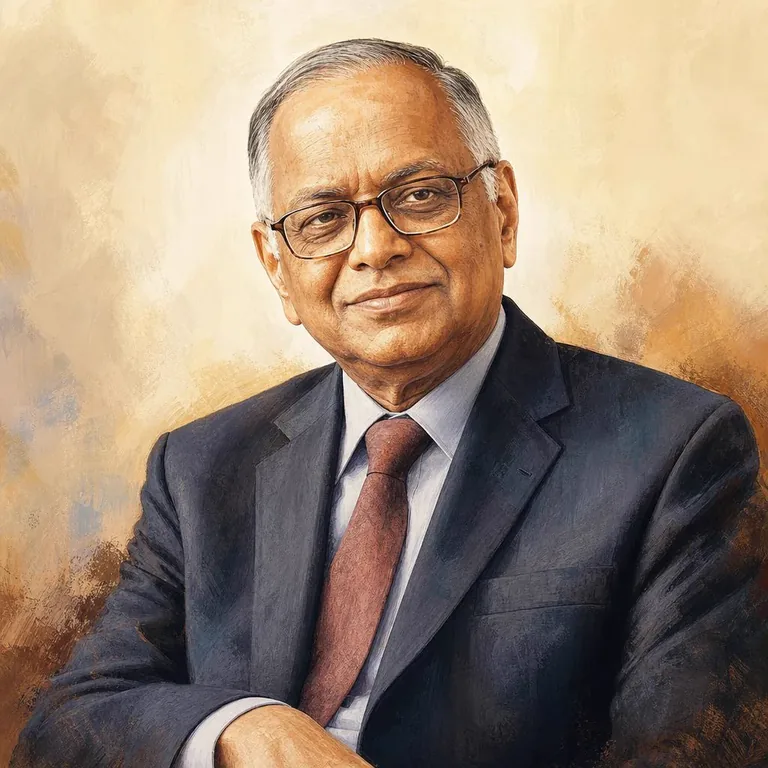
The socialist-turned-capitalist who founded Infosys with ₹10,000 from his wife's savings, ran it on a code of 'compassionate capitalism', and built the institution that proved Indian software belonged on the world stage.
Read Journey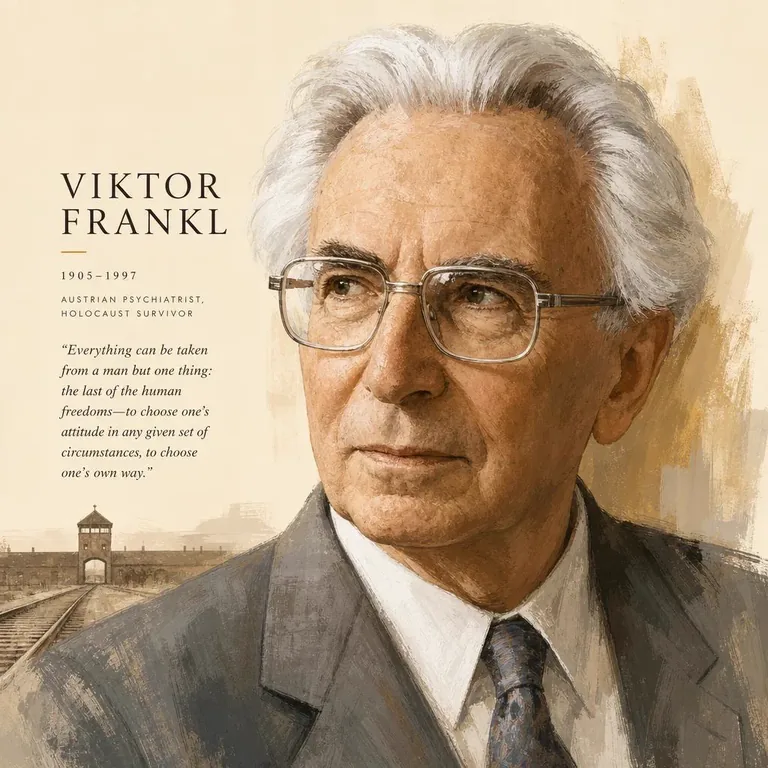
Survived four Nazi concentration camps, lost almost his entire family, and emerged with a psychology built on a single insight: meaning, freely chosen, is the human capacity even camps cannot take.
Read Journey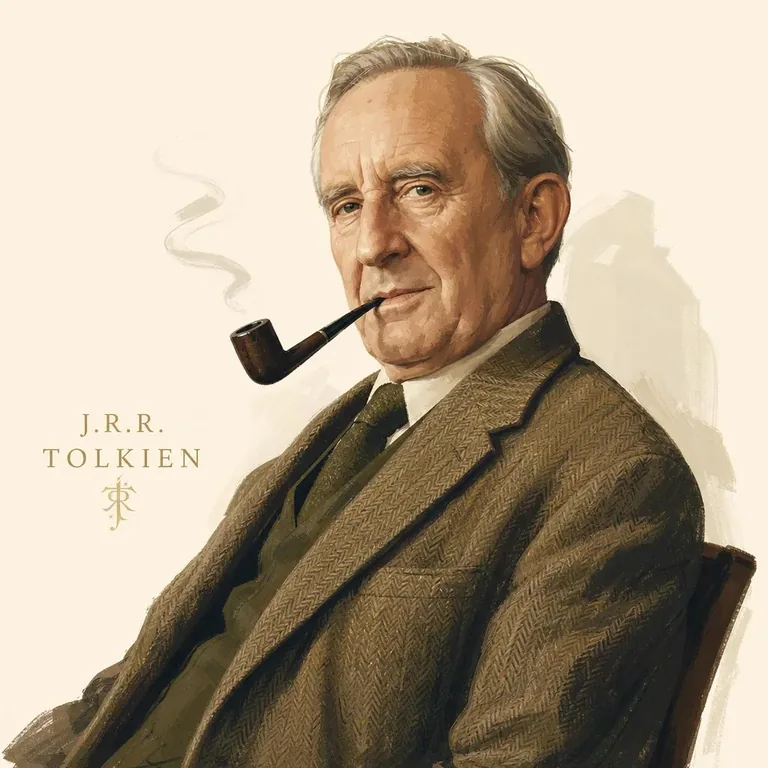
Invented languages first, then the world they would be spoken in — and proved that a single Oxford philologist, working evenings for forty years, could create the mythology a country didn't know it was missing.
Read Journey
An editor at Random House who wrote her first novel before work in the early morning hours — and ended up rewriting the American literary canon and winning every major prize a writer can win.
Read Journey