Clinical Listening
MasteredDiagnosed despair as a question of meaning, not just symptoms.
How it developed
Decades of suicide-prevention and post-war trauma practice.
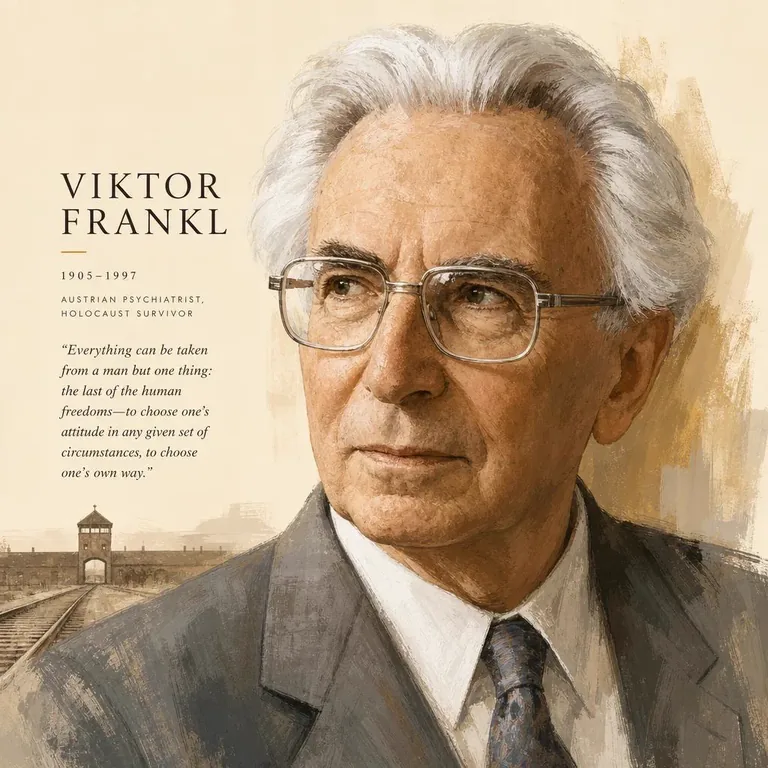
Psychiatrist; Founder of Logotherapy.
Survived four Nazi concentration camps, lost almost his entire family, and emerged with a psychology built on a single insight: meaning, freely chosen, is the human capacity even camps cannot take.
Every story has the highlights. This is the boring middle, the doubts, and the moments that quietly changed everything.
Son of a civil servant in a Jewish family; absorbed the intellectual ferment of pre-war Vienna.
Witnessed the empire's collapse and Austria's interwar instability.
A turbulent civic backdrop sharpens the questions that become a life's work.
As a teenager sent essays to Freud, who arranged publication in the International Journal of Psychoanalysis.
Working under the shadow of two competing schools — Freud and Adler.
Reach out to your heroes; they reply more often than students expect.
Studied neurology and psychiatry; broke with both Freud and Adler over the question of meaning.
Founding a new school in a city dominated by two giants.
Differentiate on the question your masters refuse to take seriously.
Treated 3,000+ women at risk of suicide; zero deaths during his tenure.
Building a system around meaning rather than medication.
Frameworks save lives at scale when applied with care.
Began formal articulation of logotherapy as a meaning-centered approach.
The Anschluss loomed; Jewish doctors faced shrinking practice rights.
Build the body of work before history forces you to defend it from memory.
Arrived with wife Tilly, parents, and brother; began secretly treating fellow inmates for despair.
Holding a clinical role while a prisoner himself.
Service is the strongest form of meaning under conditions you didn't choose.
Manuscript of his first book was sewn into his coat and confiscated on arrival.
Losing the formal record of his theory.
Hold ideas in mind first; manuscripts are downstream.
Survived four camps; learned afterward that his wife, parents, and brother had all been murdered.
Reconstructing a life with almost no surviving family.
Meaning is what carries you across the abyss when everything else is taken.
Dictated the manuscript on returning to Vienna; published anonymously at first.
Translating direct experience of mass atrocity into a usable framework.
Write the book only you can write — fast, before time domesticates the urgency.
Met his second wife at the Vienna Polyclinic where he became head of neurology.
Choosing life again after total loss.
Resuming a life is itself an act of meaning.
Codified logotherapy into a teachable system and trained thousands of clinicians.
Defending logotherapy against academic dismissal as 'pop psychology.'
Institutional position is necessary to keep a method alive across generations.
Drew massive audiences at universities and prisons; appeared on national television.
Translating European clinical language for American audiences.
A globally true idea still has to be re-staged for each culture.
Continued seeing patients and writing until the final year; 30+ books published in his lifetime.
Carrying the meaning of survival into a final decade.
Late-life work consolidates the framework for everyone who comes after.
Skills aren't talents — they're the residue of a thousand decisions. Here is what compounded over a lifetime.
Diagnosed despair as a question of meaning, not just symptoms.
Decades of suicide-prevention and post-war trauma practice.
Reframed unavoidable suffering as a chosen attitude rather than a fate.
Forged in the camps and tested with patients for fifty years afterward.
Wrote 'Man's Search for Meaning' in 9 days; eventually published 30+ books.
Trained as a Viennese intellectual where prose was a clinical instrument.
Held large auditoriums in silence with stories of survival and choice.
Hundreds of post-war lectures from Vienna to American campuses.
Built a structured therapeutic system around three sources of meaning — work, love, suffering chosen well.
Codified across decades of writing and teaching at the University of Vienna.
Remained clinical and observant even inside Auschwitz.
Treated each day in the camps as a laboratory for his theory.
Translated camp experience into language clinicians, patients, and readers could use.
Believed unshared insight is wasted insight.
No journey is a straight line. The setbacks weren't detours — they were the route.
Manuscript of 'The Doctor and the Soul' was sewn into his coat and confiscated on arrival.
Rewrote it after liberation; expanded with what he had learned in the camps.
Ideas you can rebuild from memory are the ones worth keeping.
Had a US visa but chose to stay so his elderly parents would not be alone.
Accepted the consequences; survived the camps with that choice as the framework.
Some decisions are meant to be lived with, not optimized away.
Many psychiatric establishments dismissed his work as religious or unscientific.
Built institutional credibility through his Vienna chair and clinical results.
Outsider methods need institutional anchors to survive a generation.
Later critics questioned the choices that allowed his survival in the camps.
Acknowledged the moral complexity without retreating from the work.
Survival under atrocity is not a clean moral position; honesty about that is the only defensible stance.
The books on the shelf, the people they studied, the ideas they kept returning to.
Viktor Frankl
His camp memoir and introduction to logotherapy; 16M+ copies sold.
Viktor Frankl
His foundational clinical text on logotherapy, rewritten after the war.
Viktor Frankl
His clearest theoretical statement on logotherapy's framework.
Viktor Frankl
Lectures given just months after liberation, published in English in 2020.
Viktor Frankl
Memoir covering his life from Vienna childhood to the camps and after.
Viktor Frankl
Essays on the 'existential vacuum' of modern life.
Interviews, keynotes, talks, and documentaries — chosen for the moments that reveal how they actually thought.
The bets that, made differently, would have written a different life.
AI-distilled takeaways, sorted by who you are and what you're building toward.
Circumstances dictate inputs; meaning is what you choose to do with them.
Symptoms are downstream of the question 'why?'
Reframe doesn't erase pain; it gives it structure.
Engagement at scale comes from shared meaning, not incentives.
Pursue meaning; success arrives sideways as a byproduct.
People who imagined a future task survived the camps at higher rates.
Augment the Statue of Liberty with a Statue of Responsibility on the West Coast.
The questions most people have after studying this life. Tap one — every answer is built from Viktor Frankl's own timeline, decisions, books, and lessons on this page.
Adjacent journeys, a collection that frames the craft, and one pick from a different world.
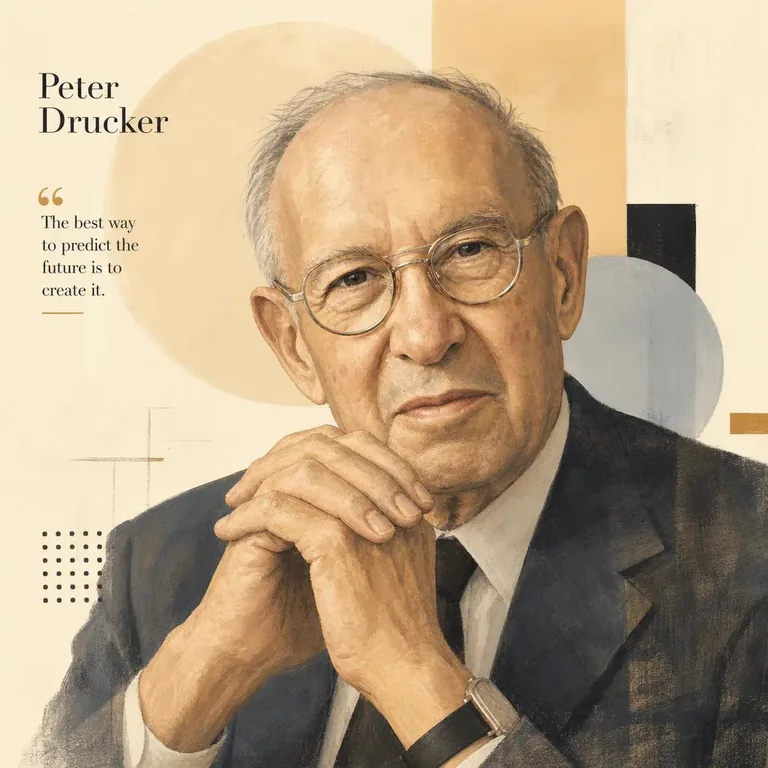
The Austrian-born consultant who invented management as a discipline — and spent 60 years teaching executives that the purpose of a business is to create a customer.
Read Journey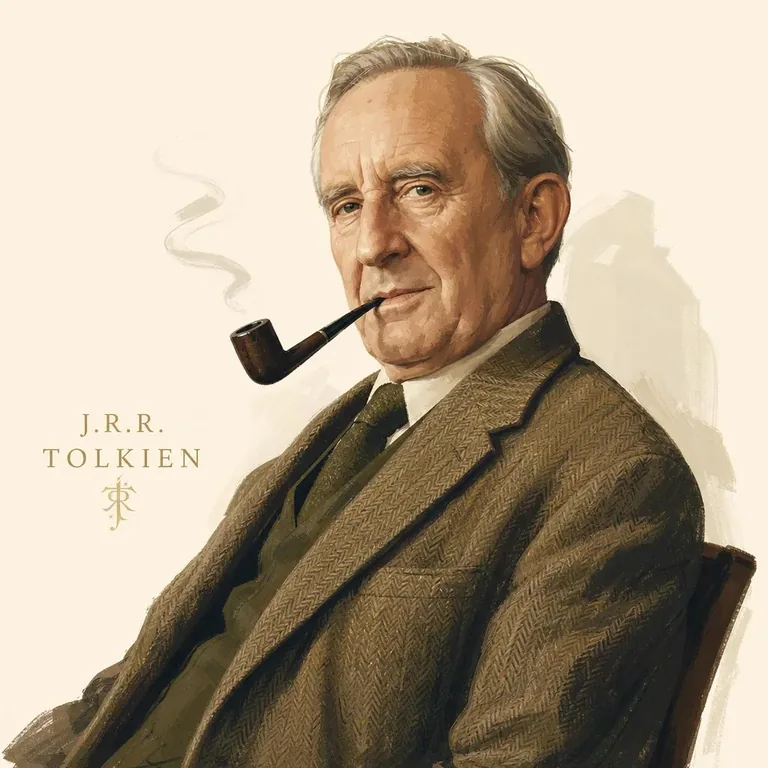
Invented languages first, then the world they would be spoken in — and proved that a single Oxford philologist, working evenings for forty years, could create the mythology a country didn't know it was missing.
Read Journey
An editor at Random House who wrote her first novel before work in the early morning hours — and ended up rewriting the American literary canon and winning every major prize a writer can win.
Read Journey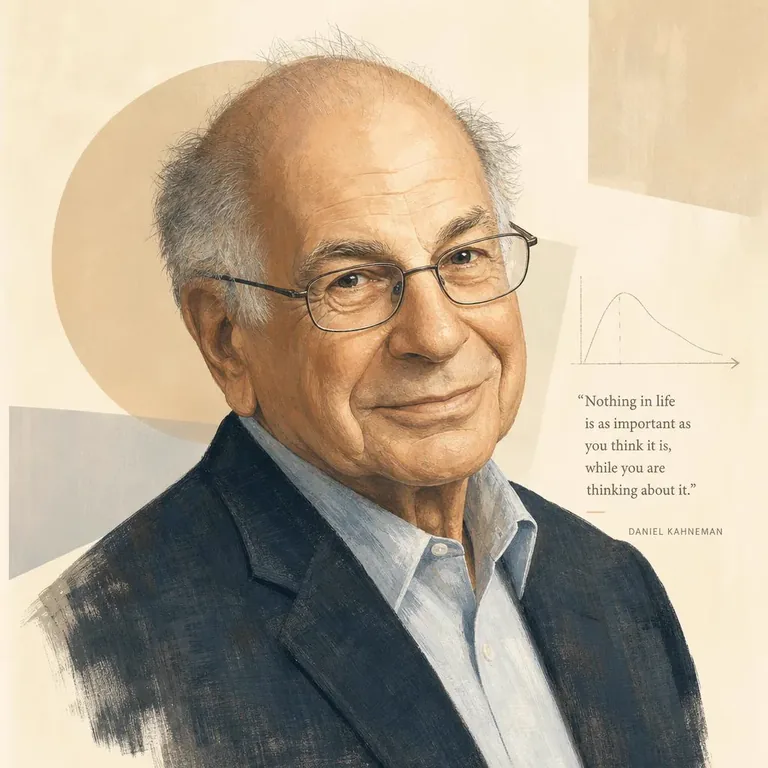
The psychologist who proved economists wrong about rationality — and gave the world a vocabulary for the two systems running in every human head.
Read Journey


Founders who were fired, rejected a hundred times, or three failed launches from bankruptcy — and the route they took back.
Open CollectionWe staked four years on a single funding application. The rejection arrived on a Tuesday. The next eighteen months were the most honest science of my career.
Read StoryCo-founder of Canva
Teaching yearbooks in Perth that grew into a design tool for a billion people — proof that patient founders win the long game.
Open Journey