Standards Design
MasteredDesigned HTML, HTTP, and URL as minimum-viable, extensible protocols that survived 30 years of adoption.
How it developed
Years inside CERN watching what made protocols spread (or not) across thousands of nodes.
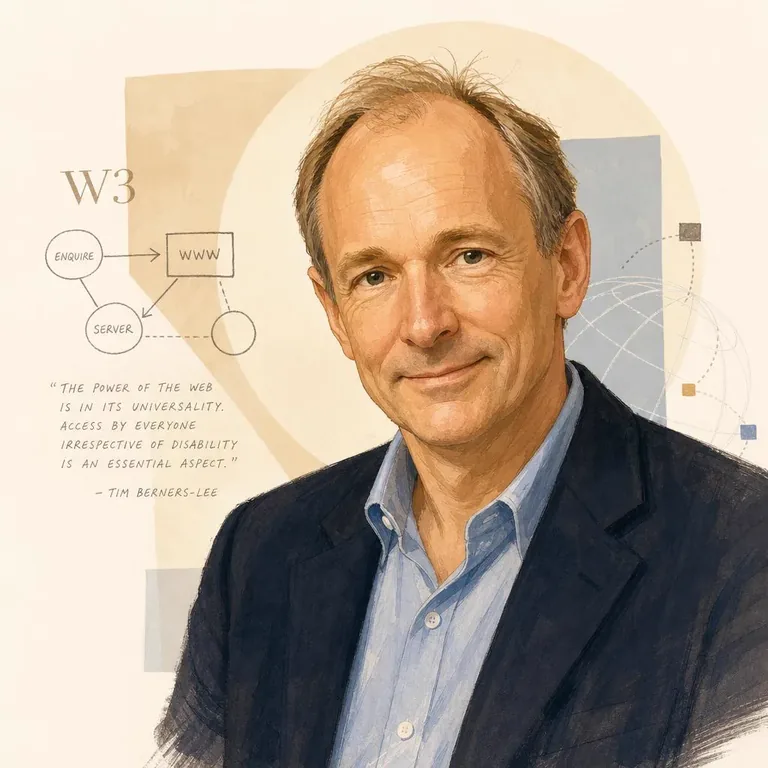
Inventor of the World Wide Web.
The British physicist who quietly proposed a hypertext system at CERN — and then gave it away to humanity, refusing the patent that would have made him the richest engineer in history.
Every story has the highlights. This is the boring middle, the doubts, and the moments that quietly changed everything.
Both parents worked on the Ferranti Mark 1, one of the world's first commercial computers.
Growing up in the long shadow of two pioneer computer scientists.
Early exposure to a discipline normalizes ambition in it.
Was banned from using the university's computers after a hacking incident; built his own from spare parts and a soldering iron.
Being denied access to the tools his work depended on.
Make your own tools when the institutional ones are closed to you.
Spent six months consulting at the European particle physics lab; wrote 'Enquire,' a personal hypertext database to track people and projects.
Modeling a complex organization in software that had to be useful immediately.
Build for your own daily friction. The general solution comes later.
Joined CERN permanently and watched the lab struggle with documentation across thousands of researchers and machines.
CERN's information was siloed across incompatible systems with no shared format.
The most useful inventions solve real institutional problems first.
Submitted a memo to his boss Mike Sendall proposing a global hypertext system; Sendall's note read 'vague but exciting.'
Pitching a speculative idea inside a physics lab whose mission had nothing to do with networked information.
A skeptical but tolerant manager is the rarest resource in invention.
Built HTML, HTTP, the first browser/editor, and the first web server in roughly three months.
Inventing four interlocking standards simultaneously while doing his day job.
When the standards don't exist, build the minimum stack end-to-end yourself.
First public web page went live at info.cern.ch in August 1991, describing the project and how to set up a server.
Convincing other CERN labs and external universities to install web servers when nobody had heard of the technology.
Releasing your invention is the start of the work, not the end.
Berners-Lee convinced CERN to release all web technology to the public domain, foregoing patent revenue.
Walking away from what could have been billions in licensing fees.
Open standards win at scale. Proprietary standards die at scale.
Moved to MIT to start the standards body that would govern web evolution.
Keeping the Web open against pressure from Microsoft, Netscape, and later Google.
Open systems need institutional protectors, not just protocols.
Knighted for services to the global development of the internet.
Accepting institutional recognition while continuing to fight institutional capture of the Web.
Honors are useful as platform, not as destination.
Received computing's highest honor for inventing the Web and the associated protocols.
Accepting the prize while publicly worrying the Web had been broken by surveillance capitalism.
Honor your invention by criticizing what it became.
Started a company to commercialize Solid — a protocol for decentralized personal data 'pods' under user control.
Convincing developers and enterprises to adopt a new identity layer 30 years after the Web's launch.
If your first invention got captured, build the next one with a structural fix.
Skills aren't talents — they're the residue of a thousand decisions. Here is what compounded over a lifetime.
Designed HTML, HTTP, and URL as minimum-viable, extensible protocols that survived 30 years of adoption.
Years inside CERN watching what made protocols spread (or not) across thousands of nodes.
Built browser, server, and language together when no single piece existed alone.
Physicist's training of building the apparatus when the field has no off-the-shelf tools.
Convinced CERN's lawyers, MIT, and Queen Elizabeth's government that an open Web was worth preserving.
Decades of writing memos, briefing politicians, and quietly building consensus inside W3C.
Spent 30+ years protecting the Web's architecture from capture by single companies.
Saw the failures of older networks (Minitel, AOL, CompuServe) and refused to repeat their structural mistakes.
Explained 'how the Web works' to non-technical audiences without dumbing it down.
Years of public lectures and op-eds aimed at educated non-engineers.
Said no to patent revenue, no to closed standards, no to surveillance capitalism — repeatedly.
Quaker family ethics translated into engineering decisions.
No journey is a straight line. The setbacks weren't detours — they were the route.
The original HTTP/HTML stack had no notion of user identity, which later led to ad-tech tracking and surveillance capitalism.
Decades later, launched Solid and Inrupt to retrofit user-controlled identity onto the Web.
The architectural decisions you defer become the next generation's structural problems.
Did not anticipate how programmatic advertising would centralize the Web around a few platforms.
Public campaigns for the 'Contract for the Web' and decentralization advocacy through W3C and Solid.
Open protocols don't guarantee open ecosystems — economic incentives can re-centralize them.
Solid has struggled to find mainstream adoption despite a decade of work and significant investment.
Continuing to push enterprise pilots and government partnerships rather than chasing consumer adoption.
Replacing infrastructure takes a generation. Stay patient and keep shipping.
Could not prevent Microsoft and Netscape from forking HTML implementations and breaking interop.
Built W3C as the formal arbiter; eventually browsers re-converged on shared standards after years of pain.
Standards bodies are slow but they outlast monopolies.
The books on the shelf, the people they studied, the ideas they kept returning to.
Tim Berners-Lee
His own account of inventing the Web — the canonical primary source.
Katie Hafner & Matthew Lyon
Pre-history of the internet that sets up Berners-Lee's contribution.
Eric Raymond
Open-source manifesto that shares Berners-Lee's commitment to decentralized building.
Tim Wu
History of communication monopolies that explains why Berners-Lee fights centralization.
Lawrence Lessig
Companion intellectual framework for understanding the Web as architecture as politics.
Interviews, keynotes, talks, and documentaries — chosen for the moments that reveal how they actually thought.
The bets that, made differently, would have written a different life.
AI-distilled takeaways, sorted by who you are and what you're building toward.
Adoption beats revenue for foundational technology. Choose adoption.
HTTP and HTML succeeded because they were small enough for anyone to implement.
CERN's documentation chaos was the Web's first use case. Yours is right in front of you too.
What you defer becomes someone else's monopoly.
Build the institutions that protect what you invented.
The first version is the one you write to make your own life easier.
Even open standards can fork. Defend interoperability actively, not just legally.
The questions most people have after studying this life. Tap one — every answer is built from Tim Berners-Lee's own timeline, decisions, books, and lessons on this page.
Adjacent journeys, a collection that frames the craft, and one pick from a different world.
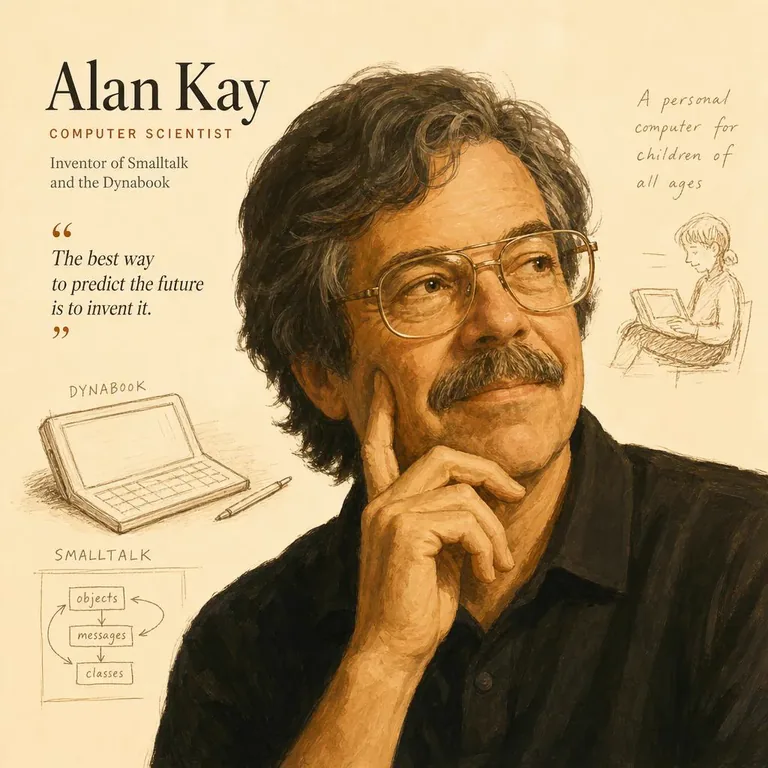
The computer scientist who imagined the laptop, the GUI, and object-oriented programming a decade before any of them existed — then spent his life pushing the rest of the industry to catch up to the children he was building it for.
Read Journey
A door-to-door fax-machine saleswoman who turned $5,000 in savings into the first billion-dollar self-made fortune built by an American woman — without a single dollar of outside capital.
Read Journey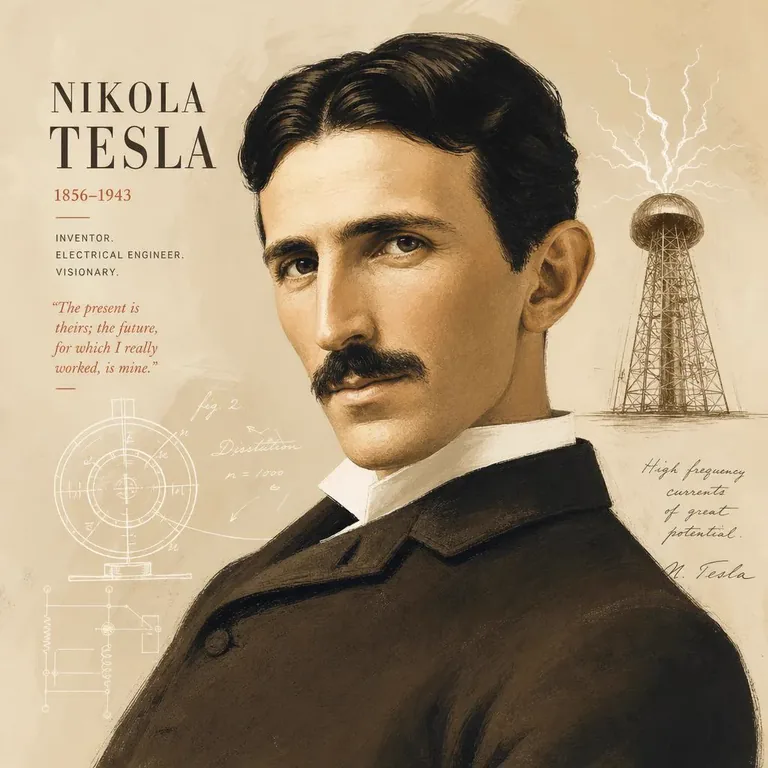
Imagined the alternating-current world we still live in — and proved that one engineer with the right model in his head could reshape the physical infrastructure of a planet, even while losing the business battles around it.
Read Journey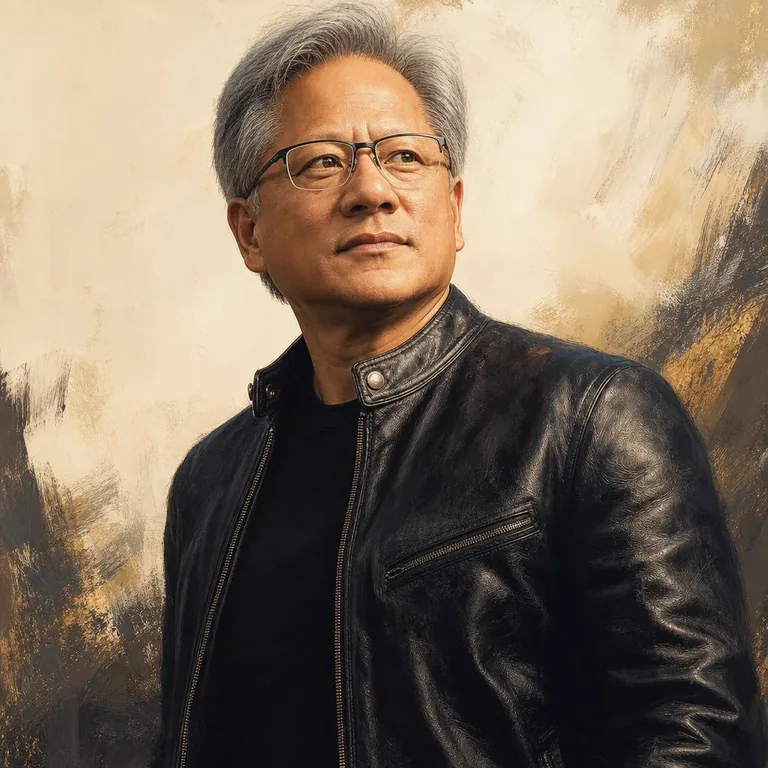
The Denny's busboy who bet thirty years on parallel computing — and turned a 1990s graphics card maker into the most strategically important company of the AI era.
Read Journey

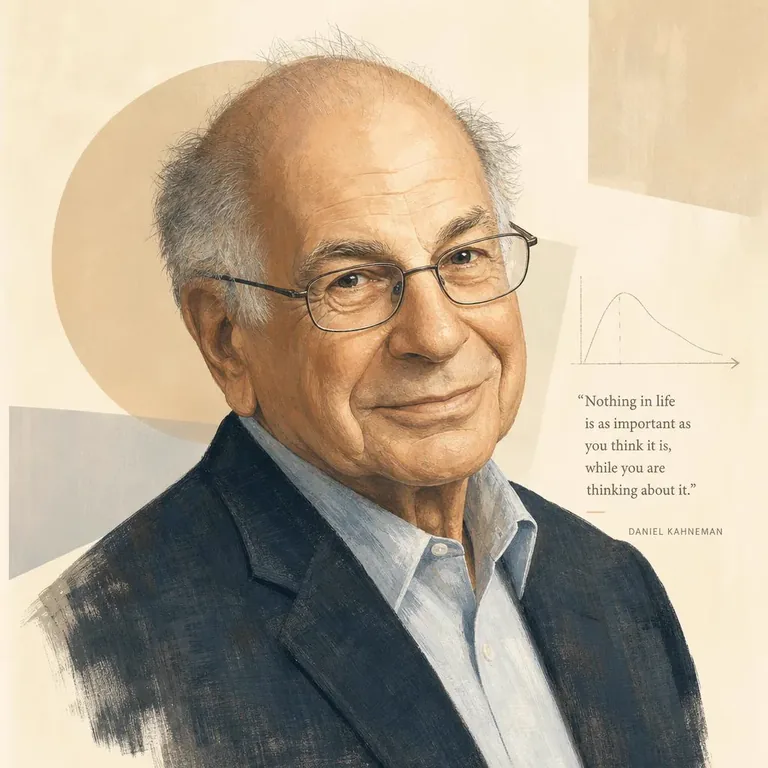
Researchers who reshaped what humans understand about the physical world — and how they teach the next generation to think.
Open CollectionThree years building a tool nobody asked for, financed by my parents' savings. The post-mortem was harder than the shutdown.
Read Story
Co-founder of Airbnb
Three air mattresses and a designer's eye that turned strangers into hosts — a founder who treats hospitality as a craft and product as the story.
Open Journey