Conceptual Invention
MasteredSpecialized in coining the categories — 'personal computer,' 'object-oriented,' 'Dynabook' — before they existed.
How it developed
Years at PARC where conceptual clarity was the currency.
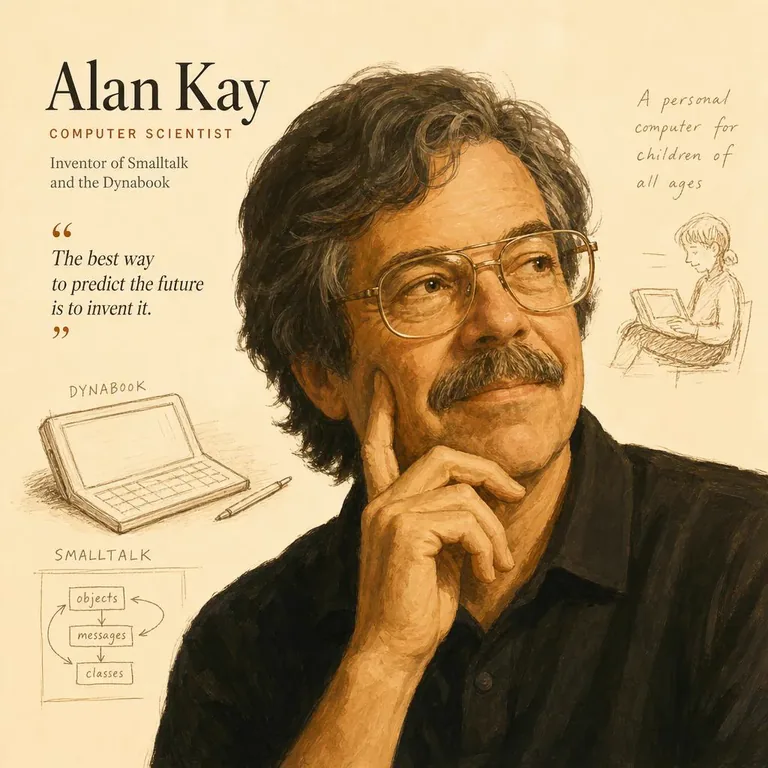
Computer Scientist; Inventor of Smalltalk and the Dynabook.
The computer scientist who imagined the laptop, the GUI, and object-oriented programming a decade before any of them existed — then spent his life pushing the rest of the industry to catch up to the children he was building it for.
Every story has the highlights. This is the boring middle, the doubts, and the moments that quietly changed everything.
Raised by a musician mother and a physiologist father in a household where curiosity was the default mode.
Read at three; school bored him profoundly.
Precocious kids need projects, not curricula.
Joined the Air Force, where he learned to program early IBM systems.
Programming was clerical work in 1961; he saw it as a medium.
The job description rarely describes the real opportunity.
Studied with Ivan Sutherland and David Evans, the godfathers of computer graphics.
Joining a field that didn't yet have departments.
Find the small group that's inventing the future and move there.
The flat-panel demo seeded the Dynabook idea; Sketchpad reshaped his sense of what software could be.
Reconciling current hardware with a vision a decade ahead.
A few seminal demos can route a career for life.
Proposed the Dynabook — a tablet-style learning device — at Xerox PARC.
Selling a kids' device to a copier company.
Frame breakthrough hardware around its hardest user.
With Dan Ingalls and Adele Goldberg, built the first complete object-oriented programming environment.
Convincing engineers raised on FORTRAN to think in messages and objects.
Languages shape what programmers can imagine.
PARC's team shipped the first personal computer with a GUI, mouse, and bitmap display.
Xerox executives didn't know what they had.
Breakthroughs need patrons who can see, not just fund.
Showed Jobs Smalltalk and the Alto; the demo seeded the Macintosh.
Letting the future leave the building under someone else's name.
Ideas spread fastest when you give them away.
Continued research on educational computing and influenced HyperCard and early Mac OS direction.
Researching inside a product company.
Choose patrons who let you keep doing the long-horizon work.
Built educational software and prototypes for Imagineering R&D.
Embedding research in an entertainment company.
Curiosity finds collaborators in unlikely industries.
Non-profit dedicated to fundamental research in human-computer symbiosis and education.
Raising sustained funding for blue-sky research.
Institutional independence is the price of long-term thinking.
ACM's highest honor, cited for object-oriented programming and overlapping windows.
Resisting the temptation to coast on legacy.
Recognition is the start of the next phase, not the end of the work.
Aimed to reinvent personal computing in 20,000 lines of code instead of millions.
Proving software bloat is not inevitable.
Constraints expose how much of complexity is accidental.
Skills aren't talents — they're the residue of a thousand decisions. Here is what compounded over a lifetime.
Specialized in coining the categories — 'personal computer,' 'object-oriented,' 'Dynabook' — before they existed.
Years at PARC where conceptual clarity was the currency.
Designed Smalltalk to make object-oriented programming livable and learnable.
Iterated through multiple Smalltalk versions over a decade.
Used live, working systems to convince skeptics in a way papers never could.
PARC culture of 'point at the running thing.'
Drew on Piaget, McLuhan, Bruner, and music theory to shape computing's future.
Refused to specialize; treated computing as a humanities subject.
Treated children as the true user of personal computing — the most demanding audience he could find.
Decades of school visits and educational pilots.
Skilled at provocative talks that punctured industry complacency.
Stage-tested in keynotes and lectures across five decades.
Comfortable working on ideas that wouldn't ship for 20 years.
Picked patrons (PARC, Apple, Disney) who allowed it.
No journey is a straight line. The setbacks weren't detours — they were the route.
Xerox sat on the personal computer for years; Apple and Microsoft captured the market.
Continued advocating publicly for what Xerox had built; wrote it into the historical record.
Inventing the future doesn't guarantee owning it.
His tablet-laptop vision required 30 years of hardware progress; he never built the product itself.
Watched the iPad ship and noted it still wasn't the Dynabook he had imagined.
Visions outrun supply chains; keep restating them.
Smalltalk lost mindshare to C++ and Java despite a richer model.
Helped birth Squeak as an open-source successor; influenced Ruby, Self, and many languages.
Even when your language loses, its ideas can win.
Ambitious 20,000-line reinvention of personal computing ran out of NSF support before completion.
Published the work and ideas as research; influenced later minimalist systems work.
Long research bets need patient money you may not always find.
The books on the shelf, the people they studied, the ideas they kept returning to.
Alan Kay
His own definitive essay on how Smalltalk and Dynabook came together.
Alan Kay
The 1972 Dynabook memo that imagined the laptop and tablet.
Seymour Papert
Kay calls Papert's vision of children-as-programmers a foundational influence.
Marshall McLuhan
Shaped his view of the computer as a new medium, not just a tool.
Lev Vygotsky
Underpinned his ideas about computing as a tool for cognitive scaffolding.
Peter Medawar
Frequently recommended for its philosophy of fruitful scientific problem choice.
Interviews, keynotes, talks, and documentaries — chosen for the moments that reveal how they actually thought.
The bets that, made differently, would have written a different life.
AI-distilled takeaways, sorted by who you are and what you're building toward.
The frame you bring to a problem matters more than raw horsepower.
Stop forecasting; start building the next decade.
Tool design is a moral act for the people who'll use them.
If your system works for an eight-year-old, it'll work for everyone.
Real breakthroughs require time horizons quarterly funding can't fit.
The big idea wasn't classes; it was late-bound message passing between cells.
Treat them like printing presses and your imagination expands.
The questions most people have after studying this life. Tap one — every answer is built from Alan Kay's own timeline, decisions, books, and lessons on this page.
Adjacent journeys, a collection that frames the craft, and one pick from a different world.
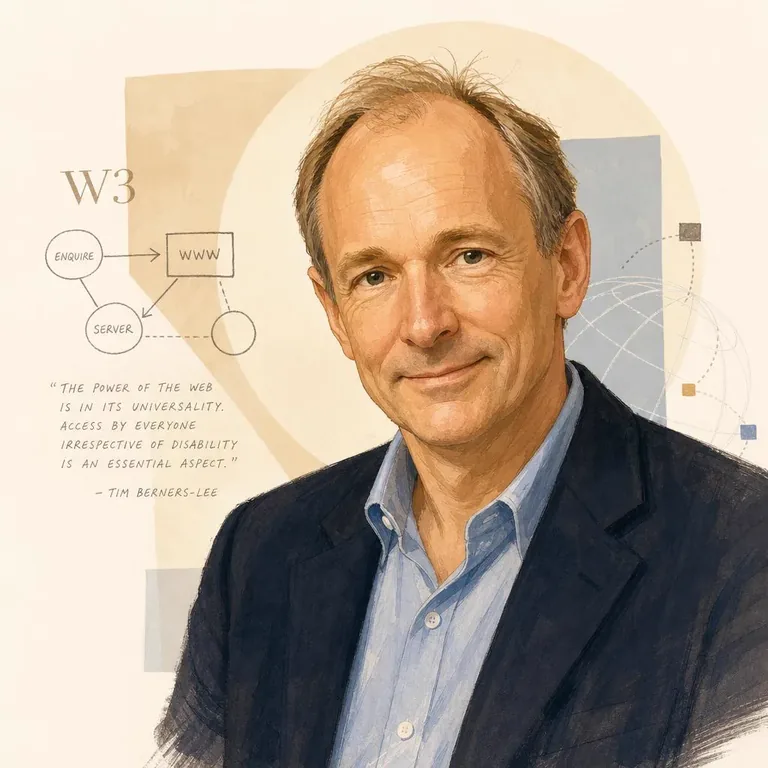
The British physicist who quietly proposed a hypertext system at CERN — and then gave it away to humanity, refusing the patent that would have made him the richest engineer in history.
Read Journey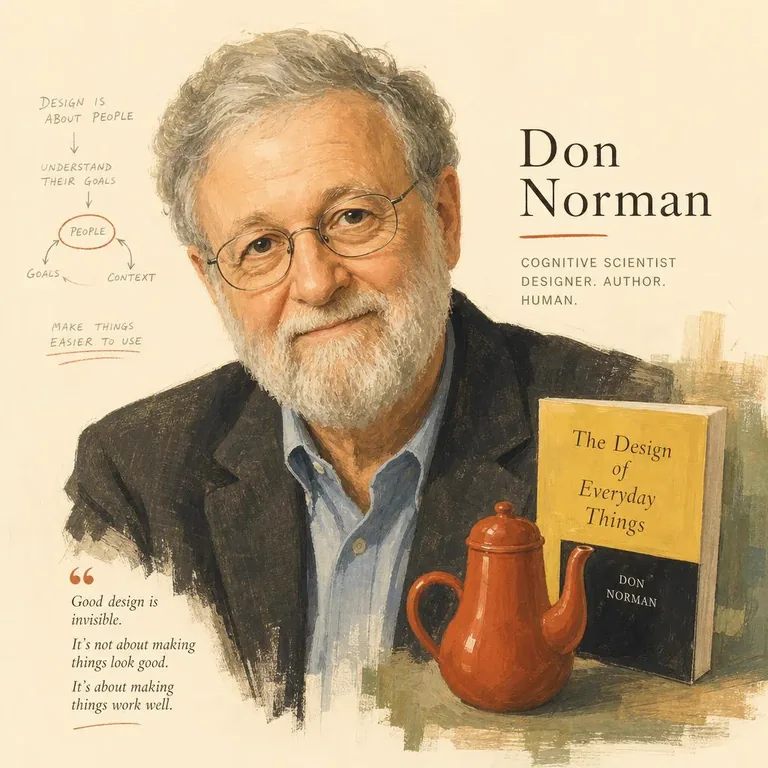
Coined 'user experience' and built the field — by insisting that confusing doors and broken stovetops were design failures, not user failures, and that cognition is what design actually serves.
Read Journey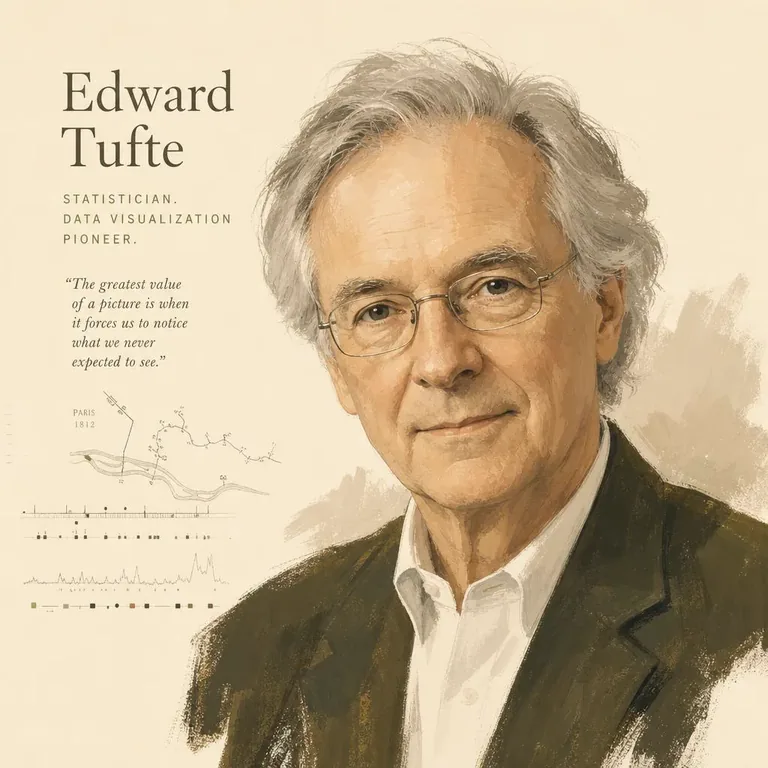
Treated charts as a form of moral seriousness — taught a generation that bad visualizations don't merely confuse, they kill, and built the standards that distinguish honest evidence from decorated noise.
Read Journey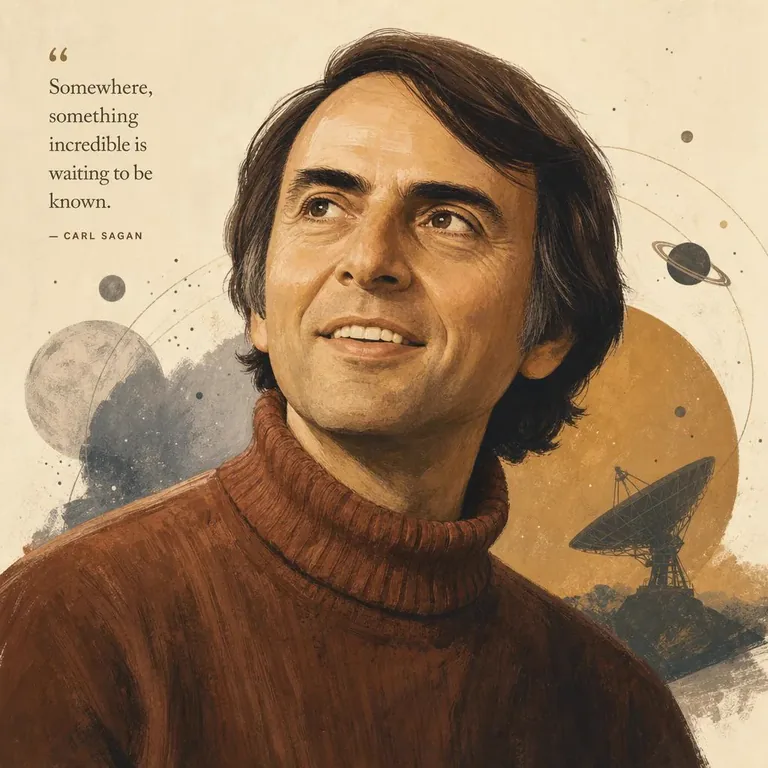
Built the most-watched science series in television history, talked to a planet about the Pale Blue Dot, and proved that rigorous astronomy and lyrical prose could share the same sentence — and the same career.
Read Journey

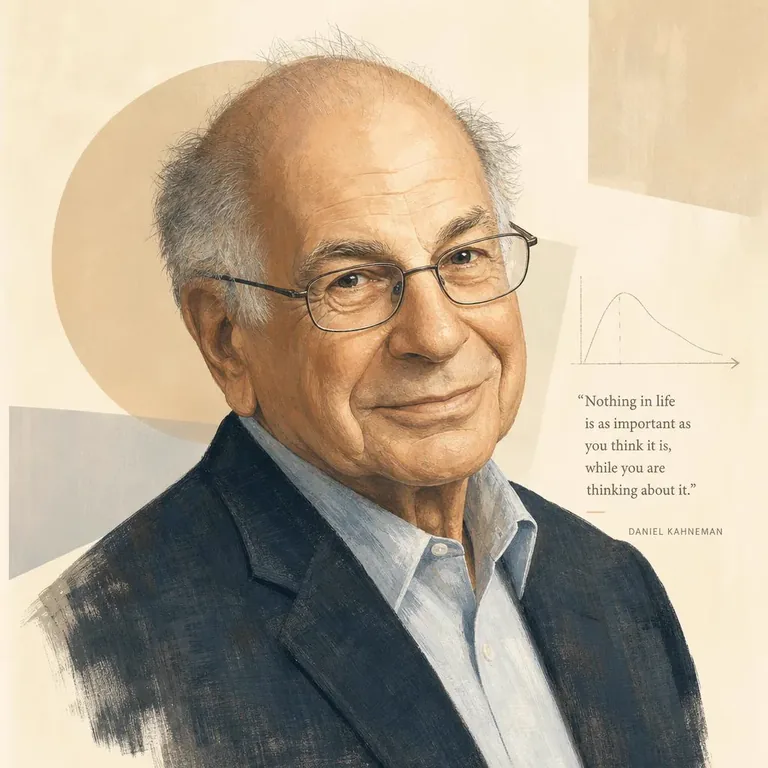
Researchers who reshaped what humans understand about the physical world — and how they teach the next generation to think.
Open CollectionI left a PhD program convinced I had failed at science. A classroom of fifteen-year-olds gave it back to me, slower and better.
Read Story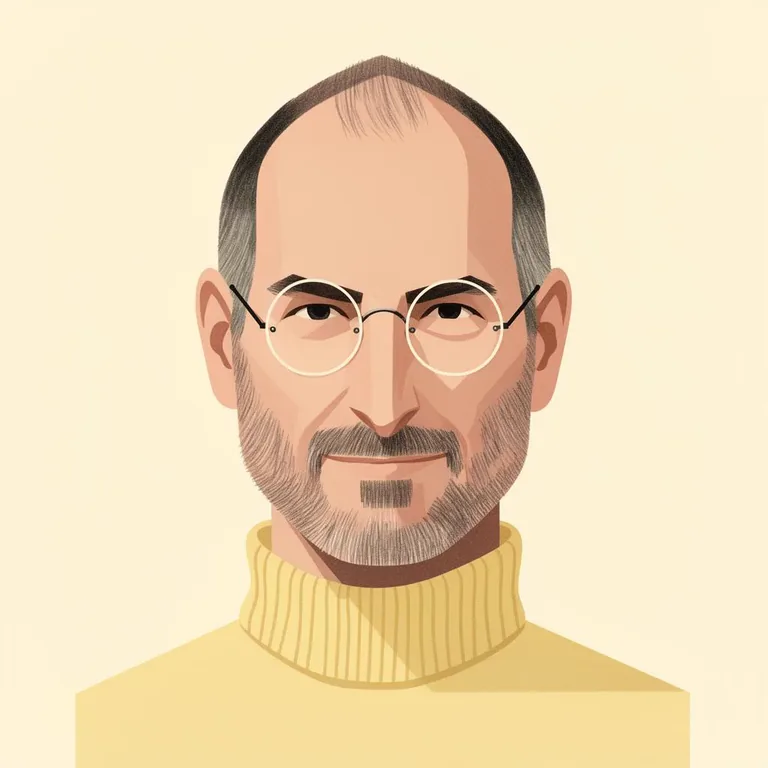
Co-founder of Apple
One of the most influential product visionaries in history — a relentless editor of ideas who insisted technology should feel human.
Open Journey