Science Communication
MasteredMade cutting-edge astronomy comprehensible without dumbing it down.
How it developed
Twenty years of teaching at Cornell and writing for general audiences.
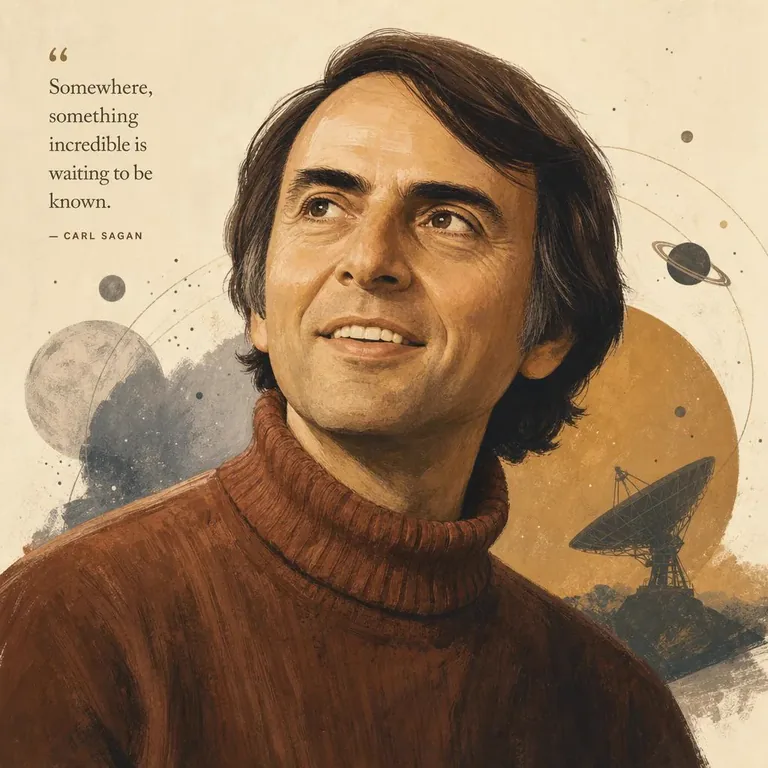
Astronomer; Science Communicator.
Built the most-watched science series in television history, talked to a planet about the Pale Blue Dot, and proved that rigorous astronomy and lyrical prose could share the same sentence — and the same career.
Every story has the highlights. This is the boring middle, the doubts, and the moments that quietly changed everything.
Son of a Ukrainian-Jewish immigrant garment worker; the 1939 World's Fair sparked a lifelong love of the future.
Working-class background with no scientific role models.
Awe is contagious; one fair, one book can ignite a life.
Studied under Harold Urey and Subrahmanyan Chandrasekhar.
Choosing science when career paths in astronomy were narrow.
Train with the best minds you can reach — proximity compounds.
Dissertation on the physics of planetary atmospheres, especially Venus.
Convincing thesis committees that planetary science was serious astronomy.
Pioneer fields look unserious until they're indispensable.
Helped interpret data confirming the runaway greenhouse effect on Venus.
Mainstream astronomy considered planetary science a backwater.
Bet your early career on the field everyone underrates.
Settled into the Laboratory for Planetary Studies and stayed for the rest of his career.
Harvard had denied him tenure; rebuilt momentum elsewhere.
Rejection routes you to your real institution.
With Frank Drake and Linda Salzman Sagan, created humanity's first interstellar message.
Compressing humanity into a 9x6-inch gold-anodized plaque.
Constraints clarify the message.
Led the team selecting the music, sounds, and images for Voyager 1 and 2.
Picking what to send to the stars on behalf of Earth.
Sometimes the most consequential editorial choice gets only one shot.
13-part PBS series watched by 500M+ people; companion book became the best-selling science book ever in English.
Convincing PBS that prime-time science could draw an audience.
Wonder, well-staged, beats spectacle.
TTAPS study modeled the climate consequences of nuclear war and changed Cold War strategy.
Crossing from astronomy into geopolitics drew academic backlash.
Scientists have duties beyond their fields when the stakes are extinction.
Argued for the 'Pale Blue Dot' photograph of Earth from 3.7B miles away.
NASA initially saw no scientific value in the image.
Sometimes the most important data point is perspective.
Book-length meditation on humanity's place in the cosmos opens with one of the most-quoted passages in modern science writing.
Translating astronomical scale into emotional reality.
Numbers without metaphor don't reach the heart.
Definitive case for scientific skepticism and the baloney detection kit.
Defending science as a culture against rising pseudoscience.
Skepticism is a civic discipline, not an attitude.
Continued writing through his illness; final book 'Billions and Billions' published posthumously.
Compressing remaining work as time ran short.
Communicators are rare; the work matters even more at the end.
Skills aren't talents — they're the residue of a thousand decisions. Here is what compounded over a lifetime.
Made cutting-edge astronomy comprehensible without dumbing it down.
Twenty years of teaching at Cornell and writing for general audiences.
Wrote sentences that read like poetry while staying scientifically rigorous.
Obsessive rewriting; Cosmos reportedly took 30 drafts per chapter.
Connected astronomy, biology, geology, anthropology, and history into single arguments.
Lifelong reading across every scientific field.
Codified the 'baloney detection kit' as a citizen's toolkit for evaluating claims.
Decades debunking UFO claims, astrology, and pseudoscience publicly.
Calibrated tone, pacing, and wonder for the camera better than any scientist of his era.
Refined across hundreds of Carson appearances before Cosmos.
Led teams on Mariner, Viking, Pioneer, Voyager, and Galileo missions.
Decades of institutional planetary science work.
Spoke publicly on nuclear winter, the arms race, and pseudoscience despite professional cost.
Treated science as a duty to society, not just a profession.
No journey is a straight line. The setbacks weren't detours — they were the route.
Denied tenure at Harvard despite a strong publication record.
Moved to Cornell, where he had the autonomy to do Cosmos.
The rejection is often the routing.
Networks resisted prime-time science as ratings risk.
Partnered with PBS; series became the most-watched in PBS history.
If gatekeepers say no, find the channel that says yes.
His 1969 pseudonymous essay on cannabis use surfaced posthumously and drew controversy.
Posthumous discussion reframed it as part of his honesty about thinking.
Honesty about your own mind costs reputation in the short run, builds it in the long.
TTAPS paper was attacked methodologically and politically through the 1980s.
Core findings held up under later modeling and shaped policy.
Politically inconvenient science attracts professional pushback; document carefully.
The books on the shelf, the people they studied, the ideas they kept returning to.
Carl Sagan
Companion to the TV series; best-selling science book ever in English.
Carl Sagan
Meditation on humanity's place in the universe after the famous Voyager photograph.
Carl Sagan
His case for scientific skepticism and the baloney detection kit.
Carl Sagan
Novel that became the 1997 Jodie Foster film.
Carl Sagan
Pulitzer-winning exploration of the evolution of human intelligence.
Carl Sagan
Posthumous collection of essays written during his final illness.
Interviews, keynotes, talks, and documentaries — chosen for the moments that reveal how they actually thought.
The bets that, made differently, would have written a different life.
AI-distilled takeaways, sorted by who you are and what you're building toward.
Lower your voice and the audience leans in.
If you don't explain it, someone wrong will.
The baloney detection kit travels everywhere; pack it.
Cosmos chapters took 30 drafts; aim higher.
The phrase itself is a complete epistemic toolkit.
The Pale Blue Dot is what scale education looks like.
Lyrical accuracy beats accurate dryness, every time.
The questions most people have after studying this life. Tap one — every answer is built from Carl Sagan's own timeline, decisions, books, and lessons on this page.
Adjacent journeys, a collection that frames the craft, and one pick from a different world.
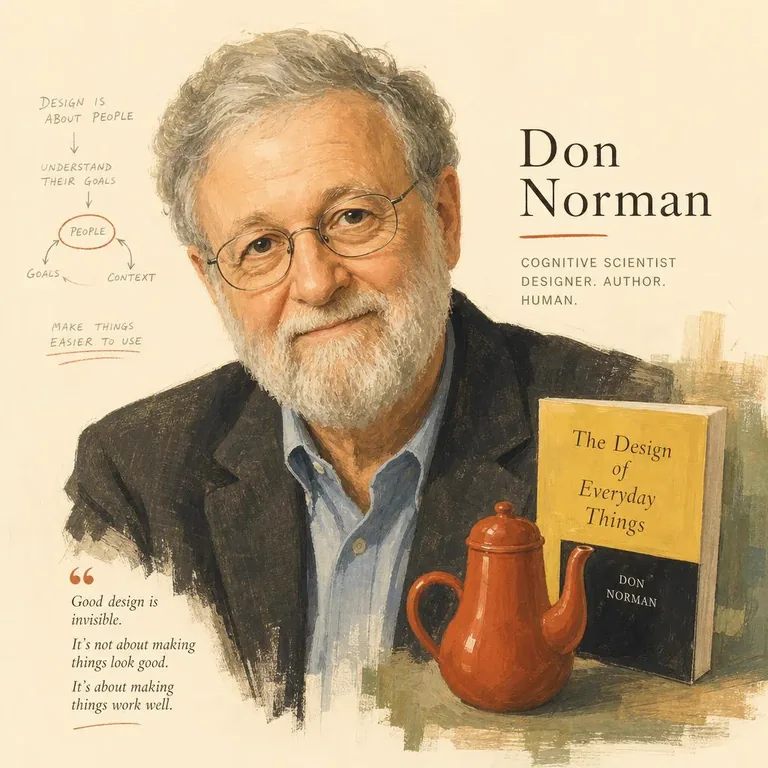
Coined 'user experience' and built the field — by insisting that confusing doors and broken stovetops were design failures, not user failures, and that cognition is what design actually serves.
Read Journey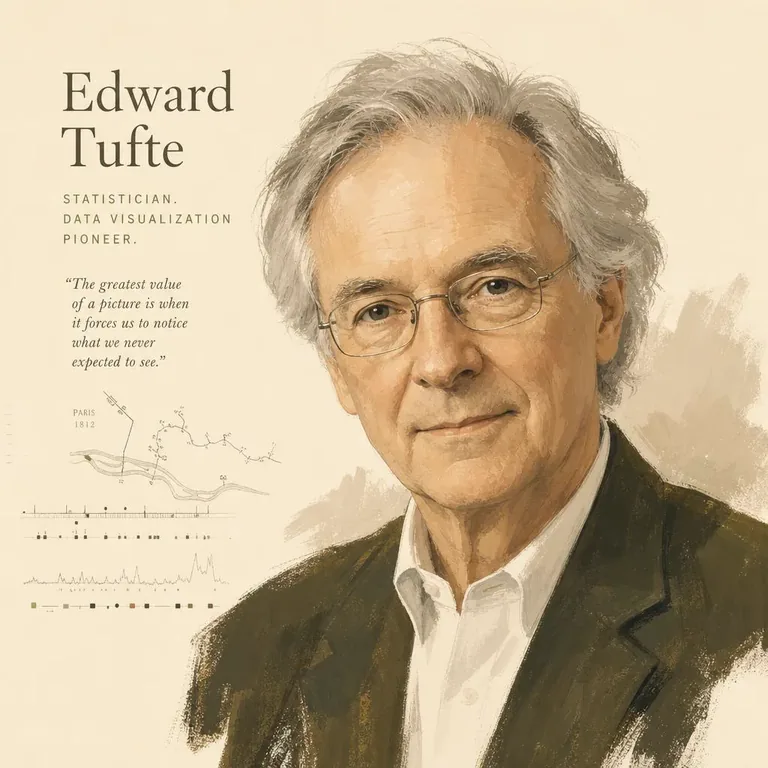
Treated charts as a form of moral seriousness — taught a generation that bad visualizations don't merely confuse, they kill, and built the standards that distinguish honest evidence from decorated noise.
Read Journey
A Brooklyn-born Nobel laureate who reformulated quantum electrodynamics, played bongos in the Caltech faculty band, cracked Los Alamos safes for sport, and taught millions to think like a physicist.
Read Journey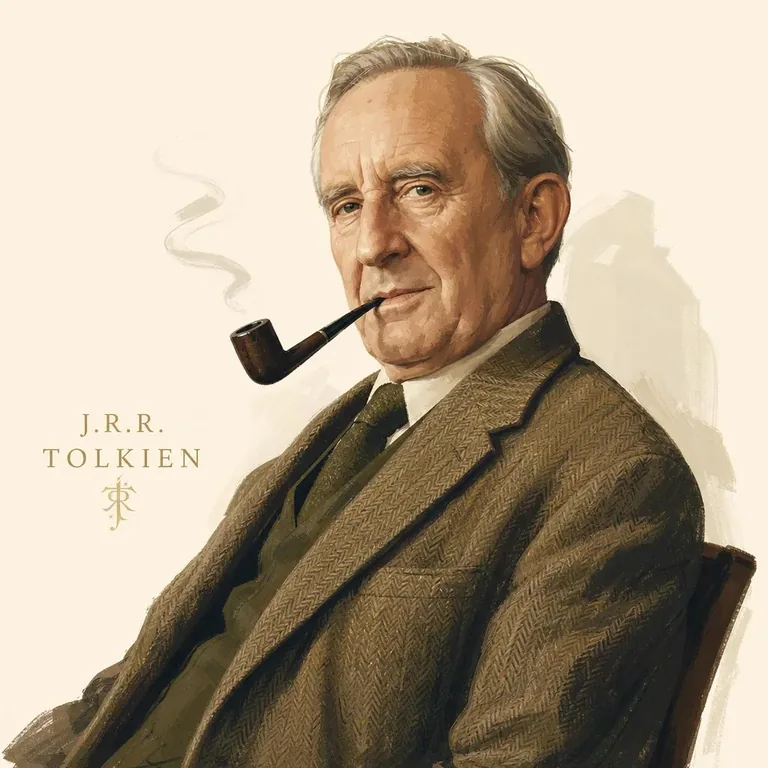
Invented languages first, then the world they would be spoken in — and proved that a single Oxford philologist, working evenings for forty years, could create the mythology a country didn't know it was missing.
Read Journey
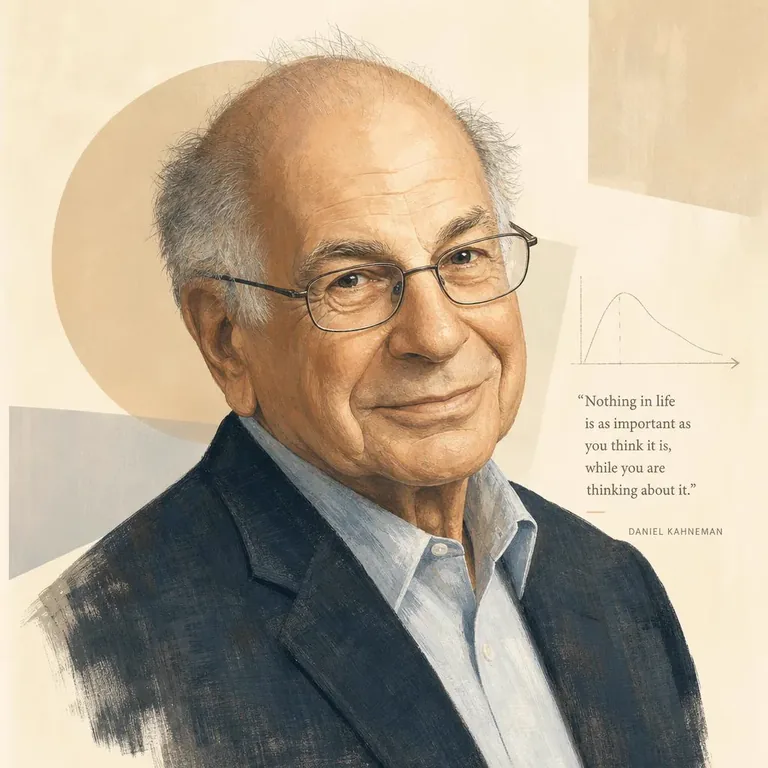
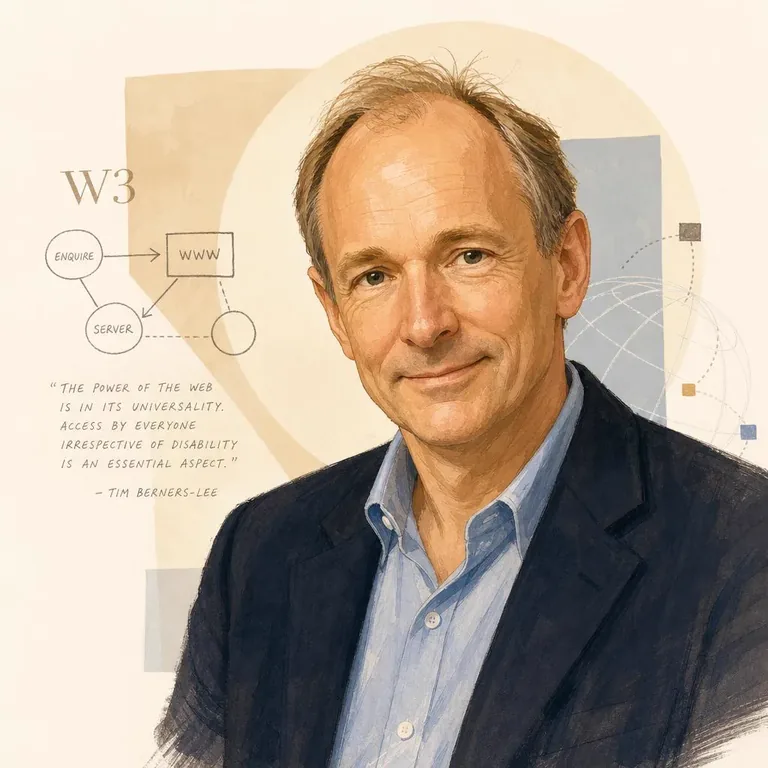
Researchers who reshaped what humans understand about the physical world — and how they teach the next generation to think.
Open CollectionI left a PhD program convinced I had failed at science. A classroom of fifteen-year-olds gave it back to me, slower and better.
Read Story
Co-founder of Apple
One of the most influential product visionaries in history — a relentless editor of ideas who insisted technology should feel human.
Open Journey