Long-Horizon Conviction
MasteredSustained a 40-year research programme through two AI winters with almost no peer support.
How it developed
Forged by years of supervisors and grant reviewers telling him neural networks would never work.
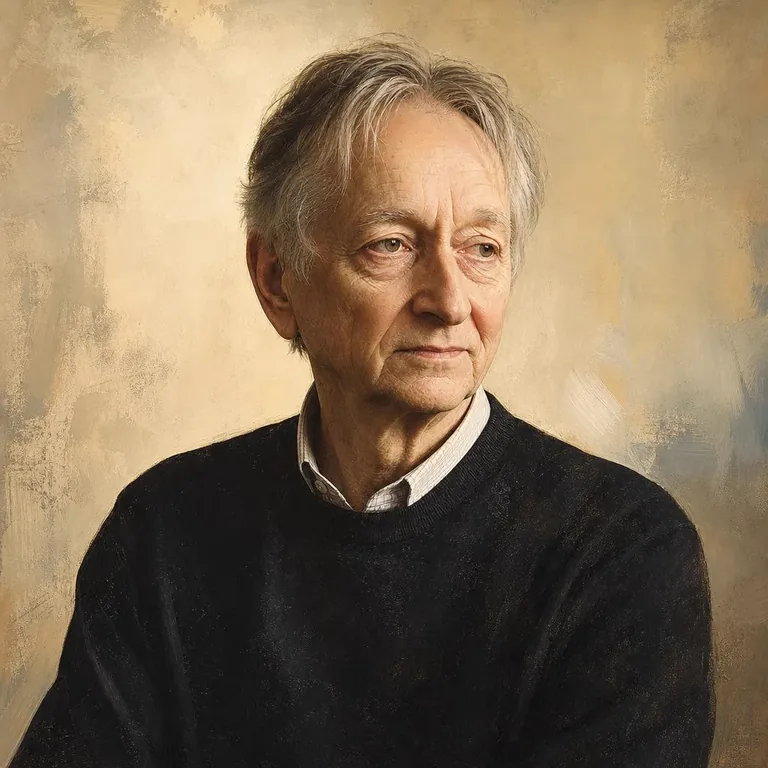
Godfather of Deep Learning; Nobel Laureate in Physics 2024.
The cognitive scientist who spent forty years insisting that neural networks would work — through two AI winters, one Nobel Prize, and a final-act warning that they now might work too well.
Every story has the highlights. This is the boring middle, the doubts, and the moments that quietly changed everything.
Great-great-grandson of George Boole; descended from a family of mathematicians, biologists, and economists.
Expected to be a brilliant academic from birth — a heavy inheritance.
A famous family is a head start and a weight. Choose which to carry.
Switched majors restlessly — natural sciences, physiology, philosophy, finally experimental psychology.
No discipline alone gave him a satisfying account of how the brain produced thought.
If no field answers your question, your question may be the start of a new field.
Worked under Christopher Longuet-Higgins; faced supervisors deeply sceptical of neural network research.
Doing a PhD on the unfashionable side of the great AI divide of the 1970s.
If everyone in your field thinks you're wrong, you have an asymmetric bet — if you're right.
With David Rumelhart and Ronald Williams, published the paper that popularised backpropagation for multi-layer networks.
Symbolic AI dominated; neural networks were a backwater funded by almost no one.
Foundational ideas often arrive in unfashionable papers.
Refused US grants tied to military applications; took a position at the University of Toronto.
Walking away from American AI funding at the start of his career.
Ethics can be a relocation, not just a statement.
Funding for neural network research collapsed; symbolic AI ate the rest. He kept publishing anyway.
Maintaining a research programme that almost no one was hiring for.
Conviction without funding is the test of whether you actually believe.
Showed how to train deep networks layer by layer — the paper that woke the field up.
Persuading reviewers that deep models could finally be made trainable.
A single technical breakthrough can revive a 30-year-dead field overnight.
His students Alex Krizhevsky and Ilya Sutskever crushed the ImageNet competition using deep CNNs on NVIDIA GPUs — the moment AI changed.
Convincing the computer vision community that hand-tuned features were obsolete.
The students you train are the longest version of your research.
Auctioned his three-person company among Google, Microsoft, Baidu, and DeepMind; Google won.
Choosing the right home for an idea that had become priceless.
Sometimes the right sale price is decided by an auction you didn't think to hold.
Proposed capsule networks as a critique of CNNs — an attempt to model objects with structure.
Critiquing the success his own students had built.
The hardest thing to question is the paradigm your name is on.
Shared the Turing Award with Yoshua Bengio and Yann LeCun for the deep learning revolution.
Accepting institutional honour for work the institutions had once ignored.
Vindication arrives slowly, then publicly.
Stepped down from Google Brain to speak freely about the existential risks of large language models.
Walking away from a senior role at 75 to start a different kind of public work.
Some warnings can only be given from outside the institution.
Shared the Nobel with John Hopfield for the foundational work on neural networks.
Accepting a Nobel in a discipline (physics) different from his own.
Foundational ideas eventually choose the prize that fits them.
Skills aren't talents — they're the residue of a thousand decisions. Here is what compounded over a lifetime.
Sustained a 40-year research programme through two AI winters with almost no peer support.
Forged by years of supervisors and grant reviewers telling him neural networks would never work.
His students built modern AI: Sutskever (OpenAI), Krizhevsky, LeCun (Meta), Salakhutdinov (Apple), Vinyals (DeepMind).
Believed his role was to create the conditions for students to overtake him — and largely succeeded.
Often reasoned by physical analogy and biological plausibility rather than pure mathematics.
Cognitive science training; resisted the field's preference for proofs over intuitions.
Repeatedly returned to old ideas (Boltzmann machines, capsules) when new tools made them feasible.
Habit of keeping a 'graveyard of good ideas' and revisiting it every decade.
Explains backpropagation, embeddings, and AI risk to general audiences without losing precision.
Decades of teaching undergraduates and giving interviews to non-specialists.
Twice walked away from institutions over ethical concerns — first US military funding, then Google AI.
Quaker upbringing combined with academic independence.
No journey is a straight line. The setbacks weren't detours — they were the route.
Neural network research was unfashionable; grants were small, prestige was negligible.
Kept publishing and training students; the 2006 deep belief net paper finally turned the tide.
An unfashionable bet pays off if you can survive the wait. Most can't.
Proposed capsule networks as a successor to CNNs; the community largely ignored them.
Continued refining the idea; treated it as a long-term research direction.
Even your own students will move on from your latest idea. That's how the field grows.
Spoke up about AI existential risk only after leaving Google in 2023, when models were already widely deployed.
Used his Nobel platform to amplify the warning publicly.
Speak earlier than feels comfortable. Vindication is not a substitute for prevention.
Recognition for foundational work arrived only after the 2012 commercial breakthrough.
Won Turing (2018) and Nobel (2024) within a decade of vindication.
Recognition arrives all at once, after a long silence. Don't wait for it.
The books on the shelf, the people they studied, the ideas they kept returning to.
Cade Metz
The most thorough account of Hinton's role in modern AI, with deep interviews.
Rumelhart, McClelland & the PDP Group
The 1986 collection containing the backpropagation paper — the canonical text of the connectionist revival.
Marvin Minsky
Hinton's intellectual sparring partner — Minsky helped end the first connectionist wave; Hinton helped restart it.
Valentino Braitenberg
On simple machines that produce complex behaviour — a Hinton favourite for teaching intuition.
Patricia Churchland & Terrence Sejnowski
Co-authored by Hinton's longtime collaborator Sejnowski — required reading for the field he helped found.
Interviews, keynotes, talks, and documentaries — chosen for the moments that reveal how they actually thought.
The bets that, made differently, would have written a different life.
AI-distilled takeaways, sorted by who you are and what you're building toward.
Neural nets were dead three times. He was right each time.
The students who outgrow you are the longest version of your work.
He did it twice — and both moves expanded his moral authority.
Backpropagation existed in the 1970s. GPUs in 2012 made it economical.
Most of his best ideas started as physical analogies, not theorems.
Forty years of quiet, then Turing, Nobel, and global influence within seven years.
The questions most people have after studying this life. Tap one — every answer is built from Geoffrey Hinton's own timeline, decisions, books, and lessons on this page.
Adjacent journeys, a collection that frames the craft, and one pick from a different world.
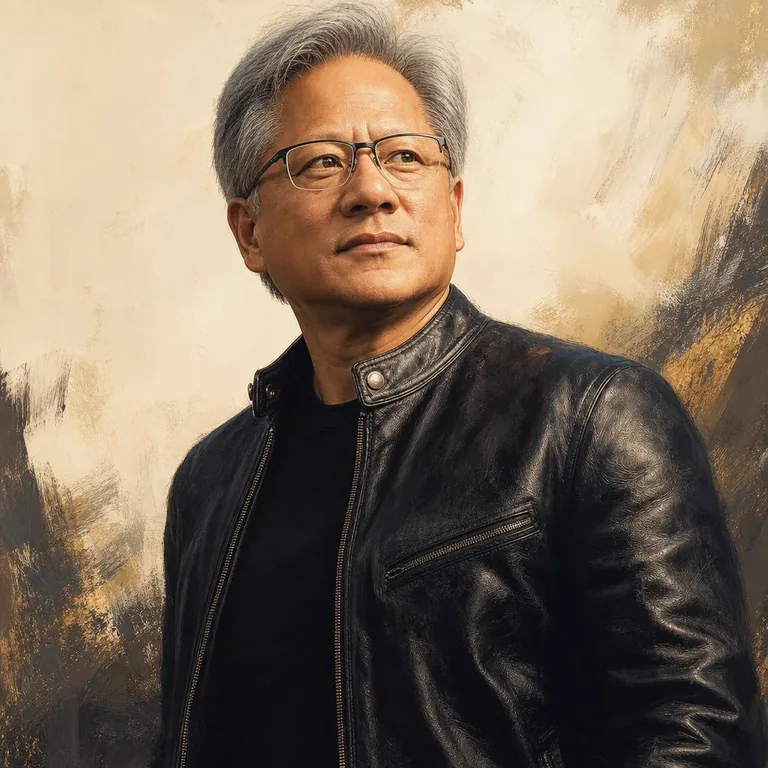
The Denny's busboy who bet thirty years on parallel computing — and turned a 1990s graphics card maker into the most strategically important company of the AI era.
Read Journey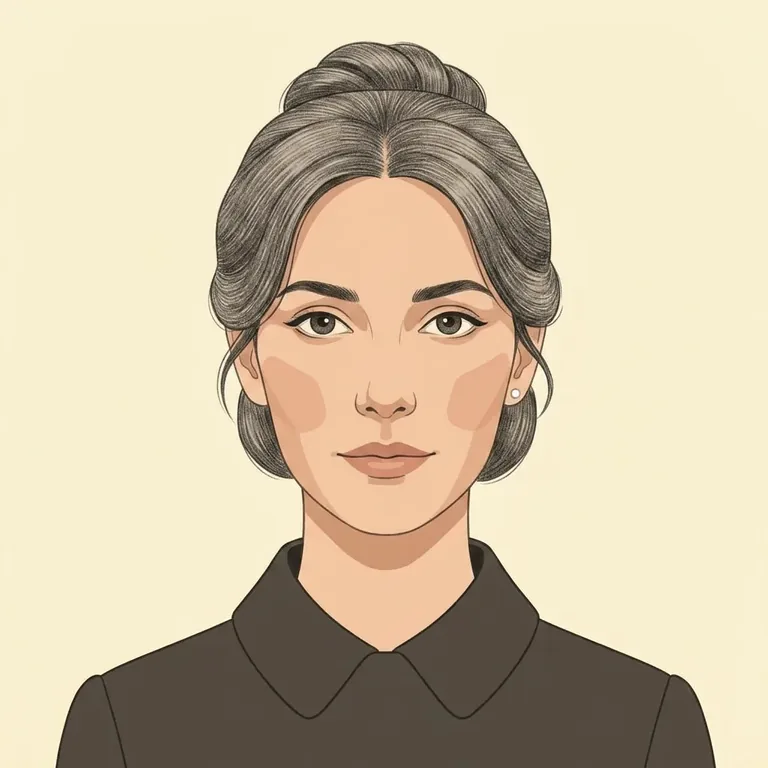
A Polish-born scientist who walked across Europe to study physics, discovered two new elements, won Nobel Prizes in two different sciences, and pushed open the door for every woman scientist who came after her.
Read Journey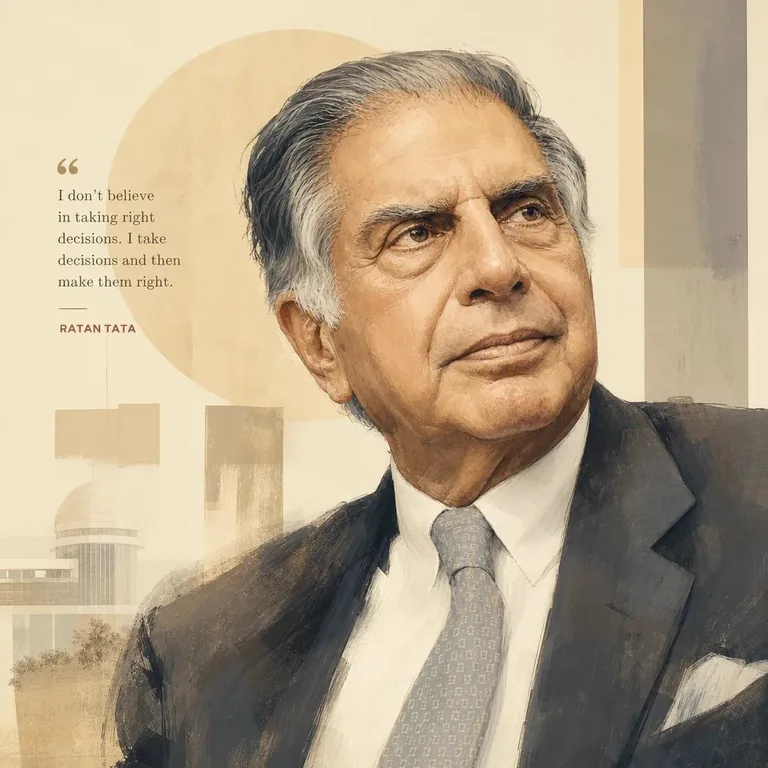
The quiet industrialist who took an aging family conglomerate and turned it into India's first true global corporation — acquiring Jaguar Land Rover, Tetley, and Corus while building the world's cheapest car.
Read Journey
A hedge-fund quant who quit Wall Street to sell books out of a garage and ended up rewiring global commerce, logistics, and cloud computing around one obsession: the customer.
Read Journey
Founders who were fired, rejected a hundred times, or three failed launches from bankruptcy — and the route they took back.
Open CollectionWe staked four years on a single funding application. The rejection arrived on a Tuesday. The next eighteen months were the most honest science of my career.
Read StoryFounder of Tesla & SpaceX
An obsessive engineer betting on rockets, electric cars, and the impossible — applying first-principles thinking at planetary scale.
Open Journey