Patient Observation
MasteredSat motionless for months until chimpanzees accepted her presence.
How it developed
Trained her temperament to fieldwork's timescale.
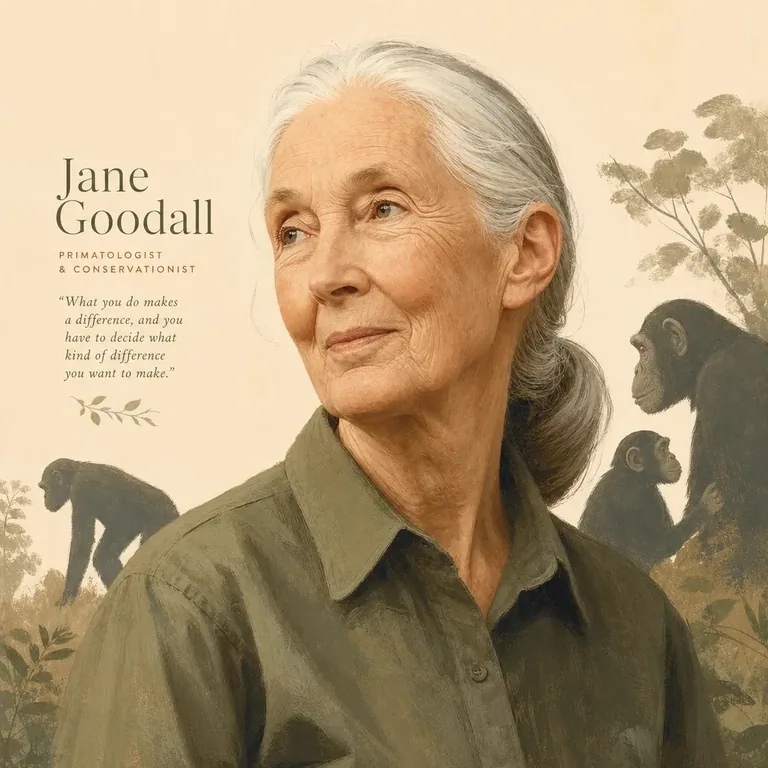
Primatologist; Conservationist; UN Messenger of Peace.
Walked into Gombe at 26 with a notebook and a pair of binoculars, watched chimpanzees use tools, and rewrote what humans were allowed to claim as uniquely their own — then spent sixty years building the institutions to protect what she had seen.
Every story has the highlights. This is the boring middle, the doubts, and the moments that quietly changed everything.
Father an engineer, mother a writer; received a stuffed chimp called Jubilee as a toddler, kept it her entire life.
No money for the African expedition she dreamed of.
Childhood obsessions, taken seriously, become careers.
Saved waitressing tips to visit a friend's farm in Africa; introduced to anthropologist Louis Leakey.
No degree, no scientific training — only the obsession.
Show up where the people you want to learn from already are.
Began field study of wild chimpanzees with her mother as required chaperone; British authorities would not let a young single woman live alone in the bush.
Chimps fled from her for months.
Field science begins with patience the academy doesn't measure.
Watched a chimpanzee strip leaves from a twig and use it to fish termites; the first documented non-human tool-making.
Knew the finding would be dismissed as anthropomorphism.
The right observation can rewrite a definition overnight.
Leakey arranged direct PhD entry at Newnham College, Cambridge.
Faced academic hostility for naming chimps and ascribing emotion to them.
Defend new methods; institutions update slowly.
One of only a handful of people ever admitted to a Cambridge doctorate without an undergraduate degree.
Convincing the committee that field observation was rigorous science.
Pioneer methodologies need their own defenders inside the academy.
First popular book on her Gombe work; introduced David Greybeard and chimp society to a global audience.
Translating decade-long field observations into a single accessible narrative.
A good book scales fieldwork to civilizational influence.
Four-year intergroup conflict that revealed organized violence among chimpanzees.
Sharing findings that complicated the gentle image she had built.
Honest science includes the inconvenient observations.
Built the organization that would scale research, conservation, and community-led programs.
Transitioning from field scientist to institutional founder.
Discoveries need institutions to outlive the discoverer.
After the Understanding Chimpanzees conference, dedicated her life to conservation activism.
Leaving the field she loved to give 300 days of travel a year.
Sometimes the work outgrows the original method.
Youth program for environmental and humanitarian action; now active in 60+ countries.
Building a kids' program that could survive past founder dependence.
Bet on the next generation explicitly — they outlast you.
Continued global travel as a conservation diplomat into her 80s.
Sustaining global influence through institutional rather than personal authority.
Honors are platforms for the next decade of work.
Continued giving lectures, mentoring scientists, and running JGI programs across continents.
Carrying decades of moral authority without coasting on it.
Late-career work consolidates what the field taught you to defend.
Skills aren't talents — they're the residue of a thousand decisions. Here is what compounded over a lifetime.
Sat motionless for months until chimpanzees accepted her presence.
Trained her temperament to fieldwork's timescale.
Named chimpanzees instead of numbering them; documented individual personalities.
Refused to flatten subjects to match the academic conventions of the day.
Built a 60+ year continuous research record at Gombe — one of the longest in any field.
Institutional commitment plus institutional infrastructure.
Made primatology comprehensible without sentimentalizing it.
National Geographic films, books, lectures, and TED talks over five decades.
Founded JGI and Roots & Shoots as durable organizations with global reach.
Late-1970s pivot from individual scientist to organizational founder.
Maintained 300 days of travel a year for decades to advocate for conservation.
Treated travel as the operating system of global influence.
Trained generations of female primatologists and African field scientists.
Deliberate pipeline building inside JGI.
No journey is a straight line. The setbacks weren't detours — they were the route.
Cambridge ethologists criticized her for naming animals and ascribing emotions.
Continued the methodology; eventually the field adopted her approach.
Defend pioneering methods until institutions catch up.
Provisioning chimps with bananas later distorted natural behavior and triggered aggression.
Phased out the practice and documented the lessons openly.
Intervention has consequences; report them transparently.
Some criticized her shift from fieldwork to advocacy as abandoning science.
Argued the science would only matter if forests survived to protect.
Activism is the conclusion of any honest conservation science.
Like many institutions, JGI struggled with the transition beyond its founder.
Built distributed leadership and Roots & Shoots youth pipelines.
Plan succession the same way you planned funding.
The books on the shelf, the people they studied, the ideas they kept returning to.
Jane Goodall
Her first popular book; the foundational text on Gombe research.
Jane Goodall
Reflective sequel covering thirty years at Gombe.
Jane Goodall
Spiritual autobiography that became the model for her later advocacy.
Jane Goodall & Douglas Abrams
Late-career conversation on the case for hope in dark times.
Jane Goodall
Botanical companion to her conservation work.
Jane Goodall
Memoir written for younger readers; the gateway book for many future scientists.
Interviews, keynotes, talks, and documentaries — chosen for the moments that reveal how they actually thought.
The bets that, made differently, would have written a different life.
AI-distilled takeaways, sorted by who you are and what you're building toward.
Field time is non-negotiable; theory built without it is brittle.
Hope is what people do, not what they feel.
Build the org as deliberately as you publish the paper.
Every individual makes a difference and has a role to play.
Show up where the work happens; the degree follows.
Roots & Shoots succeeded because it treated kids as the strategy, not the audience.
Presence in rooms across continents compounds influence.
The questions most people have after studying this life. Tap one — every answer is built from Jane Goodall's own timeline, decisions, books, and lessons on this page.
Adjacent journeys, a collection that frames the craft, and one pick from a different world.
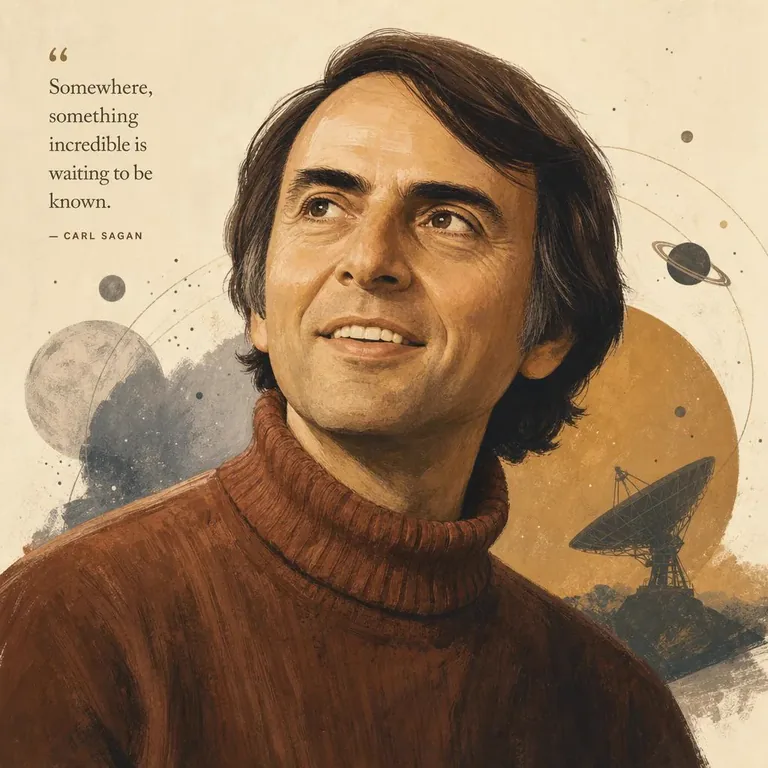
Built the most-watched science series in television history, talked to a planet about the Pale Blue Dot, and proved that rigorous astronomy and lyrical prose could share the same sentence — and the same career.
Read Journey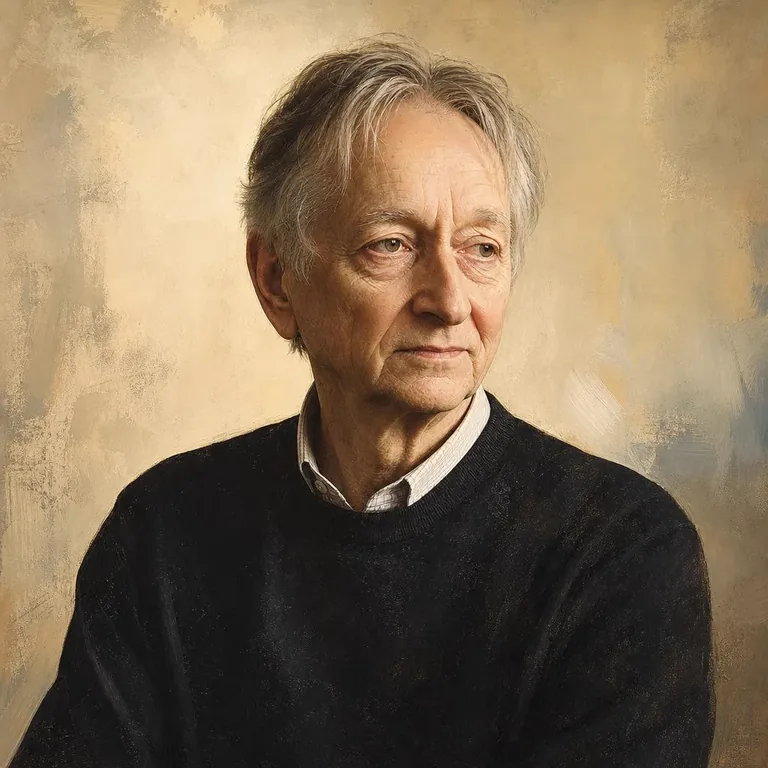
The cognitive scientist who spent forty years insisting that neural networks would work — through two AI winters, one Nobel Prize, and a final-act warning that they now might work too well.
Read Journey
A Polish-born scientist who walked across Europe to study physics, discovered two new elements, won Nobel Prizes in two different sciences, and pushed open the door for every woman scientist who came after her.
Read Journey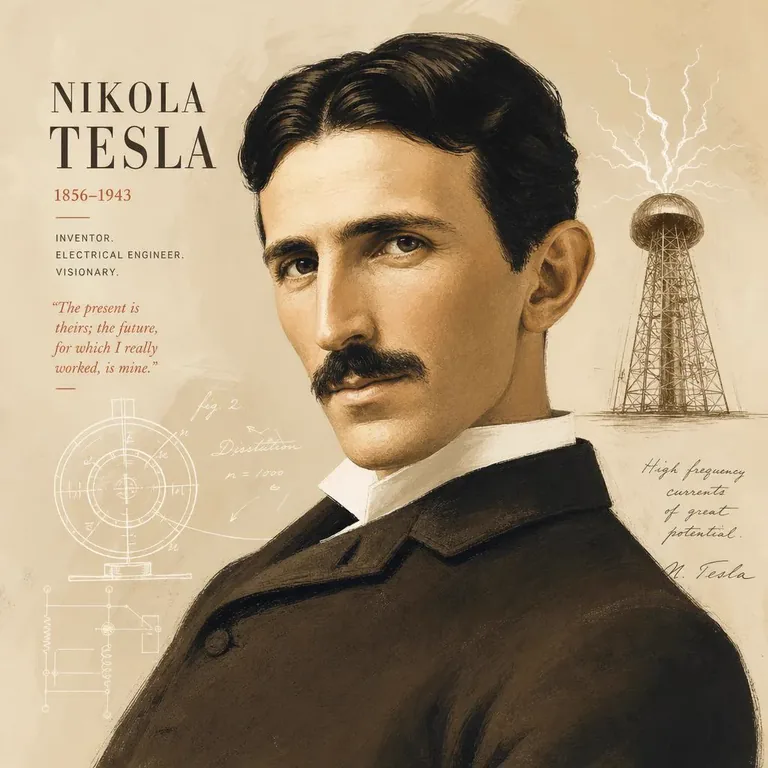
Imagined the alternating-current world we still live in — and proved that one engineer with the right model in his head could reshape the physical infrastructure of a planet, even while losing the business battles around it.
Read Journey
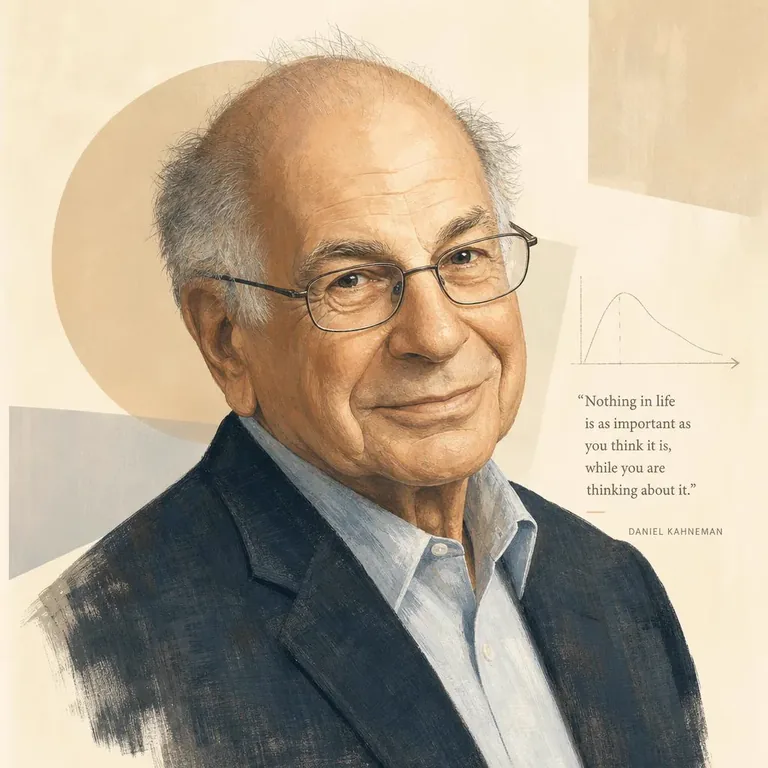
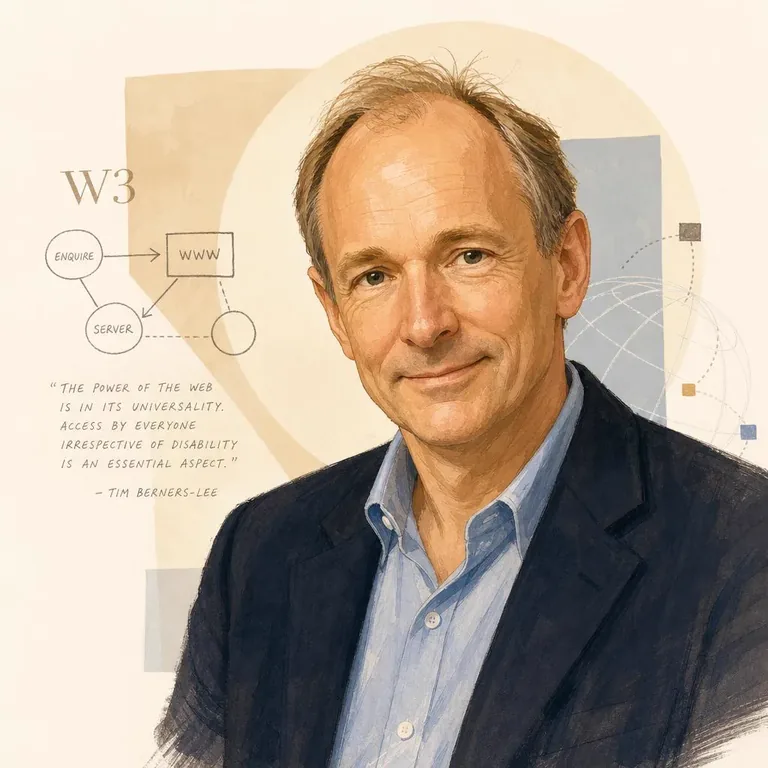
Researchers who reshaped what humans understand about the physical world — and how they teach the next generation to think.
Open Collection
Co-founder of Apple
One of the most influential product visionaries in history — a relentless editor of ideas who insisted technology should feel human.
Open Journey